
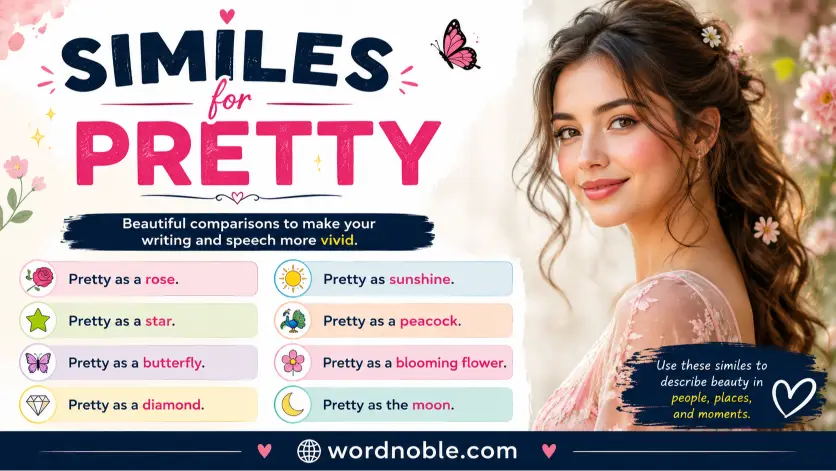
“She smiled like sunrise breaking over water.” That’s the kind of line that stops a reader mid-scroll. Plain words like “pretty” or “beautiful” get the point across, but they rarely make anyone feel anything.
Similes for pretty do the opposite they paint a picture instead of stating a fact. A face doesn’t just look nice; it glows like moonlight on snow, or blooms like a flower catching its first light.
Writers, poets, and anyone crafting a heartfelt caption reach for these comparisons because they turn ordinary description into something memorable.
Below, you’ll find a curated collection of similes for beauty, grouped by tone and use romantic, poetic, playful, and everyday so you can pick the exact shade of meaning you need.
Whether you’re writing a love letter, polishing a novel, or just want a better way to compliment someone, these expressions add color without sounding forced. Ready to trade flat adjectives for lines that actually linger? Let’s start with the classics that never go out of style.
Similes for pretty are comparisons that describe beauty by using “like” or “as,” helping readers visualize how attractive, charming, elegant, or delightful something looks.
What Does “Pretty” Mean in a Simile?
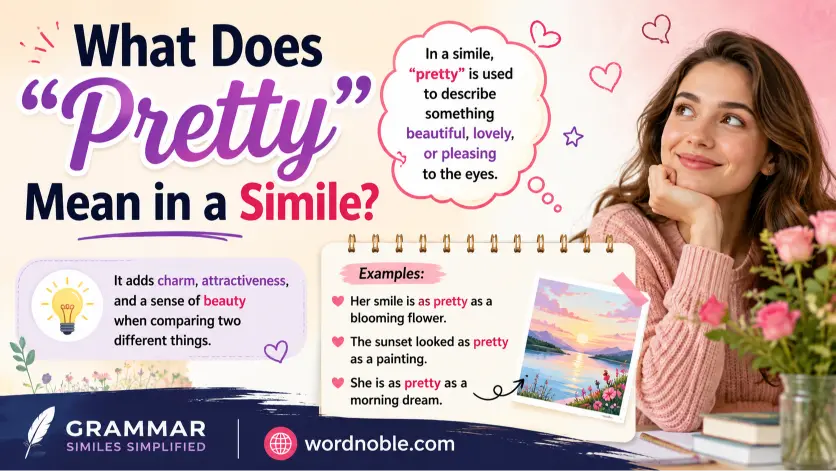
A simile for pretty compares something beautiful or attractive to another person, object, animal, place, or natural element.
For example:
- Her smile was as pretty as a blooming rose.
- The little cottage looked like a picture from a storybook.
- She was as pretty as a spring morning.
The comparison gives the reader more than a basic description. Instead of simply telling someone that a person or thing is pretty, it creates an image they can imagine.
Similes are an important form of figurative language. They are especially useful in descriptive writing, poetry, storytelling, speeches, captions, and everyday conversation.
The strongest similes do not simply repeat the idea of beauty. They connect beauty with something familiar, memorable, or emotionally meaningful.
Why Do Writers Use Similes for Pretty?
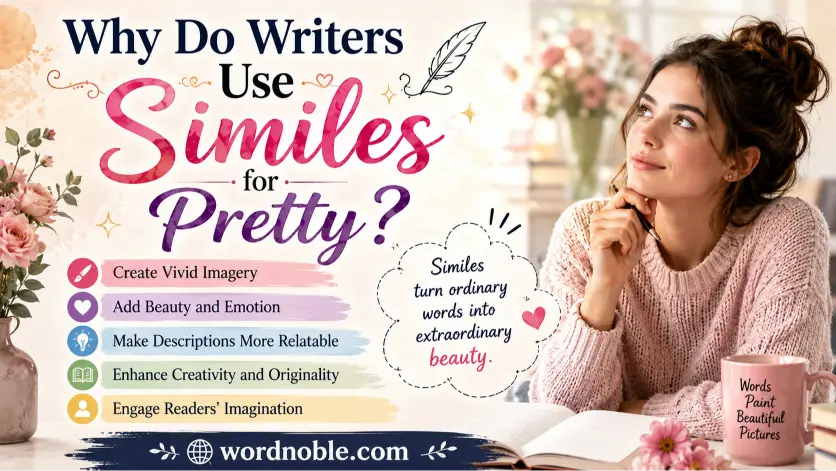
Writers use similes to make descriptions more colorful and specific.
A sentence such as “The garden was pretty” gives the reader limited information. Compare it with:
“The garden was as pretty as a painting.”
The second sentence creates a stronger visual impression.
Similes can communicate different kinds of beauty:
- Natural beauty: as pretty as a flower
- Elegant beauty: as pretty as a pearl
- Gentle beauty: as pretty as a butterfly
- Magical beauty: like a fairy-tale kingdom
- Bright beauty: as pretty as morning sunlight
- Delicate beauty: as pretty as lace
- Romantic beauty: like a rose at sunset
This makes similes valuable creative writing techniques because they combine comparison, imagery, sensory language, and emotion.
Similes for pretty are figurative comparisons used to describe beauty, attractiveness, charm, or elegance by relating the subject to something visually or emotionally appealing. They commonly use comparison words such as “like” or “as” to create clearer imagery and make descriptive language more memorable.
75+ Similes for Pretty
🌹 Nature-Based Similes for Pretty
Nature provides some of the easiest and most powerful comparisons for beauty.
- As pretty as a rose beautifully attractive and graceful.
- As pretty as a spring morning fresh, bright, and pleasant.
- As pretty as a blooming flower naturally beautiful and delicate.
- As pretty as a butterfly colorful, delicate, and charming.
- As pretty as a sunset visually stunning and memorable.
- As pretty as a field of wildflowers naturally colorful and cheerful.
- As pretty as a rainbow bright, colorful, and eye-catching.
- As pretty as a moonlit garden peaceful, romantic, and enchanting.
- As pretty as a summer day warm, bright, and cheerful.
- As pretty as a snowflake delicate and unique.
- As pretty as a cherry blossom soft, graceful, and delicate.
- As pretty as a morning sky fresh, bright, and beautiful.
- As pretty as a sparkling stream clear, lively, and attractive.
- As pretty as a field of daisies simple, cheerful, and charming.
- Like a garden in full bloom exceptionally beautiful and lively.
🦢 Animal-Based Similes for Pretty
Animals can add elegance, movement, or personality to a comparison.
- As pretty as a swan graceful and elegant.
- As pretty as a peacock colorful and striking.
- As pretty as a butterfly delicate and attractive.
- As pretty as a songbird charming and lively.
- As pretty as a kitten cute and endearing.
- As pretty as a fawn gentle, innocent, and delicate.
- Like a white dove graceful and peaceful.
- As pretty as a hummingbird colorful and captivating.
- Like a graceful swan on a lake elegant and serene.
- As pretty as a tropical bird vibrant and eye-catching.
💎 Object-Based Similes for Pretty
Objects can describe polished, refined, delicate, or striking beauty.
- As pretty as a pearl elegant and delicate.
- As pretty as a diamond brilliant and eye-catching.
- As pretty as a painting visually beautiful and artistic.
- As pretty as a porcelain doll delicate and refined.
- As pretty as a jewel precious and attractive.
- As pretty as a picture extremely attractive.
- Like a beautifully wrapped gift appealing and delightful.
- As pretty as lace delicate and elegant.
- Like a piece of artwork carefully beautiful and impressive.
- As pretty as a crystal ornament delicate and sparkling.
- As pretty as a decorated cake colorful, detailed, and attractive.
- Like a postcard from paradise exceptionally scenic and beautiful.
✨ Poetic Similes for Pretty
Poetic similes work particularly well in poems, romantic writing, stories, and emotional descriptions.
- As pretty as moonlight dancing on water soft and enchanting.
- As pretty as a rose beneath the morning sun fresh and radiant.
- Like a dream painted across the sky magical and extraordinary.
- As pretty as starlight on a quiet night peaceful and mesmerizing.
- Like spring dressed in flowers fresh, colorful, and joyful.
- As pretty as a secret garden mysterious and enchanting.
- Like sunlight wrapped in silk warm, soft, and elegant.
- As pretty as a song written by the stars imaginative and magical.
- Like a pearl beneath the moon subtle and graceful.
- As pretty as dawn awakening the world fresh and radiant.
- Like a flower blooming after rain refreshing and beautiful.
- As pretty as a dream you never want to end deeply enchanting.
😂 Funny and Exaggerated Similes for Pretty
Not every simile has to sound serious. Humorous comparisons can make descriptions playful and memorable.
- As pretty as a celebrity on a red carpet dramatically attractive.
- As pretty as a cake nobody wants to cut attractive enough to admire.
- Like a selfie that actually needed no filter naturally attractive.
- As pretty as a puppy wearing a tiny bow tie ridiculously cute.
- Like a fairy-tale character who missed the memo about being ordinary unusually beautiful.
- As pretty as a dessert behind a bakery window tempting and attractive.
- Like the main character in a romantic movie noticeably beautiful.
- As pretty as a picture that refuses to stay in the frame exceptionally eye-catching.
🎭 Emotional and Personality-Based Similes
Pretty does not always have to describe physical appearance. A smile, personality, moment, or expression can also be described as beautiful.
- Her smile was as pretty as sunshine after rain. warm and uplifting.
- His kindness was like a beautiful garden. pleasant and welcoming.
- Her laughter was as pretty as birdsong. cheerful and delightful.
- The moment was like a perfect painting. beautiful and memorable.
- Her personality was as pretty as a spring afternoon. pleasant and refreshing.
- His words were like flowers in a quiet room. gentle and comforting.
- Her eyes shone like stars. bright and captivating.
- Their friendship was as pretty as a garden in bloom. joyful and meaningful.
- Her confidence was like sunlight through the clouds. bright and inspiring.
- The memory was as pretty as an old photograph. beautiful and nostalgic.
15 Best Similes for Pretty With Meanings
| Simile | Meaning | Category | Clarity |
|---|---|---|---|
| She was as pretty as a rose. | Naturally beautiful | Nature | Simple and familiar |
| Her smile was like sunshine. | Warm and cheerful | Nature | Creates bright imagery |
| The garden was as pretty as a painting. | Visually beautiful | Art | Suggests artistic beauty |
| She looked like a graceful swan. | Elegant and graceful | Animal | Highlights poise |
| The dress was as pretty as a pearl. | Delicate and refined | Object | Suggests elegance |
| Her eyes sparkled like stars. | Bright and captivating | Nature | Creates visual imagery |
| The sunset was like a masterpiece. | Exceptionally beautiful | Art | Suggests artistic perfection |
| She was as pretty as a butterfly. | Delicate and colorful | Animal | Suggests charming beauty |
| The village looked like a fairy tale. | Magical and picturesque | Imaginative | Creates fantasy imagery |
| Her laugh was like birdsong. | Pleasant and joyful | Animal/Nature | Adds auditory imagery |
| The flowers were as pretty as jewels. | Colorful and precious | Object | Emphasizes vivid beauty |
| The beach was like a postcard. | Scenic and attractive | Object | Suggests picture-perfect scenery |
| Her face was as pretty as a spring morning. | Fresh and pleasant | Nature | Gentle description |
| The moment was like a dream. | Magical and memorable | Imaginative | Adds emotional depth |
| Her kindness was like a blooming garden. | Warm and beautiful | Nature | Describes inner beauty |
Context Table: How to Use Similes for Pretty
| Context | Meaning | Use Case | Example |
|---|---|---|---|
| Storytelling | Creates visual description | Fiction | The village was like a painting. |
| Poetry | Creates emotional imagery | Poems | Her smile was like morning light. |
| Romance | Expresses admiration | Love writing | She was as pretty as a rose. |
| Casual speech | Makes compliments colorful | Conversation | You look as pretty as a picture. |
| Humor | Adds playful exaggeration | Jokes | You look as pretty as a cake nobody wants to cut. |
| Academic writing | Explains imagery | Literature analysis | The poet compares beauty to a blooming flower. |
| Social media | Creates catchy descriptions | Captions | Pretty like a sunset. |
| School writing | Improves descriptive detail | Assignments | The garden was as pretty as a painting. |
How to Use Similes for Pretty in Your Writing
1. Choose the type of beauty
First decide what you are describing. Is it:
- physical appearance?
- a smile?
- clothing?
- nature?
- a place?
- a personality?
- a memorable moment?
Your answer determines the best comparison.
2. Match the comparison
Choose something that genuinely shares a quality with your subject.
For example, a swan works well for grace, while a rainbow works better for color.
3. Avoid generic repetition
Instead of repeatedly writing:
She was pretty.
Try identifying what makes her appearance attractive:
Her smile was as bright as morning sunshine.
The second sentence gives the reader a specific image.
4. Use sensory language
Strong descriptive writing can appeal to sight, sound, touch, emotion, and even movement.
For example:
“Her laughter was like birdsong.”
This uses auditory imagery, allowing readers to imagine the pleasant quality of her laughter.
5. Keep the comparison natural
A simile should make the description clearer rather than confusing the reader.
Natural:
“Her dress was as bright as a summer flower.”
Unnatural:
“Her dress was as pretty as a refrigerator.”
The second comparison may technically use “as,” but it does not communicate beauty effectively unless humor is specifically intended.
Simile vs. Metaphor: What Is the Difference?
A simile directly compares two things using words such as like or as.
- Simile: Her smile was like sunshine.
- Metaphor: Her smile was sunshine.
Both create figurative imagery, but the grammatical construction is different.
Similes usually make the comparison explicit, which can make them especially accessible for students learning figurative language and creative writing.
Common Mistakes When Writing Similes for Pretty
Overusing similes
Using a comparison in every sentence can make writing feel crowded.
Better: Use one strong simile where it adds meaningful imagery.
Choosing an illogical comparison
The comparison should share a relevant quality with the subject.
A beautiful person can be compared to a rose because both can suggest beauty, delicacy, or elegance.
Using clichés without purpose
Expressions such as “pretty as a picture” are familiar and useful, but original comparisons can make writing more memorable.
Confusing similes and metaphors
Remember:
Simile = like/as comparison.
Metaphor = direct comparison.
Forgetting the intended tone
A funny simile may work perfectly in casual conversation but feel inappropriate in a serious academic essay.
👍 Do and Don’t Usage Guide
Do
- Choose comparisons that have a clear connection.
- Use vivid and familiar imagery.
- Match the simile to your tone.
- Experiment with nature, animals, objects, and art.
- Use similes to add meaning rather than filler.
- Make the comparison easy for readers to understand.
Don’t
- Add several similes to one sentence unnecessarily.
- Use confusing comparisons.
- Force a comparison simply to sound creative.
- Mix up similes and metaphors.
- Use humorous imagery in serious contexts without purpose.
- Assume every beautiful thing needs the same comparison.
💬 Natural Chat-Style Responses
Here are some ways similes for pretty can appear naturally in everyday conversation:
“You look as pretty as a picture today!”
“That dress is like something straight out of a fairy tale.”
“Your new haircut is as pretty as a spring morning.”
“That sunset is honestly as pretty as a painting.”
“Her smile is like sunshine it instantly makes the room feel brighter.”
These sound more natural because they use comparisons conversationally rather than making the language overly formal.
Why Similes Matter in English Literature
Similes are among the most recognizable devices in English literature because they help writers transform abstract ideas into concrete images.
Beauty is particularly suitable for simile because it can be difficult to explain precisely. A writer can describe beauty through familiar images such as flowers, stars, sunlight, pearls, paintings, birds, or landscapes.
This gives readers something to visualize.
Similes can also establish tone. A comparison with a rose may feel romantic, while a comparison with a rainbow can feel cheerful. A humorous comparison can make a character sound playful.
In this way, similes support characterization, imagery, mood, symbolism, and descriptive writing.
How Students Can Use Similes for Pretty
Students can use these comparisons in:
- creative writing assignments
- descriptive paragraphs
- poetry
- short stories
- essays about literature
- character descriptions
- personal narratives
- classroom exercises
- speeches
- journal writing
For example:
Basic:
“The garden was pretty.”
Improved:
“The garden was as pretty as a painting, with flowers glowing beneath the afternoon sun.”
The second version provides stronger visual imagery and gives the reader a clearer mental picture.
🔗 Related Figurative Language Topics
If you are building a larger vocabulary of descriptive comparisons, explore these related areas:
- Similes for eyes useful for describing color, brightness, shape, and expression.
- Similes for face helpful for character and appearance descriptions.
- Similes for hands useful for describing movement, texture, and appearance.
- Figurative language examples includes similes, metaphors, personification, and other literary devices.
- Descriptive writing techniques strategies for making scenes and characters more vivid.
- English literature devices common techniques writers use to create meaning.
- Sensory language writing descriptions based on sight, sound, touch, smell, and taste.
FAQs:
1. What are similes for pretty?
Similes for pretty are figurative comparisons that describe beauty, attractiveness, charm, or elegance by comparing something to another appealing thing. They commonly use like or as. For example, “Her smile was like sunshine” compares the smile with sunshine to suggest that it is bright, warm, and pleasant.
2. What is a good simile for pretty?
A simple and effective simile is “as pretty as a rose.” It works because roses are widely associated with beauty, elegance, and delicacy. Other useful options include “as pretty as a picture,” “as pretty as a pearl,” and “as pretty as a spring morning,” depending on the type of beauty you want to emphasize.
3. What are some poetic similes for pretty?
Poetic similes can compare beauty with moonlight, stars, flowers, dawn, sunsets, or dreams. For example, “She was as pretty as moonlight on a quiet lake” creates a soft and romantic image. Poetic comparisons are especially effective when you want your writing to feel emotional, imaginative, graceful, or atmospheric.
4. What are some funny similes for pretty?
Funny similes deliberately exaggerate beauty or use unexpected comparisons. For example, “She looked as pretty as a cake nobody wanted to cut.” Another playful option is “You look like a selfie that needed no filter.” Funny similes work best in casual conversations, captions, jokes, and informal creative writing.
5. What is the difference between a simile and a metaphor?
A simile compares two things using words such as like or as, while a metaphor makes a direct comparison. For example, “Her eyes were like stars” is a simile. “Her eyes were stars” is a metaphor. Both are forms of figurative language, but the comparison is expressed differently.
6. How can I use similes for pretty in writing?
Start by identifying the specific quality you want to describe. Then choose something that shares that quality. For example, use a rose for delicate beauty, sunshine for brightness, or a swan for elegance. Place the comparison naturally within your sentence rather than adding a simile simply to make the writing sound more complicated.
7. Why are similes important in English literature?
Similes help literature create vivid imagery and emotional meaning. Instead of giving readers a plain description, writers connect an idea with something familiar. A well-chosen comparison can establish mood, reveal character, strengthen description, and make a passage more memorable. Similes therefore play an important role in poetry, fiction, speeches, and descriptive prose.
8. How do students use similes for pretty?
Students can use similes when describing characters, places, objects, emotions, or scenes in creative writing and poetry. They can also identify and analyze similes in literature assignments. A sentence such as “The garden was as pretty as a painting” demonstrates how a simple comparison can make a basic description more vivid and specific.
9. Can similes describe inner beauty?
Yes. Similes can describe personality traits, kindness, happiness, confidence, or other forms of inner beauty. For example, “Her kindness was like a blooming garden” suggests that her personality is welcoming and uplifting. This allows writers to move beyond physical appearance and describe beauty through emotions, behavior, and character.
10. Why do similes make descriptions better?
Similes make descriptions more concrete by connecting an idea to something readers already understand. Instead of simply saying something is pretty, a writer can explain what kind of beauty it has. A comparison with a rose suggests delicacy, while one with sunlight suggests brightness and warmth. This gives descriptive writing greater precision and imagery.
Conclusion:
Similes for pretty turn simple descriptions of beauty into vivid, memorable imagery. Instead of repeatedly telling readers that someone, somewhere, or something is pretty, you can show what makes that beauty special through flowers, animals, sunlight, stars, artwork, jewels, and other familiar images.
The best simile is not necessarily the most complicated one. It is the comparison that fits the subject, communicates the intended feeling, and helps the reader form a clear mental picture.
Whether you are writing a poem, school assignment, story, caption, or everyday compliment, a well-chosen simile can make your language more expressive. Choose the right comparison, keep it natural, and let your imagery make the beauty visible.

I am Naqash Ayub, proudly writing for WordNoble, where I focus on creating clear, informative, and SEO-friendly content. I enjoy turning detailed information into simple, trustworthy articles that help readers find the answers they need.
1 thought on “Similes for Pretty: Beautiful Comparisons to Brighten Your Writing”