
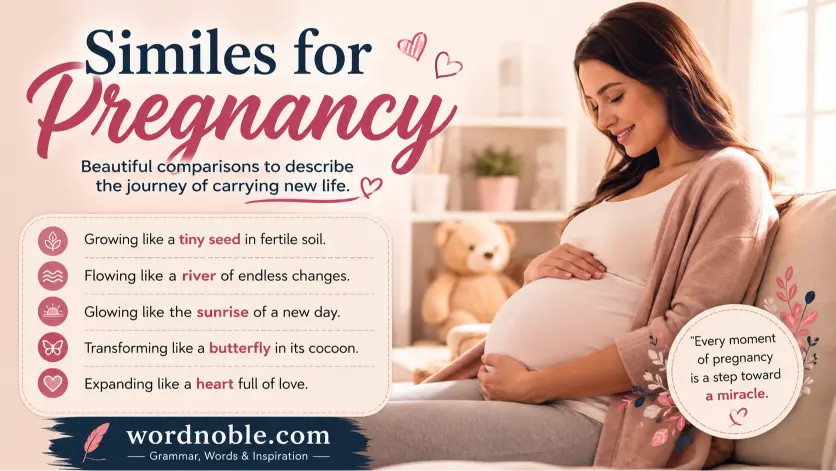
A watermelon under your shirt. A loaf of bread rising slow in a warm oven. A tiny astronaut floating in her own private galaxy. That’s the strange magic of similes for pregnancy they turn something as ordinary as a growing belly into a story worth telling.
Pregnancy changes your body in ways that are hard to describe with plain words, which is exactly why comparisons work so well. They capture the wonder, the weight, the flutter of first movement, and even the exhaustion, all in a single vivid image.
Whether you’re writing a baby shower card, journaling your own journey, or just searching for the perfect line to caption a bump photo, the right pregnancy metaphor can say what a paragraph can’t.
Below, you’ll find a collection of fresh, heartfelt, and even funny similes sorted by trimester, mood, and moment so you can find one that actually sounds like you. Let’s start with the earliest weeks, when the changes are invisible but everything already feels different.
What Are Similes for Pregnancy?
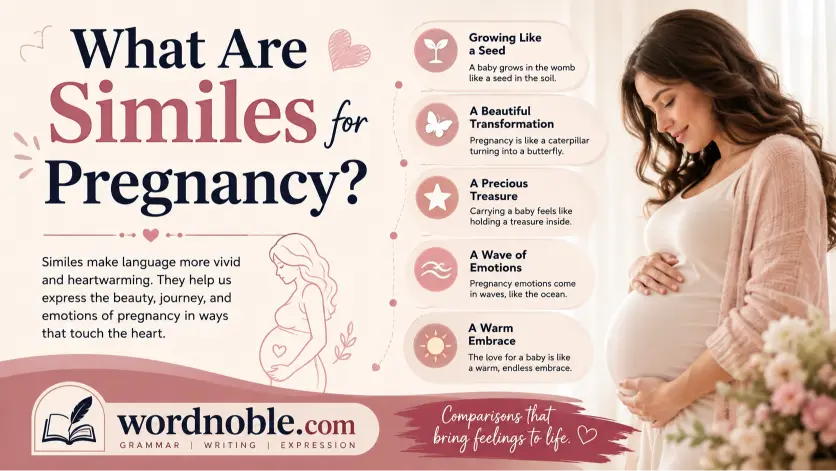
Similes for pregnancy are comparisons that describe pregnancy, pregnancy-related experiences, or emotions using words such as “like” or “as.” They help readers visualize physical changes, emotions, growth, anticipation, and the journey toward motherhood.
For example:
- Her belly was round like a full moon.
- The baby moved like a little fish beneath the water.
- Her excitement was like sunshine after a long winter.
Each comparison connects pregnancy to something familiar, creating a stronger mental picture.
Similes for pregnancy are figurative expressions that compare pregnancy or pregnancy-related experiences to familiar things using “like” or “as” to create vivid imagery.
Understanding Similes for Pregnancy

Pregnancy involves many experiences that are difficult to explain literally. A writer might want to describe a growing belly, the sensation of movement, emotional changes, anticipation, tiredness, or the feeling of carrying new life.
This is where figurative language becomes useful.
Instead of simply writing:
Her belly was growing.
A writer could say:
Her belly grew like a balloon slowly filling with air.
The second sentence gives readers something concrete to imagine.
Similes work especially well because they connect an unfamiliar or deeply personal experience with something recognizable. A reader may not have experienced pregnancy themselves, but they understand a balloon expanding, flowers blooming, seasons changing, or waves moving toward shore.
Why Writers Use Pregnancy Similes
Writers use these comparisons to:
- Create vivid mental images
- Describe physical changes creatively
- Express complicated emotions
- Make poetry more expressive
- Add warmth to storytelling
- Help readers visualize pregnancy
- Make school assignments more interesting
- Turn ordinary descriptions into memorable language
A strong simile should clarify an idea rather than make it unnecessarily complicated.
Similes for pregnancy are a form of figurative language used to compare pregnancy, bodily changes, emotions, fetal movement, anticipation, or related experiences with familiar objects, animals, natural events, or situations. They use comparison words such as “like” or “as” to make descriptions more vivid and understandable.
Contextual Meaning of Pregnancy Similes
The same simile can have different effects depending on where it appears.
In Storytelling
Similes help a narrator show what a pregnant character experiences without relying on plain descriptions.
Example:
Her anticipation fluttered like a bird trapped between excitement and fear.
The comparison makes the character’s emotional state easier to imagine.
In Poetry
Poetry often uses softer, more imaginative comparisons.
Example:
Her growing belly was like a moon carrying its own quiet mystery.
Here, the simile creates beauty and symbolism.
In Casual Speech
Everyday similes can be simple and humorous.
Example:
By the evening, I felt like I was carrying a bowling ball.
The comparison communicates heaviness in an informal way.
In Humor
Exaggerated comparisons can make pregnancy descriptions playful.
Example:
My appetite is like a train that forgot where the brakes are.
The purpose is entertainment rather than literal accuracy.
In Academic Writing
Similes should be used carefully in formal or academic work. A creative comparison may work in an essay about literature or descriptive writing, but factual medical information should remain precise.
Types of Similes for Pregnancy
🐾 Animal-Based Similes
Animals provide familiar images for movement, protection, energy, and gentleness.
1. Like a little fish
Sentence: The baby moved like a little fish beneath the water.
Meaning: Describes gentle movement inside the womb.
2. Like a butterfly fluttering
Sentence: The first movements felt like a butterfly fluttering inside her.
Meaning: Suggests delicate, light sensations.
3. Like a sleepy bear
Sentence: After a long day, she felt like a sleepy bear ready for winter.
Meaning: Describes deep tiredness and the desire to rest.
4. Like a mother bird guarding her nest
Sentence: She watched over her growing family like a mother bird protecting her nest.
Meaning: Shows care, protection, and nurturing.
5. Like a kitten stretching
Sentence: The baby kicked like a kitten stretching after a nap.
Meaning: Gives a playful image of fetal movement.
📡 Technology- and Object-Based Similes
Objects can make pregnancy descriptions easier to understand because they provide clear visual comparisons.
6. Like a balloon slowly filling
Sentence: Her belly grew like a balloon slowly filling with air.
Meaning: Describes gradual physical growth.
7. Like a ticking clock
Sentence: The final weeks felt like a ticking clock counting toward a new beginning.
Meaning: Expresses anticipation as the due date approaches.
8. Like carrying a heavy backpack
Sentence: By the end of the day, she felt like she was carrying a heavy backpack everywhere.
Meaning: Describes physical heaviness and fatigue.
9. Like a growing seed in a flowerpot
Sentence: She felt as though she were carrying a growing seed in a flowerpot.
Meaning: Compares pregnancy with gradual growth and development.
10. Like a carefully wrapped gift
Sentence: Her pregnancy felt like a carefully wrapped gift waiting to be opened.
Meaning: Expresses anticipation and mystery.
🌿 Nature-Based Similes
Nature is especially effective for pregnancy writing because pregnancy involves growth, transformation, seasons, and new life.
11. Like a seed becoming a flower
Sentence: Her journey through pregnancy was like a seed slowly becoming a flower.
Meaning: Represents gradual growth and transformation.
12. Like the moon becoming full
Sentence: Her belly became round like a full moon.
Meaning: Creates a simple visual image of a pregnant belly.
13. Like spring after winter
Sentence: The coming baby felt like spring arriving after a long winter.
Meaning: Represents hope, renewal, and a new beginning.
14. Like a river moving toward the sea
Sentence: Each month carried her forward like a river moving steadily toward the sea.
Meaning: Suggests the continuous progression of pregnancy.
15. Like a garden in bloom
Sentence: Her body seemed like a garden slowly coming into bloom.
Meaning: Describes transformation and new life in poetic language.
😂 Funny and Exaggerated Similes for Pregnancy
Humor can make pregnancy writing feel relaxed and relatable.
16. Like carrying a watermelon
Sentence: She felt like she was carrying a watermelon everywhere she went.
Meaning: A humorous way to describe a large, heavy belly.
17. Like a human snack detector
Sentence: Her appetite was like a human snack detector that never switched off.
Meaning: Playfully exaggerates frequent hunger.
18. Like a phone with one percent battery
Sentence: By bedtime, she felt like a phone stuck at one percent battery.
Meaning: Describes extreme tiredness.
19. Like a walking pillow
Sentence: She joked that she had become like a walking pillow.
Meaning: A playful reference to a softer, rounder body.
20. Like a suitcase packed too full
Sentence: She felt like a suitcase packed so full that the zipper might give up.
Meaning: Humorously describes feeling physically full or uncomfortable.
🎭 Emotional and Behavioral Similes
Pregnancy is not only physical. Similes can also describe anticipation, nervousness, excitement, tenderness, and changing emotions.
21. Like riding an emotional roller coaster
Sentence: Her emotions were like riding a roller coaster without knowing the next turn.
Meaning: Shows rapidly changing feelings.
22. Like standing at the beginning of an adventure
Sentence: She felt like someone standing at the beginning of a great adventure.
Meaning: Expresses excitement about becoming a parent.
23. Like holding a secret sunrise
Sentence: She felt like she was holding a secret sunrise inside her.
Meaning: A poetic comparison for hope and new life.
24. Like waiting for a door to open
Sentence: The final weeks felt like waiting for a door to open onto a completely new life.
Meaning: Represents anticipation of birth and change.
25. Like a heart learning a new rhythm
Sentence: Motherhood felt like her heart was learning a completely new rhythm.
Meaning: Expresses emotional transformation.
15 Best Similes for Pregnancy With Meanings
| # | Simile Sentence | Meaning | Category |
|---|---|---|---|
| 1 | Her belly was round like a full moon. | Describes its rounded shape. | Nature |
| 2 | The baby moved like a little fish. | Describes gentle movement. | Animal |
| 3 | Her belly grew like a balloon filling slowly. | Shows gradual growth. | Object |
| 4 | The first kick felt like a butterfly fluttering. | Describes a delicate sensation. | Animal |
| 5 | Pregnancy was like spring after winter. | Represents renewal and hope. | Nature |
| 6 | She felt like she was carrying a watermelon. | Humorously describes heaviness. | Funny |
| 7 | Her emotions were like a roller coaster. | Shows changing emotions. | Emotional |
| 8 | The baby felt like a tiny miracle taking shape. | Expresses wonder. | Emotional |
| 9 | The final weeks were like a ticking clock. | Shows anticipation. | Technology |
| 10 | She felt like a garden coming into bloom. | Represents transformation. | Nature |
| 11 | Her appetite was like a train without brakes. | Humorously describes strong hunger. | Funny |
| 12 | The journey was like a river flowing toward the sea. | Represents steady progress. | Nature |
| 13 | She rested like a sleepy bear. | Shows tiredness. | Animal |
| 14 | The coming baby was like a gift waiting to be opened. | Expresses anticipation. | Object |
| 15 | Motherhood felt like stepping into a new world. | Describes major life change. | Emotional |
Pregnancy Similes by Context
| Context | Meaning | Use Case | Example |
|---|---|---|---|
| Storytelling | Physical or emotional description | Fiction | Her belly was round like a full moon. |
| Poetry | Beauty and symbolism | Poems | She carried hope like spring carries flowers. |
| Casual speech | Simple comparison | Conversations | I feel like I’m carrying a watermelon. |
| Humor | Playful exaggeration | Social posts | My appetite is like a train without brakes. |
| School writing | Descriptive imagery | Assignments | Pregnancy was like a seed growing into a flower. |
| Personal journal | Emotional reflection | Journaling | Each day felt like another page in a new story. |
| Creative nonfiction | Real-life imagery | Essays | The final weeks felt like a ticking clock. |
How to Use Similes for Pregnancy in Writing
A good pregnancy simile should feel natural rather than forced.
1. Start With the Exact Feeling
Ask what you actually want to describe:
- Growth
- Movement
- Tiredness
- Excitement
- Fear
- Anticipation
- Love
- Physical heaviness
- Transformation
Then choose a comparison that matches that feeling.
2. Choose Familiar Images
Readers understand familiar things quickly. A moon, flower, river, balloon, bird, or ticking clock can create an immediate image.
3. Match the Tone
A serious poem may need a gentle, poetic comparison. A funny social-media caption may benefit from an exaggerated one.
4. Use Sensory Language
Strong descriptive writing often appeals to sight, touch, movement, sound, or emotion.
For example:
The baby moved like a tiny fish beneath calm water.
The comparison creates visual and movement-based imagery.
5. Avoid Explaining Too Much
Once the comparison is clear, let the reader experience it. A powerful simile often needs only one sentence.
How to Make Pregnancy Similes More Creative
If your comparison feels ordinary, change the source of the image.
Instead of repeatedly comparing pregnancy to a balloon, explore:
- Seasons
- Flowers
- Oceans
- Mountains
- Stars
- Animals
- Music
- Clocks
- Journeys
- Seeds
- Sunlight
- Gifts
- Gardens
You can also combine emotional and physical imagery:
Her growing belly was like a small moon, quietly marking the changing seasons of her life.
This gives the reader both a visual image and an emotional idea.
Simile vs. Metaphor: What’s the Difference?
The main difference is how the comparison is expressed.
A simile directly compares two things using words such as like or as.
Her belly was like a full moon.
A metaphor makes the comparison directly without “like” or “as.”
Her belly was a full moon.
Both are examples of figurative language, but the grammatical structure is different.
Easy Rule
Simile = comparison using “like” or “as.”
Metaphor = direct comparison.
Common Mistakes When Using Pregnancy Similes
Overusing Comparisons
Using a simile in every sentence can make writing feel artificial.
Better: Use one strong comparison where it adds meaning.
Choosing an Illogical Comparison
The two things should share a recognizable quality.
A comparison between pregnancy and something completely unrelated may confuse the reader.
Confusing Similes With Metaphors
Remember that a simile normally signals its comparison with like or as.
Making Every Simile Dramatic
Not every sentence needs a grand poetic image. Simple comparisons can be more effective.
Using Clichés Too Often
Common comparisons are useful, but original images can make your writing more memorable.
Do and Don’t: Using Pregnancy Similes
👍 Do
- Choose comparisons readers understand.
- Match the simile to the emotion.
- Use vivid sensory language.
- Keep comparisons natural.
- Experiment with nature and everyday objects.
- Use humor when the context allows it.
- Make the comparison support the main idea.
👎 Don’t
- Add similes to every sentence.
- Use confusing comparisons.
- Mix metaphors accidentally.
- Force an unusual comparison simply to sound creative.
- Use humor in an inappropriate context.
- Sacrifice clarity for poetic language.
Natural Chat-Style Responses Using Pregnancy Similes
Sometimes people want a casual, relatable way to describe pregnancy. Here are some natural examples:
1. “Honestly, I feel like I’m carrying a watermelon today.”
2. “The baby is moving like a little fish in there!”
3. “My energy disappears like a phone battery on one percent.”
4. “These last few weeks feel like watching a clock move in slow motion.”
5. “My emotions are like a roller coaster lately—up, down, and everywhere.”
6. “This whole journey feels like spring slowly arriving after winter.”
Why Similes Matter in English Literature
Similes are an important part of figurative language and creative writing. They allow authors to communicate ideas indirectly through familiar images.
In English literature, a well-crafted simile can contribute to:
- Imagery
- Character development
- Emotional expression
- Symbolism
- Tone
- Atmosphere
- Description
- Reader engagement
Pregnancy provides especially rich material because it combines physical transformation with emotional anticipation and the concept of new life.
A writer can therefore use pregnancy-related similes not merely to describe appearance but also to explore identity, hope, uncertainty, love, transformation, and time.
Related Figurative Language Terms
If you’re learning how to create stronger descriptions, these concepts are closely connected to pregnancy similes:
Figurative Language
Language that communicates ideas beyond strictly literal meaning.
Sensory Language
Words that help readers imagine what something looks, feels, sounds, tastes, or smells like.
Descriptive Writing
Writing that uses specific details and imagery to create a vivid picture.
Metaphor vs. Simile
Two related forms of figurative comparison with different grammatical structures.
Imagery
Language that creates sensory or mental pictures in the reader’s mind.
Personification
Giving human qualities to something nonhuman.
FAQs:
1. What are similes for pregnancy?
Similes for pregnancy are comparisons that describe pregnancy or pregnancy-related experiences using words such as “like” or “as.” They can describe a growing belly, fetal movement, emotions, tiredness, anticipation, or transformation. For example, saying “her belly was round like a full moon” creates a familiar visual image that makes the description easier for readers to picture.
2. What are some good examples of pregnancy similes?
Good examples include “the baby moved like a little fish,” “her belly was round like a full moon,” and “pregnancy was like spring after winter.” Each comparison highlights a different quality. The fish suggests movement, the moon suggests shape, and spring suggests renewal. The best simile depends on whether you want to describe physical changes, emotions, anticipation, or new beginnings.
3. What are some funny similes for pregnancy?
Funny pregnancy similes often use playful exaggeration. For example, “I feel like I’m carrying a watermelon” humorously describes a large or heavy belly. Another example is “my appetite is like a train without brakes,” which exaggerates hunger for comic effect. Funny similes work best in casual conversations, humorous writing, captions, and situations where a lighthearted tone is appropriate.
4. What are some poetic similes for pregnancy?
Poetic similes can compare pregnancy with nature, light, seasons, or journeys. Examples include “her belly was like a full moon,” “pregnancy was like spring after winter,” and “her body was like a garden coming into bloom.” These comparisons create imagery and emotional depth without describing pregnancy entirely in literal terms. They are especially suitable for poems, reflective writing, and literary descriptions.
5. What is the difference between a pregnancy simile and a metaphor?
A pregnancy simile uses an explicit comparison, commonly with “like” or “as.” For example, “her belly was like a full moon” is a simile. A metaphor makes the comparison directly: “her belly was a full moon.” Both are figurative language techniques, but similes signal the comparison more clearly while metaphors present one thing as another.
6. How can I use pregnancy similes in creative writing?
Begin by identifying what you want readers to visualize or feel. Then find something familiar that shares that quality. For example, if you want to describe gradual growth, you might compare pregnancy to a seed becoming a flower. If you want to describe anticipation, you could compare the final weeks to a ticking clock. Keep the comparison relevant and natural.
7. Why are pregnancy similes useful in English literature?
Pregnancy similes can communicate more than physical appearance. They can represent growth, transformation, hope, uncertainty, anticipation, and new life. In literature, figurative comparisons help create imagery, establish tone, develop characters, and make emotional experiences easier for readers to understand. A carefully chosen simile can therefore turn a straightforward description into something more vivid and memorable.
8. How can students use pregnancy similes?
Students can use pregnancy similes in creative-writing assignments, descriptive paragraphs, poetry, figurative-language exercises, and English literature lessons. They should first identify the characteristic they want to describe, such as growth or excitement, and then choose a familiar comparison. Students should also explain the meaning of the comparison when an assignment asks them to analyze figurative language.
9. Can pregnancy similes be used in poetry?
Yes. Similes can be especially effective in poetry because poems often depend on imagery and concise comparisons. A poet might compare a pregnant belly to a full moon or pregnancy to spring arriving after winter. The comparison can communicate physical appearance while also suggesting ideas such as growth, hope, renewal, mystery, or the beginning of a new chapter.
10. Should pregnancy similes always be poetic?
No. Pregnancy similes can be poetic, humorous, casual, educational, or simple. A literary poem may need an imaginative comparison, while a casual conversation may benefit from something straightforward such as “I feel like I’m carrying a watermelon.” The important thing is that the simile fits the purpose, audience, and tone of the writing.
Conclusion:
Similes for pregnancy give writers a creative way to describe growth, movement, emotions, anticipation, and transformation.
Instead of relying only on literal descriptions, you can compare pregnancy with familiar images such as a full moon, blooming garden, flowing river, growing seed, or ticking clock. These comparisons make writing more vivid while helping readers connect with experiences they may not personally know.
The key is to choose a comparison that genuinely matches the quality you want to express.
Whether you’re writing a poem, story, school assignment, personal reflection, or casual message, one thoughtful simile can make an ordinary sentence much more memorable. Strong imagery does not require complicated languageit requires the right comparison.

I am Naqash Ayub, proudly writing for WordNoble, where I focus on creating clear, informative, and SEO-friendly content. I enjoy turning detailed information into simple, trustworthy articles that help readers find the answers they need.