
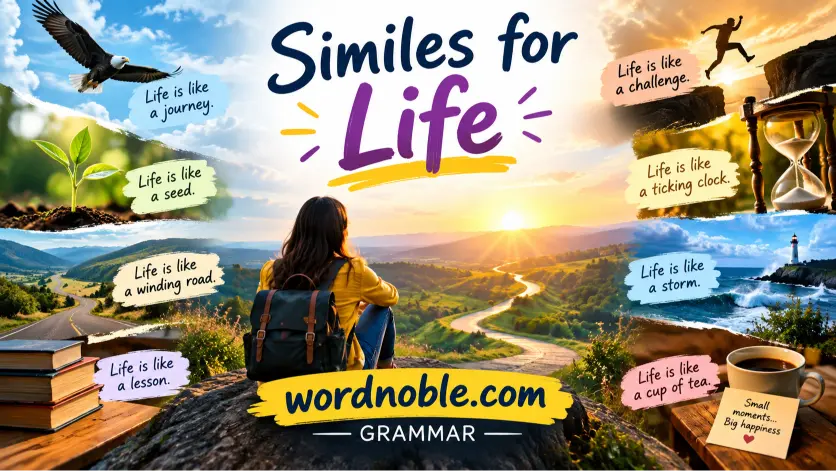
Life rarely explains itself in plain terms, so people borrow images instead. A storm, a river, a box of chocolates these comparisons do more than decorate a sentence.
They capture feelings that straightforward words can’t quite reach. That’s exactly why similes for life show up everywhere, from song lyrics to graduation speeches to the quiet thoughts we have on a hard Tuesday.
They give shape to something messy and unpredictable, turning confusion into a picture we can actually hold onto.
This collection pulls together some of the most memorable life metaphors and comparisons, organized so you can find the right one for the right mood, whether you’re writing, reflecting, or just looking for words that finally fit.
You’ll see how a single well-chosen image can say more than a paragraph of explanation, and why certain comparisons have lasted for generations while others fade. Some entries here will feel instantly familiar. Others might surprise you.
Either way, you’ll walk away with a sharper sense of how language turns lived experience into something shareable starting with where these comparisons actually come from.
What Are Similes for Life?
Similes for life are comparisons that use “like” or “as” to describe what life is like. They connect life to familiar things, such as a journey, a river, a book, or a garden, to express its qualities in a vivid way.
A simile for life compares life to something familiar using “like” or “as” to express an idea about growth, change, struggle, happiness, or experience.
Meaning and Deep Explanation
Life is difficult to describe because it includes many different experiences. It can be peaceful, unpredictable, exciting, painful, or full of possibility. A direct statement such as “Life is difficult” communicates an idea, but a comparison can make that idea easier to imagine.
For example, saying “Life is like a winding road” suggests that the future is uncertain and that people must make choices along the way.
Similes for life work by connecting an abstract idea to something concrete. Readers may not be able to see “hope” or “uncertainty,” but they can picture a sunrise, a bridge, a river, or a mountain.
These comparisons are part of figurative language, a broad category of creative expression that includes similes, metaphors, personification, and symbolism. They also support sensory language and imagery by helping readers visualize, feel, or imagine an experience.
Why Do Writers Use Similes for Life?
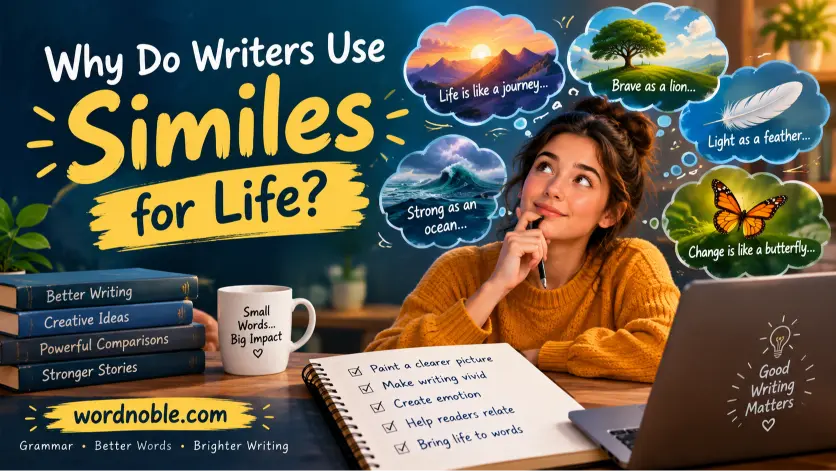
Writers use these comparisons to:
- Make abstract ideas easier to understand.
- Add emotion and depth to ordinary statements.
- Create memorable images for readers.
- Explain personal experiences in a relatable way.
- Improve poetry, storytelling, essays, and speeches.
- Express both positive and difficult sides of living.
A strong simile does more than sound beautiful. It gives the reader a clearer understanding of the writer’s meaning.
Similes for life are figurative expressions that compare human existence to familiar objects, experiences, or natural processes. They communicate ideas about change, growth, uncertainty, struggle, and happiness by using “like” or “as.” These comparisons make abstract experiences more vivid, relatable, and emotionally meaningful in creative and descriptive writing.
How Similes for Life Change Meaning by Context
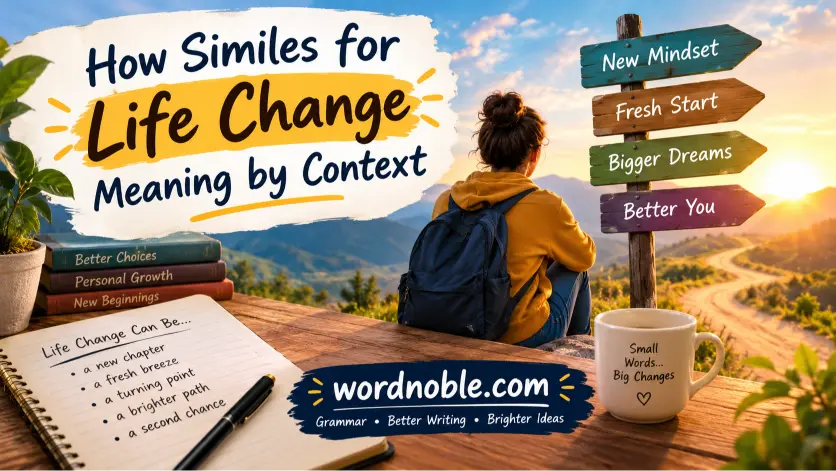
The same comparison can communicate different ideas depending on where it appears.
Storytelling
In stories, similes help describe a character’s experiences and make events easier to imagine.
Life was like a maze, and every decision led to another unexpected turn.
This suggests confusion, uncertainty, and the need to keep moving.
Poetry
Poetry often uses similes to express emotion, reflection, and symbolism in a compact way.
Life is like a candle, glowing brightly before the flame grows small.
The comparison may suggest beauty, fragility, or the passage of time.
Casual Speech
In everyday conversation, similes make advice and personal observations sound natural.
Life is like a bicycle; you have to keep moving to stay balanced.
This expresses the idea that progress and effort help people handle challenges.
Humor
Funny similes make serious or ordinary experiences more entertaining.
Life is like a phone battery it always seems to run out when you need it most.
The humor comes from connecting a familiar frustration to a larger idea.
Academic Writing
In essays, similes can clarify complex ideas, but they should support the explanation rather than replace evidence.
Life can be compared to a learning process, where each experience adds another layer of understanding.
Academic comparisons work best when they are precise and followed by a clear explanation.
Simile Taxonomy: Types of Similes for Life
Different categories create different moods and meanings. Choosing the right comparison helps your writing sound intentional.
🐾 Animal-Based Similes
Animal comparisons can express movement, resilience, freedom, or instinct.
- Life is like a bird in flight.
Meaning: Life is always moving and offers opportunities for freedom. - Life is like a turtle’s journey.
Meaning: Progress may be slow, but patience can lead to success. - Life is like a butterfly emerging from a cocoon.
Meaning: Change can lead to growth and transformation.
Animal-based similes are especially useful when writing about independence, patience, or personal development.
📡 Technology-Based Similes
Technology-based comparisons connect life to modern experiences such as learning, communication, and problem-solving.
- Life is like a computer program.
Meaning: Choices and actions can influence what happens next. - Life is like a phone with many applications.
Meaning: People manage different responsibilities, relationships, and goals. - Life is like a GPS with occasional wrong turns.
Meaning: Even with a plan, people may need to adjust their direction.
These similes work well in modern essays, social media writing, and humorous observations.
🌿 Nature-Based Similes
Nature provides some of the most universal comparisons for life.
- Life is like a river.
Meaning: It keeps moving and changes as it travels. - Life is like a garden.
Meaning: Growth requires care, patience, and effort. - Life is like the changing seasons.
Meaning: Experiences move through different stages. - Life is like a mountain.
Meaning: Reaching goals may require effort and perseverance.
Nature-based similes are common in poetry because they create strong visual imagery and emotional associations.
😂 Humorous and Exaggerated Similes
Funny comparisons make life’s frustrations and surprises easier to express.
- Life is like a surprise exam you rarely feel completely prepared.
Meaning: Unexpected challenges appear without warning. - Life is like a suitcase with a broken zipper.
Meaning: Problems can appear when everything seems organized. - Life is like a roller coaster designed by someone who dislikes calm.
Meaning: Life can contain dramatic highs and lows.
Humorous similes are useful in casual conversation, captions, speeches, and entertaining stories.
🎭 Emotional and Behavioral Similes
These comparisons focus on feelings, decisions, relationships, and personal experiences.
- Life is like a mirror.
Meaning: Experiences can reflect choices, attitudes, and actions. - Life is like a puzzle.
Meaning: Understanding often comes gradually as separate pieces connect. - Life is like a classroom.
Meaning: Every experience can teach a lesson. - Life is like a blank canvas.
Meaning: People have opportunities to shape their future.
These similes are particularly effective in reflective writing and motivational passages.
15 Creative Examples of Similes for Life
The following examples are organized for easy understanding and practical use.
| # | Simile Sentence | Meaning | Category |
|---|---|---|---|
| 1 | Life is like a winding road. | The future contains turns, choices, and surprises. | Nature / Journey |
| 2 | Life is like a river flowing toward the sea. | Life keeps moving and cannot remain unchanged. | Nature |
| 3 | Life is like a garden that needs constant care. | Growth requires effort, patience, and attention. | Nature |
| 4 | Life is like a book with unfinished chapters. | The future is still being written. | Object-Based |
| 5 | Life is like a roller coaster. | Experiences include emotional highs and lows. | Humorous |
| 6 | Life is like a puzzle missing a few pieces. | Some answers become clear only with time. | Object-Based |
| 7 | Life is like a mountain climb. | Success often requires persistence and hard work. | Nature |
| 8 | Life is like a sunrise after a long night. | Difficult periods can lead to hope and renewal. | Nature |
| 9 | Life is like a bird learning to fly. | Growth involves practice, uncertainty, and courage. | Animal-Based |
| 10 | Life is like a candle in the wind. | Life can be beautiful but fragile and unpredictable. | Nature |
| 11 | Life is like a classroom without a final bell. | Learning continues throughout our experiences. | Behavioral |
| 12 | Life is like a train with changing stations. | People move through different stages and relationships. | Journey |
| 13 | Life is like a blank canvas. | Choices help shape the future. | Object-Based |
| 14 | Life is like a phone battery that needs recharging. | Rest and self-care are necessary. | Technology |
| 15 | Life is like a dance between chance and choice. | Both circumstances and decisions influence our experiences. | Emotional |
How to Understand These Examples
Each simile connects life to a familiar image. The comparison is not meant to be literally true. Instead, it highlights one quality of life, such as movement, uncertainty, effort, beauty, or change.
For example, “Life is like a book” focuses on chapters and unfinished possibilities, while “Life is like a mountain” emphasizes challenge and achievement. The best choice depends on the idea you want to communicate.
Context Table: Choosing the Right Simile
| Context | Meaning | Use Case | Example |
|---|---|---|---|
| Hope | Life can improve after difficulty. | Poems, speeches, reflections | Life is like a sunrise after a dark night. |
| Growth | Development takes time and care. | Essays, school writing | Life is like a garden that needs patience. |
| Uncertainty | The future is unpredictable. | Stories, personal writing | Life is like a winding road. |
| Struggle | Success requires effort. | Motivational writing | Life is like climbing a steep mountain. |
| Change | Experiences move through stages. | Poetry, essays | Life is like the changing seasons. |
| Learning | Every experience teaches something. | Assignments, reflections | Life is like a classroom. |
| Freedom | Life offers movement and possibility. | Poems, captions | Life is like a bird in flight. |
| Humor | Everyday experiences can be surprising. | Casual speech, social posts | Life is like a surprise exam. |
How to Use Similes for Life in Your Writing
A simile becomes effective when it fits the message and feels natural. Follow these steps to create stronger comparisons.
1. Decide What Part of Life You Want to Describe
Avoid trying to describe everything at once. Focus on one quality:
- Life’s uncertainty
- Personal growth
- Happiness
- Hardship
- Relationships
- Time
- Hope
- Success
For example, if your topic is perseverance, a mountain or long journey may be more suitable than a mirror.
2. Choose a Familiar Image
Use something readers can easily picture. Roads, rivers, seasons, books, gardens, and birds are effective because their qualities are widely understood.
3. Identify the Shared Quality
Ask yourself: What does this object or experience have in common with life?
A river moves continuously. A garden needs care. A book contains chapters. These shared qualities make the comparison meaningful.
4. Use “Like” or “As” Clearly
A simile usually includes a comparison word.
- Life is like a journey.
- Life is as unpredictable as the weather.
- Life moves like a river.
This makes the figurative meaning easy to recognize.
5. Explain the Comparison When Necessary
In poetry, the image may stand alone. In an essay or school assignment, add a sentence explaining what the simile means.
Life is like a garden because the choices we make and the care we give ourselves influence how we grow.
6. Avoid Mixing Too Many Images
One clear comparison is often stronger than several unrelated ones. If you begin with a river, keep the explanation connected to movement, direction, or change.
Simile vs. Metaphor: What Is the Difference?
Both similes and metaphors compare two different things, but they do so in different ways.
| Feature | Simile | Metaphor |
|---|---|---|
| Comparison | Uses “like” or “as” | States that one thing is another |
| Example | Life is like a journey. | Life is a journey. |
| Style | Often more direct and explanatory | Often more compact and symbolic |
| Purpose | Highlights a shared quality | Creates a stronger implied connection |
Simple Explanation
A simile says life is like something. A metaphor says life is something in a figurative sense.
Both are useful creative writing techniques. The choice depends on the tone and strength of the comparison you want.
Common Mistakes When Writing Similes for Life
Overusing Comparisons
Adding a simile to every sentence can make writing feel crowded. Use comparisons where they add meaning or imagery.
Choosing an Illogical Comparison
A comparison should share a relevant quality with life. A random object may confuse readers if the connection is unclear.
Confusing Similes With Metaphors
“Life is like a river” is a simile. “Life is a river” is a metaphor. The distinction matters when explaining figurative language.
Explaining Too Much
A strong image often needs only a short explanation. Repeating the same meaning several times can weaken its impact.
Using Clichés Without Purpose
Common comparisons can still work, but adding a fresh detail makes them more memorable.
Instead of:
Life is like a roller coaster.
Try:
Life is like a roller coaster that never gives you the full map before the ride begins.
Usage Guide: Do and Don’t
Do
- Choose comparisons that match your intended meaning.
- Use familiar images that readers can understand.
- Add sensory details when they improve the image.
- Explain the comparison in academic writing.
- Vary your similes to avoid repetition.
- Use figurative language to support your main idea.
Don’t
- Force a simile into every paragraph.
- Mix unrelated comparisons without a clear reason.
- Use “like” without making a meaningful comparison.
- Assume every simile must be inspirational.
- Confuse a figurative statement with a literal fact.
- Let decorative language replace a clear message.
Natural Chat-Style Responses Using Similes for Life
These examples show how similes can sound natural in everyday conversations.
1. When someone feels overwhelmed
“Life is like a winding road. You don’t have to know every turn to keep moving.”
2. When encouraging a friend
“Life is like a garden. Give yourself time, care, and room to grow.”
3. When discussing unexpected problems
“Life is like a surprise exam you never feel ready for every question.”
4. When talking about personal growth
“Life is like a book. One difficult chapter doesn’t mean the whole story is bad.”
5. When discussing change
“Life is like the seasons. Things change, but every stage has something to teach us.”
6. When reflecting on the future
“Life is like a blank canvas. You may not control every circumstance, but you can still shape your next step.”
Related Terms and Semantic Concepts
Understanding related language concepts can help you create stronger writing.
- Figurative language: Words used beyond their literal meaning to create deeper expression.
- Auditory imagery: Language that helps readers imagine sounds.
- Sensory writing: Description that appeals to sight, sound, touch, taste, or smell.
- Metaphor vs. simile: Two comparison techniques with different structures.
- Descriptive writing: Writing that creates a clear picture through specific details.
- English literature devices: Techniques such as symbolism, personification, imagery, alliteration, and hyperbole.
- Creative writing techniques: Methods used to make stories, poems, and essays more engaging.
Although similes for life are mainly conceptual, they become stronger when combined with sensory details. For example, describing life as a “river” becomes more vivid when the writing includes rushing water, quiet banks, or distant waves.
FAQs:
1. What are similes for life?
Similes for life are comparisons that use “like” or “as” to describe human existence. They connect life to familiar things such as roads, rivers, books, gardens, or seasons. These comparisons help explain abstract ideas like growth, uncertainty, struggle, and hope. For example, “Life is like a journey” suggests that people move through different experiences and stages.
2. What is a simple simile for life?
A simple simile for life is “Life is like a journey.” It means that life involves movement, choices, experiences, and destinations. People may take different paths, face unexpected turns, and learn along the way. This comparison is easy to understand and works well in school assignments, motivational writing, personal reflections, and everyday conversation.
3. What are some examples of similes for life?
Examples include “Life is like a winding road,” “Life is like a river,” “Life is like a garden,” and “Life is like a book with unfinished chapters.” Each comparison emphasizes a different quality. A road suggests uncertainty, a river suggests movement, a garden suggests growth, and a book suggests experiences that are still unfolding.
4. What are some funny similes for life?
Funny similes for life include “Life is like a surprise exam,” “Life is like a phone battery that dies at the worst moment,” and “Life is like a roller coaster designed by someone who dislikes calm.” These comparisons use humor to describe unexpected problems, emotional ups and downs, or everyday frustrations. They work well in casual speech and social media captions.
5. What are some poetic similes for life?
Poetic similes for life include “Life is like a candle glowing in the darkness,” “Life is like a river beneath the moon,” and “Life is like a sunrise after a long night.” These comparisons create emotional and visual imagery. They are useful in poetry, reflective writing, speeches, and passages about hope, beauty, change, and the passage of time.
6. What is the difference between a simile and a metaphor for life?
A simile compares life to something using “like” or “as,” such as “Life is like a journey.” A metaphor makes a direct figurative comparison, such as “Life is a journey.” Both express a shared idea, but similes make the comparison more explicit, while metaphors often sound more direct and symbolic.
7. How can I use similes for life in writing?
Start by deciding which quality of life you want to describe, such as growth, struggle, uncertainty, or happiness. Then choose a familiar image that shares that quality. Use “like” or “as” to create the comparison, and explain it if your writing is academic. A well-chosen simile should clarify your idea rather than distract from it.
8. Why are similes important in English literature?
Similes are important in English literature because they make abstract emotions and experiences easier to imagine. Writers use them to create imagery, develop tone, reveal character, and make descriptions memorable. A comparison can also communicate a complex idea quickly, allowing readers to connect emotionally with a poem, story, essay, or speech.
9. How can students use similes for life?
Students can use similes for life in essays, creative writing, poetry, speeches, journal entries, and classroom assignments. They can describe life as a journey, a classroom, a garden, or a book. The key is to explain the shared quality clearly. Students should choose comparisons that support their topic and avoid adding figurative language only for decoration.
10. Can similes for life be positive and negative?
Yes. Similes for life can express positive, negative, or balanced ideas. For example, “Life is like a sunrise” suggests hope, while “Life is like a storm” may suggest difficulty or confusion. A comparison such as “Life is like changing seasons” presents a more balanced view by showing that experiences naturally shift over time.
Conclusion:
Similes for life make abstract experiences easier to understand by connecting them to familiar images. A road can represent uncertainty, a river can suggest movement, and a garden can express growth. These comparisons add emotion, clarity, and imagery to poetry, stories, essays, and everyday conversations.
The strongest simile is not always the most complicated one. It is the one that communicates your intended meaning clearly and naturally. When choosing a comparison, focus on the quality of life you want to describe, select an image that fits, and explain the connection when needed.
With practice, similes can turn simple observations into memorable writing that helps readers see life from a new perspective.

I am Naqash Ayub, proudly writing for WordNoble, where I focus on creating clear, informative, and SEO-friendly content. I enjoy turning detailed information into simple, trustworthy articles that help readers find the answers they need.