
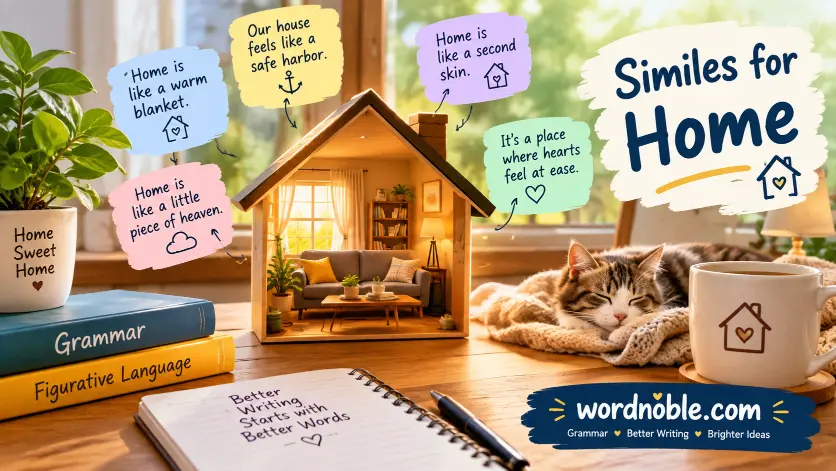
You step through the door after a long day, and something in your chest unclenches. That feeling is hard to describe, which is exactly why writers reach for similes for home. A good comparison can make a reader feel warmth, safety, or belonging in a single line.
Home is not just a building. It can feel like a warm blanket, an old song, or a lighthouse in bad weather. The right simile turns that private feeling into something anyone can picture.
Below, you will find a collection of home similes you can use in stories, poems, captions, and school assignments. Some are cozy. Some are tender. A few even show how home can feel heavy or distant. You will also see how each comparison works, so you can adapt it to your own writing instead of copying it.
Whether you want a simple line for a caption or a richer image for a poem, these examples will give you a strong start. Let’s begin with the cozy, comforting similes that capture home at its warmest.
Meaning and Deep Explanation
A simile for home compares a home or something associated with it to another thing that shares a meaningful quality. The comparison uses like or as to connect familiar ideas with more imaginative ones.
For example, saying, My home is like a warm blanket, suggests comfort and protection. The house is not literally a blanket. The comparison helps the reader understand how the home feels.
Similes are a form of figurative language. They can describe physical features, such as a bright kitchen, or emotional experiences, such as feeling safe after returning from a difficult day.
How Similes for Home Work
A simile usually has three parts:
- Subject: The home or home-related experience being described.
- Comparison: An object, place, person, or natural element that shares a quality with the subject.
- Signal word: Like or as, which makes the comparison clear.
Example: Our house was as peaceful as a quiet garden.
The house is the subject, a quiet garden is the comparison, and as is the signal word. The shared quality is peacefulness.
Why Writers Use Similes for Home
Writers use these comparisons to make descriptions more engaging and emotionally meaningful.
- They create sensory imagery, helping readers picture rooms, hear familiar sounds, or imagine the atmosphere of a house.
- They express emotions such as love, comfort, loneliness, nostalgia, and security.
- They make descriptive writing more memorable without requiring long explanations.
- They help readers connect an unfamiliar home or experience with something they already understand.
In English literature, similes are a common creative writing technique. They help writers turn everyday experiences into images that carry emotional and symbolic meaning.
Similes for home are figurative expressions that compare a house, living environment, or sense of belonging to another thing with a shared quality, using like or as. They help communicate the physical appearance, emotional atmosphere, and personal meaning of home through vivid descriptive language.
Contextual Meaning Expansion
The same simile can communicate different ideas depending on the context in which it appears.
Storytelling
In a story, a simile can establish the atmosphere of a house. A description such as, The old house stood like a forgotten castle, creates an impression of age, mystery, or loneliness.
Poetry
Poetry often uses similes to express personal feelings about belonging. A home may be compared with a nest, a harbor, or a heartbeat to suggest love, protection, and emotional connection.
Casual Speech
In everyday conversation, people use simple comparisons to describe familiar experiences. For example, My room is like a little cave can mean that the room is quiet, private, and comfortable.
Humor
Funny similes exaggerate ordinary situations. A messy house may be compared to a tornado zone, while a crowded living room may feel like a packed train.
Academic Writing
In school assignments and literary analysis, similes can help explain how a writer creates imagery or communicates a theme. Academic writing should clarify the comparison and its effect rather than simply listing creative phrases.
Types of Similes for Home
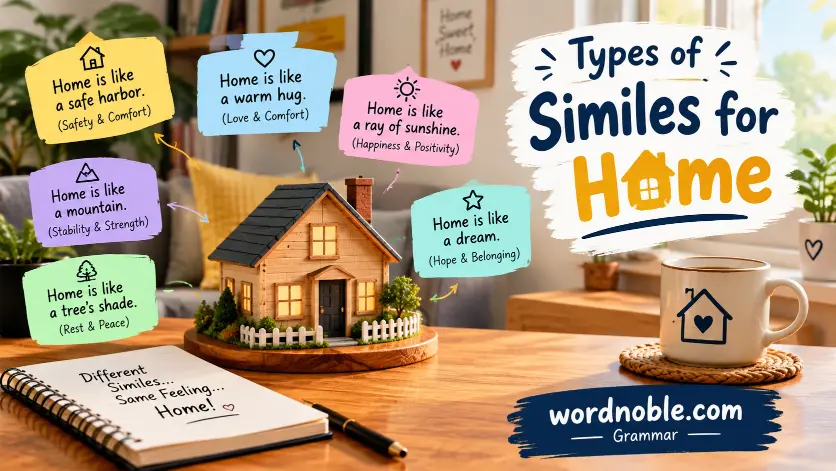
Animal-Based Similes
Animal comparisons can describe the feeling of home, family relationships, or the way a house functions.
- Our home was like a bird’s nest, warm and protected.
- The children rushed around the house like playful puppies.
- My grandmother’s kitchen was as welcoming as a cat curled beside a fire.
- The old house watched over us like a loyal dog.
- The family gathered in the living room like chicks beneath a hen.
Meaning: These comparisons connect home with warmth, protection, loyalty, family, and comfort.
Technology-Based Similes
Technology-based comparisons are useful for modern homes, connected families, and busy household routines.
- Our home was like a charging station after a tiring day.
- The living room was as bright as a computer screen.
- My house was like a smart device, always responding to our needs.
- The family kitchen buzzed like a busy communication hub.
- My bedroom was like a private server, storing years of memories.
Meaning: These similes suggest energy, connection, organization, brightness, and the role of home in daily life.
Nature-Based Similes
Nature provides some of the most effective comparisons for describing home.
- Our home was like a peaceful harbor.
- The house stood as steady as an old oak tree.
- My room was as quiet as a forest at dawn.
- The windows glowed like sunlight through autumn leaves.
- Home felt like a garden after gentle rain.
Meaning: Nature-based similes communicate peace, stability, beauty, renewal, and protection.
Humorous and Exaggerated Similes
Funny comparisons make ordinary household situations memorable.
- My bedroom was like a tornado wearing a backpack.
- The kitchen was as busy as an airport during a holiday.
- Our living room looked like a toy store after an earthquake.
- The laundry pile was like a mountain that never stopped growing.
- My little brother’s room was as messy as a pirate’s treasure cave.
Meaning: These comparisons use exaggeration to create humor and make descriptions more entertaining.
Emotional and Behavioral Similes
Emotional similes describe what home means to a person rather than what it looks like.
- Home felt like a hug after a difficult day.
- My childhood house was like a memory book.
- Returning home was as comforting as hearing a familiar voice.
- Our family home was like a bridge connecting generations.
- A quiet home can feel like a friend who listens without judgment.
Meaning: These similes communicate comfort, nostalgia, belonging, family connection, and emotional support.
15 Similes for Home With Meanings
Here are 15 original examples that show how to use comparisons naturally in sentences.
1. Home Is Like a Warm Blanket
Meaning: Home provides comfort and protection.
Category: Comfort
My home is like a warm blanket on a cold evening.
The comparison connects the physical comfort of a blanket with the emotional comfort of home.
2. Our House Was as Peaceful as a Quiet Garden
Meaning: The house was calm and relaxing.
Category: Nature
After everyone left, our house was as peaceful as a quiet garden.
The garden creates a picture of stillness and calm.
3. Home Is Like a Safe Harbor
Meaning: Home offers protection during difficult times.
Category: Nature
When life becomes stressful, home is like a safe harbor.
The harbor suggests a secure place away from danger.
4. My Bedroom Was Like a Private Cave
Meaning: The bedroom was quiet, secluded, and comfortable.
Category: Nature
I spent the rainy afternoon in my bedroom, which was like a private cave.
The cave emphasizes privacy and shelter.
5. Our Kitchen Was as Busy as a Beehive
Meaning: Many people were active in the kitchen.
Category: Animal
During the family celebration, our kitchen was as busy as a beehive.
The beehive comparison suggests constant activity.
6. My Childhood Home Was Like a Treasure Chest
Meaning: The home held valuable memories.
Category: Emotional
Every corner of my childhood home was like a treasure chest filled with memories.
The treasure chest makes memories seem precious and worth preserving.
7. The House Stood Like an Old Oak Tree
Meaning: The house appeared strong, stable, and enduring.
Category: Nature
The house stood like an old oak tree through years of changing seasons.
The oak tree represents strength and lasting presence.
8. Home Felt as Soft as a Familiar Song
Meaning: Home created a gentle and comforting emotional feeling.
Category: Auditory imagery
Returning home felt as soft as a familiar song playing in the background.
The comparison uses a familiar sound to describe an emotional experience.
9. The Living Room Was Like a Little Theater
Meaning: The room was a place where people gathered and shared experiences.
Category: Object
Every evening, our living room became like a little theater during family movie night.
The theater suggests entertainment and shared attention.
10. Our Home Was as Bright as a Summer Morning
Meaning: The home felt cheerful and full of light.
Category: Nature
With sunlight streaming through the windows, our home was as bright as a summer morning.
The summer morning creates a vivid picture of brightness.
11. My House Was Like a Busy Train Station
Meaning: The house was full of movement and activity.
Category: Object
On the morning of the festival, my house was like a busy train station.
The train station suggests people coming and going.
12. Home Was Like a Lighthouse in the Dark
Meaning: Home provided guidance, hope, and security.
Category: Nature
When I felt lost, home was like a lighthouse in the dark.
The lighthouse represents a place that helps someone find direction.
13. Our Family Home Was as Familiar as an Old Photograph
Meaning: The home was deeply connected to memories and familiarity.
Category: Emotional
Even after many years, our family home was as familiar as an old photograph.
The photograph represents a preserved memory.
14. My House Looked Like a Puzzle Made of Memories
Meaning: Different parts of the home reflected different experiences.
Category: Object
Every room in my house looked like a puzzle made of memories.
The puzzle suggests that many small details form a meaningful whole.
15. The Empty House Was as Quiet as a Sleeping Forest
Meaning: The house was unusually silent.
Category: Nature
After the family moved away, the empty house was as quiet as a sleeping forest.
The sleeping forest creates a picture of deep silence.
Context Table: Similes for Home
| Context | Meaning | Use Case | Example |
|---|---|---|---|
| Comfort | Feeling safe and relaxed | Personal writing | Home is like a warm blanket. |
| Family | Love and togetherness | Stories | Our home was like a nest. |
| Nature | Peace and stability | Poetry | The house stood like an oak tree. |
| Humor | Exaggerated mess or activity | Casual speech | My room is like a tornado zone. |
| Nostalgia | Connection to memories | Reflective writing | My childhood home was like a treasure chest. |
| Safety | Protection from difficulties | Essays | Home is like a safe harbor. |
| Loneliness | Silence or emptiness | Fiction | The empty house was like a sleeping forest. |
| Creativity | Imaginative description | School assignments | Our living room was like a theater. |
How to Use Similes for Home in Writing
1. Choose the Quality First
Decide what you want readers to understand about the home. Is it warm, crowded, peaceful, old, beautiful, or lonely? Choosing the quality makes the comparison more precise.
2. Use a Familiar Comparison
A good simile connects home with something readers already understand. A warm blanket communicates comfort more clearly than a complicated or unfamiliar comparison.
3. Add Sensory Details
Make the image stronger by describing what a person can see, hear, smell, or feel.
Instead of writing, Our house was nice, write, Our house glowed like a lantern as warm light spilled across the windows.
4. Match the Tone
A humorous simile may work well in a casual story but not in a serious poem about grief. Choose comparisons that fit the mood and audience.
5. Explain the Effect
When writing a school assignment, briefly explain what the simile suggests. This helps show how figurative language creates meaning.
How to Improve Creativity With Similes
- Observe ordinary details around your home.
- Make a list of objects, animals, sounds, and natural places that share the feeling you want to express.
- Experiment with different comparisons before choosing the clearest one.
- Combine visual imagery with emotional or auditory imagery.
- Read your sentence aloud to check whether the comparison sounds natural.
- Avoid choosing a comparison only because it sounds poetic. It should communicate a specific idea.
Simile vs. Metaphor
A simile and a metaphor both compare two different things, but they use different structures.
| Feature | Simile | Metaphor |
|---|---|---|
| Signal word | Uses like or as | Usually does not use like or as |
| Comparison | Explicit | Direct or implied |
| Example | My home is like a sanctuary. | My home is a sanctuary. |
| Effect | Clearly explains a shared quality | Can sound more direct or symbolic |
A simile says that one thing is similar to another. A metaphor directly describes one thing as another to create a figurative meaning.
Common Mistakes
Overusing Similes
Using a comparison in every sentence can make writing feel crowded. Select a few strong images that support the main idea.
Illogical Comparisons
A simile should have a clear shared quality. Comparing a quiet home to a roaring engine without explaining the connection may confuse readers.
Confusing Similes With Metaphors
Remember that a simile generally uses like or as. A metaphor makes a direct comparison.
Mixing Literal and Figurative Meaning
A sentence such as, The house was like a warm blanket, is figurative. It does not mean the house is physically made of fabric.
Choosing Unrelated Images
A comparison should fit the context. A peaceful home may be compared to a quiet garden, while a noisy home may be compared to a busy station.
Usage Guide: Do and Don’t
Do
- Use clear and meaningful comparisons.
- Match the simile to the mood.
- Include sensory details when they add value.
- Explain the shared quality in academic writing.
- Vary your comparisons to avoid repetition.
Don’t
- Force a simile into every sentence.
- Use a comparison that has no clear connection.
- Confuse similes with metaphors.
- Add unnecessary words to make a sentence sound poetic.
- Use humor in a serious passage unless it serves a purpose.
Natural Chat Responses Using Similes for Home
Here are a few everyday ways to use similes in conversation.
1. How was your day?
It was exhausting, but coming home felt like a warm blanket.
2. What is your house like?
It’s like a little garden, peaceful and full of plants.
3. Why do you love your childhood home?
It was like a treasure chest of memories.
4. Is your home quiet?
Not at all. It’s like a busy train station when everyone is around.
5. How does your home make you feel?
It feels like a safe harbor whenever life gets difficult.
6. Why are you staying in tonight?
My room is like a private cave, and I need some peace.
Related Terms
Figurative Language
Figurative language uses words beyond their literal meaning to communicate ideas, feelings, or images. Similes and metaphors are two common examples.
Auditory Imagery
Auditory imagery describes sounds through language. In writing about home, it can include the sound of a familiar voice, rain on the roof, or laughter in the kitchen.
Sensory Writing
Sensory writing uses details connected to sight, sound, touch, smell, and taste. Similes can strengthen these descriptions by comparing a sensation with something familiar.
Metaphor vs. Simile
Both devices make comparisons, but similes use like or as, while metaphors make direct comparisons.
Descriptive Writing
Descriptive writing creates a clear picture of a person, place, object, or experience. Similes help make these descriptions more vivid.
English Literature Devices
Simile, metaphor, personification, imagery, symbolism, and alliteration are literary devices that help writers create meaning and style.
FAQs:
1. What are similes for home?
Similes for home are comparisons that describe a house, living space, or feeling of belonging using like or as. They can express comfort, safety, warmth, nostalgia, or loneliness. For example, Home is like a safe harbor compares home with a protected place. Writers use these expressions in stories, poems, school assignments, and everyday speech to make descriptions more vivid.
2. What are some examples of similes for home?
Examples include, Home is like a warm blanket, Our house was as peaceful as a quiet garden, and My childhood home was like a treasure chest. Each comparison communicates a different quality. The blanket suggests comfort, the garden suggests peace, and the treasure chest suggests valuable memories. These examples can be adapted for personal writing or descriptive assignments.
3. What are funny similes for home?
Funny similes exaggerate ordinary household situations to make readers laugh. Examples include, My bedroom was like a tornado wearing a backpack, and The laundry pile was like a mountain that never stopped growing. These comparisons are not meant to be literal. They use surprising images to describe mess, noise, crowded rooms, or busy family routines in a playful way.
4. What are poetic similes for home?
Poetic similes for home connect a house with emotional or natural images. For example, Home was like a lighthouse in the dark suggests hope and guidance, while Home felt like a familiar song suggests comfort and memory. Poetic comparisons often use imagery to communicate feelings that are difficult to explain directly. They work well in poems, reflective essays, and creative writing.
5. What is the difference between a simile and a metaphor?
A simile compares two things using like or as. A metaphor makes a direct comparison without those signal words. For example, My home is like a sanctuary is a simile, while My home is a sanctuary is a metaphor. Both can communicate safety and peace, but the simile makes the comparison explicit, while the metaphor presents the image more directly.
6. How do you use similes for home in writing?
Start by deciding what quality you want to describe, such as comfort, peace, age, or family love. Choose a familiar object, place, or experience that shares that quality. Connect the two with like or as, then add a detail that strengthens the image. For example, Our house was like a lighthouse, glowing warmly against the dark evening sky.
7. Why are similes important in English literature?
Similes are important because they help writers communicate meaning through comparison and imagery. They can create atmosphere, reveal a character’s feelings, and make descriptions more memorable. In literature, a simile may also contribute to themes such as belonging, identity, family, or loss. Readers can understand an unfamiliar experience by connecting it with something they already know.
8. How can students use similes for home?
Students can use similes in descriptive paragraphs, poetry, creative stories, and school assignments about family or childhood. First, choose a feature of home, such as its appearance, sound, or emotional meaning. Then create a comparison using like or as. For example, My home was as welcoming as a garden in spring. Explain what the comparison means to make the writing clearer.
9. Can a simile describe a home that feels lonely?
Yes. Similes can describe loneliness by comparing a home with something empty, silent, or distant. For example, The empty house was as quiet as a sleeping forest. This comparison creates a picture of silence and absence. The best simile depends on the emotional situation. A deserted house, a childhood home after moving, or a quiet room may each require a different image.
10. Can similes for home describe sounds?
Yes. Similes can describe the sounds associated with home through auditory imagery. For example, The laughter in our kitchen was like birdsong, or The old floorboards creaked like a wooden ship. These comparisons help readers imagine what a home sounds like. Sound-based similes are useful in stories and poems because they make the setting feel more alive and immersive.
Conclusion:
Similes for home help transform ordinary descriptions into vivid images of comfort, family, safety, and belonging. A home can be compared to a warm blanket, a peaceful garden, a safe harbor, or a treasure chest of memories. Each comparison highlights a different quality and gives readers a clearer emotional picture.
The most effective similes use familiar images, match the tone of the writing, and communicate a meaningful connection. Whether you are writing a school assignment, a poem, or a personal story, choose comparisons that make your description more memorable without overloading the sentence.
A well-chosen simile does more than decorate language. It helps readers understand what home truly means.

I am Naqash Ayub, proudly writing for WordNoble, where I focus on creating clear, informative, and SEO-friendly content. I enjoy turning detailed information into simple, trustworthy articles that help readers find the answers they need.