Hope can feel slippery, like something you’re reaching for but can’t quite hold. That’s exactly why similes for hope matter so much in writing they turn an abstract feeling into something you can actually picture. A candle in the dark.
A seed pushing through concrete. These small comparisons do the heavy lifting that plain adjectives never could, giving your reader a moment of recognition instead of just information. Whether you’re crafting a poem, writing a heartfelt card, or adding emotional depth to a story, the right simile can make hope feel real on the page.
Plenty of writers reach for the same tired phrases and end up sounding flat or overly sentimental. This guide skips the clichés and hands you fresh, vivid comparisons drawn from nature, light, everyday moments, and even science plus tips on choosing the best one for your tone and context.
By the end, you’ll have a whole toolkit of expressions for optimism, resilience, and quiet faith in better days. Let’s start with what actually makes a simile about hope work.
What Are Similes for Hope?
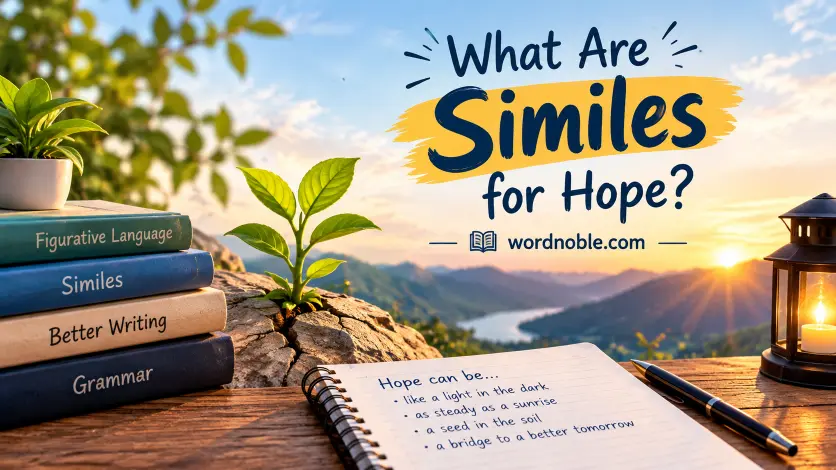
Similes for hope are comparisons that describe hope by connecting it to something familiar, usually with words such as “like” or “as.” They help readers visualize an abstract feeling through a concrete image.
For example:
Hope is like a candle glowing in the darkness.
The comparison suggests that hope provides light and guidance during a difficult situation.
Hope is an abstract emotion, so it can be difficult to describe literally. Similes solve this problem by connecting hope with recognizable things such as sunlight, seeds, stars, birds, flowers, bridges, and flames.
These comparisons are a form of figurative language and are widely useful in creative writing, poetry, storytelling, speeches, personal reflections, and English literature.
Similes for hope compare hope to something positive, resilient, or illuminating using “like” or “as.” They make the abstract feeling of hope more vivid and understandable.
Understanding the Meaning of Similes for Hope
Hope represents a belief or feeling that something positive may happen, even when circumstances are difficult. Because hope cannot be physically seen or touched, writers often use imagery to communicate it.
A simile turns that invisible emotion into a picture.
Consider:
Hope is like a seed beneath the soil.
A seed may not be visible, but it contains the possibility of growth. The comparison therefore presents hope as something quiet that can eventually become something greater.
Another example is:
Hope is like sunlight after a storm.
Here, sunlight represents relief, renewal, and the possibility of better circumstances.
Similes for hope can communicate several related ideas:
- optimism during difficult moments
- confidence in the future
- emotional strength
- patience and perseverance
- recovery after hardship
- possibility and opportunity
- encouragement and motivation
- renewal and fresh beginnings
The strongest comparison depends on the specific kind of hope a writer wants to express.
Why Do Writers Use Similes for Hope?
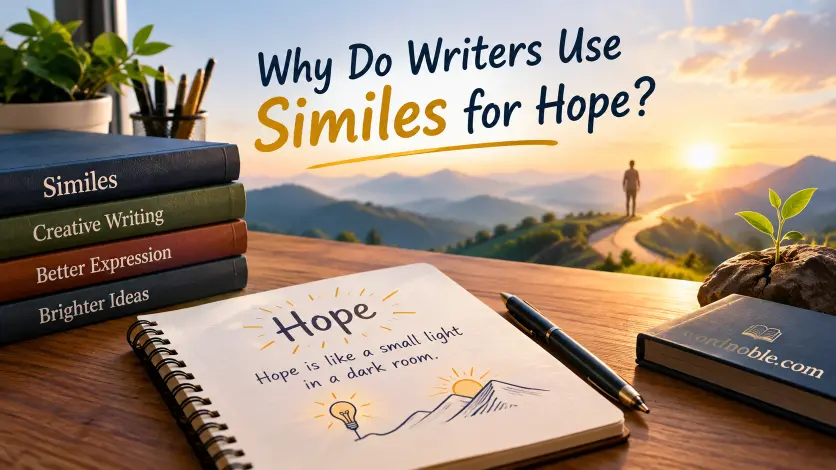
Writers use similes because abstract emotions become easier to understand when connected to familiar experiences.
A comparison can also create sensory language. Instead of simply telling readers that a character feels hopeful, a writer can show that feeling through light, movement, color, sound, nature, or physical objects.
For example:
Weak:
She felt hopeful.
More vivid:
Her hope was like a small flame refusing to go out.
The second sentence gives the reader an image of persistence. The flame becomes a representation of emotional strength.
Similes can therefore improve:
- descriptive writing
- emotional storytelling
- poetry
- character development
- speeches
- essays
- personal narratives
- literary analysis
Similes for hope are figurative expressions that compare hope with a familiar person, object, experience, or natural phenomenon to communicate its emotional qualities. They can emphasize hope’s brightness, strength, persistence, growth, comfort, or ability to survive difficult circumstances.
How Similes for Hope Change Meaning by Context
The same general idea of hope can produce different meanings depending on the context.
Storytelling
In stories, hope can reveal a character’s emotional development. A comparison with a flame may suggest persistence, while a comparison with a seed may suggest slow growth.
Poetry
Poetry often uses imaginative and symbolic comparisons. Hope may be compared with stars, dawn, flowers, birds, rivers, or other elements of nature.
Casual Speech
Everyday conversation usually benefits from simple comparisons that are easy to understand.
For example:
“Her encouragement was like a ray of sunshine.”
Humor
A humorous simile can make hope sound exaggerated or playful.
“His hope was like a phone battery at one percent, but somehow still alive.”
Academic Writing
Academic writing generally requires controlled and purposeful figurative language. A simile may be appropriate when analyzing literature, explaining imagery, or discussing a writer’s technique.
Types of Similes for Hope
🐾 Animal-Based Similes
Animal comparisons can communicate movement, resilience, freedom, or persistence.
Examples:
- Hope is like a bird waiting to spread its wings.
- Hope is like a loyal dog waiting by the door.
- Hope is like a butterfly emerging from its cocoon.
Meaning: These comparisons present hope as something alive, persistent, patient, or capable of transformation.
📡 Technology-Based Similes
Technology can provide modern comparisons for hope, especially in contemporary writing.
Examples:
- Hope is like a signal that keeps searching for a connection.
- Hope is like a phone light glowing during a power outage.
- Hope is like a backup file waiting to restore what was lost.
Meaning: These comparisons present hope as connection, guidance, recovery, or continued possibility.
🌿 Nature-Based Similes
Nature provides some of the most recognizable imagery for hope.
Examples:
- Hope is like sunlight after rain.
- Hope is like a seed waiting beneath the soil.
- Hope is like spring after a long winter.
- Hope is like a star shining through the night.
Meaning: Nature-based comparisons often communicate renewal, patience, growth, light, and new beginnings.
😂 Humorous and Exaggerated Similes
Humorous comparisons make the concept of hope lighter and more conversational.
Examples:
- His hope was like a balloon that refused to pop.
- Her hope was like a Wi-Fi signal in a crowded room, weak but still searching.
- My hope was like the last slice of pizza, somehow still within reach.
Meaning: These comparisons use exaggeration and familiar situations to make hope entertaining while keeping its positive quality.
🎭 Emotional and Behavioral Similes
These comparisons focus directly on emotional resilience and human behavior.
Examples:
- Hope is like a friend who refuses to leave.
- Hope is like a heartbeat that keeps going.
- Hope is like a quiet voice saying, “Try again.”
- Hope is like a hand reaching toward tomorrow.
Meaning: These similes portray hope as companionship, persistence, encouragement, or emotional strength.
15 Powerful Similes for Hope With Meanings
| Simile | Meaning | Category |
|---|---|---|
| Hope is like a candle in the darkness. | Hope provides light during difficult times. | Nature/Object |
| Hope is like a seed beneath the soil. | Hope can grow even when it is not yet visible. | Nature |
| Hope is like sunlight after a storm. | Hope brings relief after hardship. | Nature |
| Hope is like a star in the night sky. | Hope can guide someone through uncertainty. | Nature |
| Hope is like spring after winter. | Difficult periods can eventually lead to renewal. | Nature |
| Hope is like a bird ready to fly. | Hope represents freedom and possibility. | Animal |
| Hope is like a bridge over troubled water. | Hope can provide a path through problems. | Object |
| Hope is like a tiny flame that refuses to die. | Hope can survive adversity. | Object |
| Hope is like a door waiting to open. | Hope represents an opportunity or possibility. | Object |
| Hope is like a compass pointing forward. | Hope encourages someone to keep moving ahead. | Object |
| Hope is like a quiet friend beside you. | Hope provides emotional support. | Emotional |
| Hope is like a heartbeat that continues. | Hope represents persistence and survival. | Emotional |
| Hope is like a message from tomorrow. | Hope connects the present with a better possibility. | Creative |
| Hope is like a rainbow after rain. | Hope can follow a period of sadness or difficulty. | Nature |
| Hope is like a light at the end of a tunnel. | Hope suggests that hardship may have an ending. | Nature |
Context Table: Choosing the Right Simile for Hope
| Context | Meaning | Use Case | Example |
|---|---|---|---|
| Difficult situation | Strength during hardship | Stories, speeches | Hope is like a candle in the darkness. |
| New beginning | Renewal | Poetry, essays | Hope is like spring after winter. |
| Future opportunity | Possibility | Creative writing | Hope is like a door waiting to open. |
| Emotional support | Comfort | Personal writing | Hope is like a quiet friend beside you. |
| Perseverance | Continuing despite difficulty | Motivational writing | Hope is like a heartbeat that continues. |
| Guidance | Direction during uncertainty | Stories | Hope is like a compass pointing forward. |
| Recovery | Improvement after hardship | Narratives | Hope is like sunlight after a storm. |
| Growth | Potential developing slowly | School writing | Hope is like a seed beneath the soil. |
| Humor | Positive feeling with exaggeration | Casual conversation | Hope is like a phone battery at one percent. |
| Transformation | Change and possibility | Poetry | Hope is like a butterfly emerging from its cocoon. |
How to Use Similes for Hope in Writing
A simile works best when it adds meaning rather than simply decorating a sentence.
1. Identify the Feeling
First decide what kind of hope you want to describe.
Is it:
- fragile?
- strong?
- uncertain?
- persistent?
- joyful?
- comforting?
- growing?
Then choose an image that naturally represents that quality.
2. Choose a Relevant Comparison
😊If hope is fragile, a small flame may work.
If hope is growing, a seed may be better.
If hope represents renewal, spring may create a stronger image.
3. Use Specific Imagery
Instead of choosing a vague comparison, select something readers can picture clearly.
Less specific:
Hope was like something good.
More specific:
Hope was like a single candle glowing across the dark room.
4. Consider the Tone
A serious poem may require a delicate comparison, while a humorous conversation can use an exaggerated modern image.
5. Avoid Explaining Too Much
A strong simile often communicates its meaning naturally. Let the image do some of the work.
How Similes Improve Creative Writing
Similes can make writing more memorable because they activate the reader’s imagination.
Compare:
The character had hope.
with:
The character carried hope like a small lantern through the darkness.
The second sentence creates visual imagery and gives hope a physical presence.
This technique can strengthen:
- imagery
- emotional depth
- character description
- atmosphere
- symbolism
- reader engagement
- descriptive language
Similes also help students move beyond simple statements and develop more expressive writing.
Simile vs. Metaphor
A simile makes a comparison using words such as like or as.
Simile:
Hope is like a candle in the darkness.
A metaphor makes the comparison directly.
Metaphor:
Hope is a candle in the darkness.
Both expressions connect hope with a candle, but the grammatical structure differs.
| Simile | Metaphor |
|---|---|
| Uses like or as | Makes a direct comparison |
| Hope is like a candle. | Hope is a candle. |
| Comparison is explicit | Comparison is more direct |
| Often easy for beginners | Can sound more symbolic |
Neither technique is automatically better. Writers choose between them based on tone, purpose, and style.
Common Mistakes When Writing Similes for Hope
Overusing Similes
Using several comparisons in every sentence can make writing feel crowded.
Better approach: Use a simile when it adds a meaningful image.
Making Illogical Comparisons
The comparison should have a recognizable connection to hope.
A random comparison may confuse readers instead of helping them.
Confusing Similes With Metaphors
Remember that a simile normally signals comparison with like or as, while a metaphor makes the comparison directly.
Using Clichés Without Purpose
Common expressions can be useful, but original comparisons can make creative writing more distinctive.
Mixing Too Many Images
Jumping from candles to oceans to birds to computers within one sentence can weaken the central image.
Choose one strong comparison and develop it clearly.
Usage Guide: Do and Don’t
Do
- Choose comparisons that match the intended emotion.
- Use familiar images when clarity matters.
- Use sensory language to make hope vivid.
- Adapt the comparison to the writing context.
- Experiment with nature, objects, animals, and modern technology.
- Keep the comparison easy to understand.
- Use originality when appropriate.
Don’t
- Add a simile to every sentence.
- Force a comparison that does not make sense.
- Mix several unrelated images together.
- Explain an obvious comparison repeatedly.
- Confuse a metaphor with a simile.
- Sacrifice clarity just to sound poetic.
Natural Chat Responses Using Similes for Hope
Here are some natural ways people might use similes for hope in everyday conversation:
- “Keep going. Hope is like a little light that can help you find your way.”
- “I still have hope. It’s like a tiny flame that refuses to go out.”
- “Things may be difficult now, but hope is like spring after winter.”
- “Her message gave me hope like sunlight coming through the clouds.”
- “I’m holding onto hope like a lifeline.”
These sound more conversational than highly formal literary comparisons and can work in texts, messages, personal reflections, or informal conversations.
Related Figurative Language Terms
Understanding related concepts can help you use similes more effectively.
Figurative Language
Figurative language uses words creatively to communicate ideas beyond their most literal meanings. Similes and metaphors are two common forms.
Sensory Language
Sensory language describes experiences through sight, sound, touch, taste, smell, or other perceptual details.
Descriptive Writing
Descriptive writing uses precise details and imagery to help readers imagine people, places, objects, emotions, and experiences.
Auditory Imagery
Auditory imagery focuses on sounds. While it is not specifically required for writing about hope, it can be combined with emotional imagery to create a richer scene.
Metaphor vs. Simile
Both create comparisons, but similes generally use explicit comparison words such as “like” or “as,” while metaphors make direct comparisons.
Why Are Similes Important in English Literature?
Similes are important in English literature because they allow writers to communicate abstract ideas through concrete imagery.
Emotions such as hope, fear, love, loneliness, anger, and sadness can be difficult to describe literally. Figurative comparisons give these ideas shape and help readers connect emotionally with a text.
In literary analysis, students may examine a simile to understand:
- characterization
- symbolism
- mood
- theme
- imagery
- tone
- emotional development
- the writer’s creative technique
A simile can therefore contribute much more than decoration. It can help reveal what a character feels or what a literary passage is trying to communicate.
How Students Can Use Similes for Hope
Students can use similes for hope in essays, creative writing assignments, poetry, speeches, journal entries, and descriptive paragraphs.
For example:
Creative writing:
“Even after losing everything, Maya held onto hope like a seed waiting for spring.”
Poetry:
“Hope shone like a distant star.”
Speech:
“Hope is like a bridge that helps us move from difficulty toward possibility.”
When completing a school assignment, students should make sure the comparison fits the topic instead of adding figurative language simply to make the writing sound complicated.
FAQs:
What Are Similes for Hope?
Similes for hope are figurative comparisons that describe hope by connecting it to something familiar. They commonly use words such as “like” or “as.” For example, “Hope is like a candle in the darkness” compares hope with a candle to emphasize its ability to provide light and guidance during difficult circumstances. These comparisons make an abstract emotion easier for readers to visualize.
What Is a Good Simile for Hope?
A strong simile for hope is “Hope is like a candle in the darkness.” It clearly communicates the idea of finding light during a difficult period. Other useful comparisons include hope being like a seed beneath the soil, sunlight after a storm, spring after winter, or a star in the night sky. The best choice depends on the specific meaning and tone of your writing.
What Are Some Examples of Similes for Hope?
Examples include “Hope is like a seed beneath the soil,” “Hope is like sunlight after a storm,” “Hope is like a star in the night sky,” and “Hope is like a small flame that refuses to die.” Each comparison emphasizes a different quality. Seeds suggest growth, sunlight suggests relief, stars suggest guidance, and flames suggest persistence.
What Are Some Funny Similes for Hope?
Funny similes can compare hope with familiar modern situations. For example, “Hope is like a phone battery at one percent, somehow still alive.” Another playful example is “His hope was like the last slice of pizza, somehow still within reach.” Humorous comparisons work particularly well in casual conversations, social posts, lighthearted stories, and creative writing with an informal tone.
What Are Some Poetic Similes for Hope?
Poetic similes often use nature and beautiful visual imagery. Examples include “Hope is like a star hidden behind clouds,” “Hope is like dawn after a sleepless night,” and “Hope is like a flower opening after rain.” These comparisons can create a gentle, emotional tone and work well in poems, reflective writing, literary passages, and inspirational speeches.
What Is the Difference Between a Simile and a Metaphor?
A simile makes an explicit comparison, usually with “like” or “as.” For example, “Hope is like a candle.” A metaphor makes the comparison directly: “Hope is a candle.” Both forms connect two ideas, but their grammatical construction differs. Similes often make the comparison more obvious, while metaphors can create a stronger or more symbolic statement.
How Do You Use Similes for Hope in Writing?
Start by deciding what quality of hope you want to communicate. Then choose an image that naturally represents that quality. For example, use a seed for growing hope, a flame for persistent hope, or sunlight for renewed hope. Place the simile where it adds emotional or descriptive value, and avoid using so many comparisons that the writing becomes difficult to follow.
Why Are Similes Useful for Describing Hope?
Hope is an abstract emotion, so readers cannot physically see it. A simile gives that invisible feeling a recognizable image. Comparing hope with a candle, seed, star, or sunrise helps readers understand its qualities through something familiar. This makes writing more vivid, memorable, and emotionally expressive while strengthening the connection between an abstract idea and a concrete image.
How Can Students Use Similes for Hope?
Students can use similes for hope in essays, poems, stories, speeches, and descriptive writing. A simple example is “Hope is like a seed waiting to grow.” Students should choose comparisons that directly support their subject and explain the intended meaning when necessary. Using one clear, relevant simile is generally more effective than filling a paragraph with unrelated comparisons.
Why Are Similes for Hope Important in English Literature?
Similes help literary writers turn abstract emotions into vivid images. Hope can be represented through light, nature, movement, growth, or other concrete experiences. Readers can then interpret not only the emotion itself but also its role in a character, scene, theme, or larger message. For students, identifying and explaining such comparisons is also an important part of understanding figurative language and literary techniques.
Conclusion:
Similes for hope give writers a simple but powerful way to describe an abstract emotion through vivid imagery. Comparing hope with a candle, seed, star, sunrise, spring, or another meaningful image helps readers understand qualities such as persistence, growth, guidance, comfort, and renewal.
The most effective similes are not simply beautiful; they fit the context and communicate a clear idea. Whether you are writing a poem, story, essay, speech, or personal reflection, choose a comparison that matches the feeling you want your reader to experience.
Once you understand how similes connect abstract emotions with concrete images, your descriptive writing can become clearer, more creative, and much more memorable.

I am Naqash Ayub, proudly writing for WordNoble, where I focus on creating clear, informative, and SEO-friendly content. I enjoy turning detailed information into simple, trustworthy articles that help readers find the answers they need.