
You’re staring at a blank page, trying to describe how a heart feels when someone walks into the room. “Pounding” sounds tired.
“Racing” has been used a thousand times. You need something fresher. That’s where similes for heart come in. A good simile compares the heart to something familiar, so readers feel the emotion instead of just reading about it.
The heart is one of the richest subjects in writing. It can be heavy, light, broken, full, or wild. Each state calls for a different comparison. A heart can beat like a drum in a storm or feel as fragile as spun glass. It can also be as warm as a fireplace in winter.
Below, you’ll find similes for heart grouped by feeling: love, fear, grief, joy, and courage. You’ll also see how to pick the right comparison for your sentence and avoid clichés. Let’s start with the most popular category, similes that capture love.
Similes for heart are comparisons that describe the heart, emotions, love, courage, or feelings by using “like” or “as.” They make emotional ideas more vivid and memorable.
What Do Similes for Heart Mean?
A simile for the heart compares the heart or an emotion connected with it to something familiar. The comparison usually uses words such as like or as.
For example:
- Her heart was like a warm fireplace.
- His heart felt as heavy as a stone.
- Their hearts beat like drums.
These sentences do more than state a feeling. They create an image.
A heart cannot literally be a fireplace, stone, or drum in these examples. The comparison is figurative language used to communicate an emotional or physical experience more clearly.
Heart-related similes can describe:
- love
- kindness
- courage
- sadness
- excitement
- fear
- heartbreak
- generosity
- loneliness
- happiness
- emotional strength
The best comparison depends on the feeling and context.
How Do Similes for Heart Work?
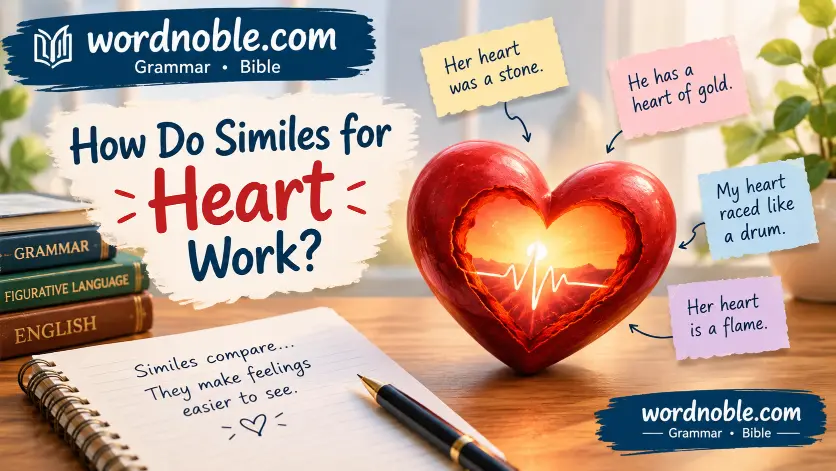
A heart simile connects an abstract emotion to something readers already understand.
For example, saying:
“She had a kind heart.”
tells the reader about her personality.
But:
“Her heart was like a gentle sunrise.”
creates a more sensory image. The sunrise suggests warmth, beauty, hope, and calm.
This is one reason similes are important in creative writing. Emotions can be difficult to describe directly because readers cannot physically see feelings such as love or courage. A carefully chosen comparison gives those feelings shape.
Similes can also create different moods. A heart compared with a fire may suggest passion. A heart compared with ice may suggest emotional distance. And a heart compared with a bird may suggest freedom or excitement.
The comparison itself helps determine the emotional meaning.
Why Do Writers Use Similes for Heart?
Writers use heart similes because they make emotional descriptions more vivid.
1. They Make Abstract Feelings Concrete
Love, grief, hope, and courage are abstract ideas. A simile connects them to something familiar.
2. They Create Imagery
A strong comparison helps readers form a mental picture. This is especially useful in poetry, fiction, personal writing, and descriptive passages.
3. They Add Emotion
Instead of simply saying that someone is sad, a writer can compare the person’s heart to something heavy, empty, cold, or broken.
4. They Improve Descriptive Writing
Similes help ordinary sentences become more expressive without requiring complicated vocabulary.
5. They Build Mood
Warm, bright comparisons can create positive emotions, while dark, cold, or broken comparisons can create sadness or tension.
Similes for heart are figurative comparisons used to describe emotions, personality, love, courage, sadness, or the heart itself by connecting it to a familiar person, object, animal, or natural element. They usually use “like” or “as” to create clearer emotional imagery.
Contextual Meaning: How Heart Similes Change by Situation
The same type of comparison can communicate different ideas depending on where it appears.
Storytelling
In fiction, heart similes can reveal a character’s emotional state without directly explaining it.
Example:
His heart was like a locked door.
This may suggest that the character is emotionally closed or unwilling to trust others.
Poetry
Poetry often uses heart similes to create strong imagery and emotional depth.
Example:
Her heart was like a candle glowing through the darkness.
The comparison can suggest hope, love, or emotional strength.
Casual Speech
Everyday conversations often use simple heart comparisons.
Example:
My heart was beating like a drum when I walked onto the stage.
This naturally communicates nervousness or excitement.
Humor
Exaggerated comparisons can make emotional descriptions funny.
Example:
My heart jumped like a rabbit when I saw the exam paper.
The unusual image creates a playful effect.
Academic Writing
Formal academic writing generally requires restraint. Similes can be useful in literary analysis or when discussing figurative language, but they should not replace precise factual explanations.
Simile Taxonomy: Types of Similes for Heart
🐾 Animal-Based Similes for Heart
Animal comparisons can communicate movement, courage, fear, freedom, or gentleness.
Examples:
- Her heart fluttered like a bird.
Meaning: She felt excited or nervous. - His heart was as brave as a lion.
Meaning: He showed courage. - My heart jumped like a startled rabbit.
Meaning: I suddenly became frightened or surprised. - Their hearts raced like horses.
Meaning: They felt intense excitement or nervousness.
Animal imagery is especially effective when the animal has a recognizable quality that supports the intended emotion.
📡 Technology-Based Similes for Heart
Modern comparisons can give heart descriptions a contemporary feel.
Examples:
- Her heart pulsed like a notification on a busy phone.
Meaning: Her excitement kept demanding attention. - His heart was like a battery running low.
Meaning: He felt emotionally exhausted. - My heart raced like a computer processing too many commands.
Meaning: I felt overwhelmed or anxious.
Technology-based similes can work particularly well in contemporary fiction, social media writing, and humorous descriptions.
🌿 Nature-Based Similes for Heart
Nature provides some of the most poetic comparisons.
Examples:
- Her heart was like a blooming garden.
Meaning: She was full of happiness, kindness, or love. - His heart felt as cold as winter snow.
Meaning: He seemed emotionally distant. - Her heart was like sunlight after a storm.
Meaning: She brought hope after a difficult period. - His heart was as steady as an old oak tree.
Meaning: He was emotionally strong and dependable.
Nature-based imagery is common in poetry and descriptive literature because it gives emotional ideas a visual and sensory quality.
😂 Funny and Exaggerated Similes for Heart
Humorous similes often exaggerate feelings for comic effect.
- My heart jumped like popcorn in a hot pan.
- Her heart raced like a squirrel late for work.
- His heart was beating like a drum at a noisy parade.
- My heart dropped like a phone with no protective case.
These comparisons are not meant to be literal. Their exaggerated quality makes the emotion entertaining.
🎭 Emotional and Behavioral Similes
These comparisons focus directly on feelings and behavior.
- Her heart was as light as a feather.
Meaning: She felt happy and carefree. - His heart was heavy like a rain-filled cloud.
Meaning: He felt sad or worried. - Her heart was like an open book.
Meaning: She expressed her feelings honestly. - His heart was as hard as stone.
Meaning: He appeared emotionally unkind or insensitive.
15 Similes for Heart With Meanings
| Simile Sentence | Meaning | Category | Clarity Explanation |
|---|---|---|---|
| Her heart was like a warm fireplace. | She was comforting and caring. | Nature/Object | A fireplace suggests warmth and comfort. |
| His heart was as heavy as a stone. | He felt deeply sad. | Object | A heavy stone represents emotional weight. |
| Her heart fluttered like a bird. | She felt excited or nervous. | Animal | A fluttering bird suggests quick emotional movement. |
| His heart was brave like a lion. | He was courageous. | Animal | Lions are commonly associated with bravery. |
| My heart raced like a drumbeat. | I felt excited or anxious. | Sound | Rapid beats suggest strong emotion. |
| Her heart was like a blooming flower. | She felt happy or loving. | Nature | A blooming flower suggests growth and beauty. |
| His heart was as cold as ice. | He seemed emotionally distant. | Nature | Ice represents coldness and emotional distance. |
| Her heart was like sunlight after rain. | She brought hope and happiness. | Nature | Sunlight after rain suggests relief and renewal. |
| My heart jumped like a startled rabbit. | I became suddenly frightened. | Animal | A startled rabbit reacts quickly to danger. |
| Their hearts beat like racing drums. | They were extremely excited. | Sound | Drums create an image of fast, powerful beats. |
| His heart was like an open door. | He was welcoming and trusting. | Object | An open door suggests acceptance. |
| Her heart was as light as a feather. | She felt carefree. | Object | A feather represents lightness. |
| My heart felt like a cracked mirror. | I felt emotionally broken. | Object | A cracked mirror suggests damage and sadness. |
| His heart was like a quiet lake. | He was calm and peaceful. | Nature | A quiet lake suggests stillness. |
| Her heart burned like a bright flame. | She felt strong passion. | Nature | Fire suggests intensity and passion. |
Context Table: Choosing the Right Heart Simile
| Context | Meaning | Use Case | Example |
|---|---|---|---|
| Love | Strong affection | Poetry, romance | Her heart was like a blooming rose. |
| Sadness | Emotional pain | Stories, personal writing | His heart was as heavy as stone. |
| Courage | Bravery | Fiction, speeches | Her heart was brave like a lion. |
| Happiness | Joy and lightness | Creative writing | His heart was as light as a feather. |
| Fear | Sudden alarm | Stories, conversation | My heart jumped like a rabbit. |
| Hope | Renewal | Poetry | Her heart was like sunlight after rain. |
| Kindness | Warmth and care | Character descriptions | His heart was like a warm fireplace. |
| Emotional distance | Coldness | Fiction | Her heart was as cold as ice. |
| Excitement | Rapid emotion | Conversation | My heart raced like a drum. |
| Peace | Calmness | Poetry, description | His heart was like a quiet lake. |
How to Use Similes for Heart Naturally in Writing
A simile works best when it supports the meaning of the sentence instead of simply decorating it.
Start With the Emotion
First decide what you want the reader to understand.
Is the character:
- happy?
- frightened?
- heartbroken?
- loving?
- confident?
- lonely?
- excited?
- calm?
Then choose an image that naturally represents that feeling.
Choose a Familiar Comparison
Readers understand familiar objects and experiences quickly.
For sadness, a heavy stone may work better than an obscure reference. For warmth, a fireplace may create a clearer image than an unusual comparison.
Match the Mood
A romantic scene may benefit from flowers, stars, sunlight, or warmth. A tense scene may need sharper imagery such as racing drums, storms, or startled animals.
Avoid Explaining Too Much
Once the simile clearly communicates the emotion, allow the image to work.
Instead of writing:
Her heart was like a warm fireplace, which means she was kind, caring, comforting, and welcoming.
a story can simply say:
Her heart was like a warm fireplace.
The reader can interpret the image naturally.
How to Make Heart Similes More Creative
To create original comparisons, think beyond the most common images.
Instead of always using:
- heart like a rose
- heart like a stone
- heart like fire
- heart like ice
consider everyday experiences, sounds, technology, weather, animals, architecture, or movement.
For example:
Her heart was like a window catching the first light of morning.
This creates a more specific image than simply saying her heart was happy.
A strong simile often contains three parts:
Emotion + familiar image + meaningful connection
For example:
His heart was as steady as an old lighthouse.
The lighthouse suggests reliability and strength, giving the comparison a specific emotional purpose.
Simile vs Metaphor: What Is the Difference?
A simile makes a comparison using words such as like or as.
Simile:
Her heart was like a garden.
A metaphor makes the comparison directly without using “like” or “as.”
Metaphor:
Her heart was a garden.
Both forms create imagery, but their grammatical structures differ.
| Simile | Metaphor |
|---|---|
| Uses like or as | Makes a direct comparison |
| Her heart was like a garden. | Her heart was a garden. |
| Usually signals the comparison clearly | Often sounds more direct |
| Common in descriptive writing | Common in poetry and literary writing |
Neither form automatically makes writing better. The best choice depends on the tone and effect you want.
Common Mistakes When Using Heart Similes
1. Overusing Similes
Using a comparison in every sentence can make writing feel crowded.
Use similes where the image adds something meaningful.
2. Choosing Illogical Comparisons
A comparison should have a recognizable connection.
If a heart is compared to something completely unrelated without explanation, readers may struggle to understand the intended meaning.
3. Mixing Similes and Metaphors
Remember:
“Her heart was like ice” is a simile.
“Her heart was ice” is a metaphor.
4. Using Clichés Too Often
Common comparisons are useful for beginners, but creative writing can become more memorable when familiar ideas are expressed in fresh ways.
5. Ignoring Context
A peaceful scene may not need an aggressive or frightening heart comparison. Always match the imagery to the situation.
Usage Guide: Do and Don’t
👍 Do
- Choose comparisons that support the emotion.
- Use familiar imagery when clarity matters.
- Match the simile to your writing’s mood.
- Experiment with nature, objects, animals, and sounds.
- Use similes to make abstract emotions easier to visualize.
- Read the sentence aloud to check whether it sounds natural.
❌ Don’t
- Add similes to every sentence.
- Use a comparison just because it sounds impressive.
- Mix up similes and metaphors.
- Choose confusing images without purpose.
- Explain an obvious comparison repeatedly.
- Let figurative language hide the main idea.
Natural Chat-Style Responses Using Heart Similes
Here are some casual ways heart similes can appear in everyday conversation:
“My heart was beating like a drum when they called my name.”
“Her heart felt as light as a feather after hearing the good news.”
“That message made my heart jump like a startled rabbit.”
“His heart was like an open door; he trusted everyone.”
“After the argument, my heart felt as heavy as a stone.”
These sound natural because they connect familiar emotions with recognizable experiences.
Related Terms and Semantic Concepts
Understanding heart similes also connects to several important English language concepts.
Figurative Language
Figurative language communicates ideas beyond their literal meanings. Similes and metaphors are two major forms.
Auditory Imagery
Auditory imagery creates a sense of sound. Heart-related writing can use sounds such as drums, beats, tapping, or pounding to represent excitement, fear, or anxiety.
Sensory Writing
Sensory writing appeals to the senses to make descriptions more vivid. Heart similes can combine emotional meaning with visual, auditory, tactile, or movement-based imagery.
Descriptive Writing
Descriptive writing uses precise details and imagery to help readers experience a person, place, object, or emotion.
Metaphor vs Simile
Both compare ideas, but a simile typically uses like or as, while a metaphor makes a direct comparison.
FAQs:
1. What Are Similes for Heart?
Similes for heart are figurative comparisons that describe the heart or emotions connected with it. They commonly use “like” or “as” to connect an emotional idea with something familiar. For example, “Her heart was like a warm fireplace” compares kindness and comfort with the warmth of a fireplace. These comparisons make emotions easier to visualize and can add depth to creative and descriptive writing.
2. What Is a Good Simile for a Heart?
A good heart simile depends on the emotion you want to describe. For kindness, you might write, “Her heart was like a warm fireplace.” And for sadness, “His heart was as heavy as a stone” communicates emotional weight. For excitement, “Her heart raced like a drum” creates a sense of rapid movement. The strongest simile is one whose image clearly supports the intended feeling.
3. What Are Some Similes for a Broken Heart?
Broken-heart similes often use images of damaged, empty, heavy, or fragile objects. Examples include “Her heart felt like a cracked mirror” and “His heart was as fragile as thin glass.” These comparisons suggest emotional pain without stating it directly. Writers can also use images such as storms, fallen leaves, shattered objects, or empty rooms to communicate loneliness and heartbreak.
4. What Are Some Funny Similes for Heart?
Funny heart similes usually exaggerate emotions by comparing the heart with something unexpected. For example, “My heart jumped like popcorn in a hot pan” humorously describes sudden excitement or fear. Another example is “Her heart raced like a squirrel late for work.” These comparisons work well in casual writing, humorous stories, social posts, and dialogue because their exaggeration creates a playful tone.
5. What Are Some Poetic Similes for Heart?
Poetic heart similes often use nature, light, weather, and movement to create emotional imagery. Examples include “Her heart was like sunlight after rain,” “His heart was as calm as a quiet lake,” and “Her heart burned like a distant flame.” These comparisons allow poets and creative writers to communicate complex emotions through sensory language rather than direct explanation.
6. What Is the Difference Between a Heart Simile and a Heart Metaphor?
A heart simile normally uses “like” or “as” to make a comparison, while a metaphor makes the comparison directly. For example, “Her heart was like a garden” is a simile. “Her heart was a garden” is a metaphor. Both are forms of figurative language, but the simile explicitly signals the comparison while the metaphor presents the comparison as a direct statement.
7. How Can I Use Heart Similes in Writing?
Start by identifying the emotion you want to communicate. Then choose an image that naturally represents that feeling. For example, use warmth for comfort, ice for emotional distance, or a racing drum for excitement. Place the simile where it adds meaning rather than adding one to every sentence. This approach keeps descriptive writing vivid while maintaining clarity and natural flow.
8. Why Are Heart Similes Important in English Literature?
Heart similes help writers express emotions through imagery. Literature frequently explores love, grief, courage, fear, hope, and relationships, all of which can be difficult to communicate through literal language alone. A carefully chosen comparison allows readers to connect an abstract emotion with a familiar sensory experience. This makes descriptions more memorable and can contribute to tone, characterization, and mood.
9. How Can Students Use Similes for Heart?
Students can use heart similes in creative writing, poetry, essays about figurative language, classroom assignments, and character descriptions. A simple approach is to identify an emotion and connect it with a familiar object, animal, or natural element. For example, a student might write, “Her heart was as light as a feather after hearing the news.” The comparison communicates happiness clearly.
10. Can Heart Similes Improve Descriptive Writing?
Yes. Heart similes can make emotional descriptions more vivid when they are relevant and precise. Instead of simply saying a character is nervous, a writer can describe the heart as beating like a drum. This gives the reader an image of the experience. However, similes should support the writing rather than overwhelm it. One strong comparison can often be more effective than several weak ones.
Conclusion:
Similes for heart give writers a simple way to turn emotions into vivid images. A heart can be compared with a warm fireplace to suggest kindness, a stone to express sadness, a bird to show nervous excitement, or sunlight to communicate hope. The key is choosing an image that naturally matches the feeling.
Strong similes do more than make sentences sound beautiful. They improve imagery, support characterization, establish mood, and help readers connect with abstract emotions.
Whether you are writing a poem, story, school assignment, or everyday description, use comparisons with purpose. When the image fits the emotion, a simple sentence can become much more memorable.

I am Naqash Ayub, proudly writing for WordNoble, where I focus on creating clear, informative, and SEO-friendly content. I enjoy turning detailed information into simple, trustworthy articles that help readers find the answers they need.