

Loneliness rarely announces itself with the right words. You reach for “sad” or “isolated,” and they just sit there, flat and lifeless, missing the ache you’re actually trying to describe. That’s where similes for lonely earn their keep they turn a vague feeling into something you can almost touch.
A house with the lights off. A phone that never buzzes. A chair at a table built for two. These comparisons don’t just decorate a sentence; they make readers feel the isolation instead of just reading about it.
Whether you’re writing poetry, a personal essay, a song, or simply trying to journal your way through a hard week, the right metaphor for loneliness can say in five words what paragraphs of explanation never could.
Below, you’ll find a collection of similes some quiet and aching, some sharp and unexpected organized so you can find the exact shade of emotional isolation you’re trying to capture. Start with the ones that stop you mid-scroll, because those are usually the ones worth stealing.
What Are Similes for Lonely?

Similes for lonely are comparisons that describe loneliness by using like or as. They connect a lonely person, place, or feeling to something familiar, such as an abandoned house, a solitary bird, or a fading star.
For example:
She felt as lonely as a single star in a sky full of darkness.
This comparison makes loneliness easier to imagine. Instead of simply saying someone feels lonely, it shows the emotional experience through a vivid image.
Similes for lonely are figurative comparisons that use like or as to express feelings of isolation, separation, or emotional emptiness through familiar images.
Understanding the Meaning of Lonely Similes
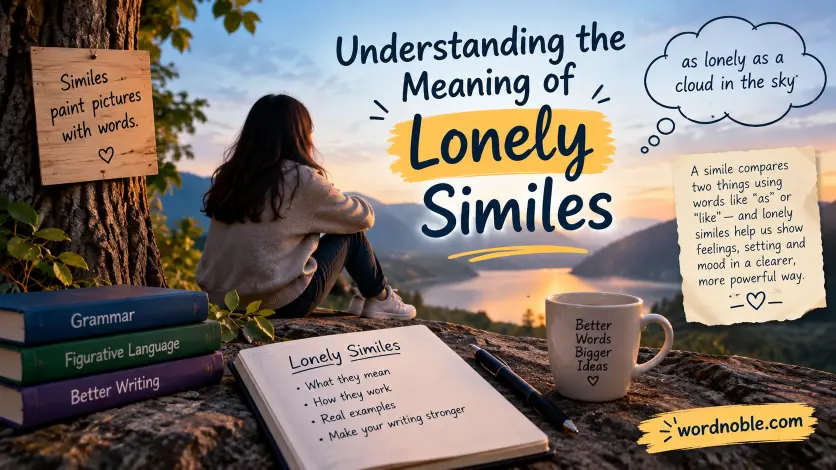
A simile for lonely does more than replace the word lonely. It gives the feeling a shape, setting, sound, or emotional texture.
Compare these two sentences:
- He was lonely.
- He was as lonely as a lighthouse surrounded by endless sea.
The first sentence states a fact. The second creates an image of separation and distance. Readers can picture the lighthouse standing alone, surrounded by water, with no one nearby.
Loneliness can be:
- Physical: Being alone in a place.
- Emotional: Feeling disconnected even when others are present.
- Social: Having few meaningful relationships.
- Temporary: Missing someone who is far away.
- Deep: Feeling invisible, forgotten, or misunderstood.
The best simile matches the specific kind of loneliness you want to express.
Similes for lonely are examples of figurative language used to communicate isolation or emotional separation through comparison. They help readers understand loneliness by connecting an abstract feeling to a recognizable person, object, animal, place, or natural scene. These comparisons are useful in creative writing, poetry, storytelling, conversation, and English literature because they make emotional descriptions more vivid and memorable.
Why Writers Use Similes for Lonely
Loneliness is an abstract emotion, so it can be difficult to describe precisely. Similes make it more concrete.
They create visual imagery
A lonely person may be compared to an empty chair, a distant moon, or a forgotten house. These images allow readers to picture the emotion.
They communicate emotional depth
Different comparisons suggest different forms of loneliness. A single candle may suggest quiet sadness, while an abandoned island may suggest deep isolation.
They make writing memorable
Simple statements can be quickly forgotten. A fresh comparison gives readers an image they may remember long after reading it.
They support sensory language
Loneliness can be described through visual, auditory, and tactile imagery. An empty hallway, a silent phone, or a cold window can make the emotion feel real.
They strengthen creative writing
Similes help writers build atmosphere, develop characters, and express feelings without explaining every emotion directly.
Simile Taxonomy: Types of Similes for Lonely
Animal-Based Similes
Animals often represent solitude, separation, or the need for companionship.
- As lonely as a wolf howling at the moon suggests isolation and a longing for connection.
- As lonely as a bird without its flock expresses separation from friends or a community.
- As lonely as a lost puppy suggests vulnerability and the desire for comfort.
- As lonely as a fish in an empty pond creates an unusual image of being alone where companionship should exist.
- As lonely as a cat on an empty rooftop suggests quiet, distant solitude.
Animal comparisons work especially well in stories, poems, and emotional descriptions because they connect loneliness with recognizable behavior.
Object-Based and Technology-Based Similes
Objects can show loneliness through emptiness, silence, or disconnection.
- As lonely as an empty chair at a crowded table suggests emotional exclusion.
- As lonely as a phone that never rings expresses waiting for contact.
- As lonely as a message left unread suggests being ignored or forgotten.
- As lonely as a single key without a lock conveys a sense of not belonging.
- As lonely as a forgotten photograph suggests memories and lost connections.
These comparisons are effective in modern writing because they connect emotional experiences to familiar everyday objects.
Nature-Based Similes
Nature provides some of the strongest images of solitude.
- As lonely as a single star in a cloudy sky suggests distance and separation.
- As lonely as a tree standing alone in a field expresses independence mixed with isolation.
- As lonely as an island in a restless sea suggests being surrounded yet disconnected.
- As lonely as a leaf drifting through autumn conveys separation and uncertainty.
- As lonely as a lighthouse on a distant shore suggests standing apart from others.
Nature-based similes are especially useful in poetry and descriptive writing because they create strong visual imagery.
Humorous and Exaggerated Similes
Funny similes can describe loneliness without making the tone entirely sad.
- As lonely as a sock after losing its pair gives loneliness a playful, familiar image.
- As lonely as a pizza slice at a salad party suggests being out of place.
- As lonely as a group-chat message nobody answers humorously describes being ignored.
- As lonely as a penguin at a beach party exaggerates the feeling of not belonging.
- As lonely as a single French fry at the bottom of an empty box creates a lighthearted image of isolation.
Humorous similes work best in casual conversation, comedy, social posts, and light creative writing.
Emotional and Behavioral Similes
Some comparisons focus directly on how loneliness feels or behaves.
- As lonely as a voice speaking into silence suggests a lack of response or connection.
- As lonely as a shadow with no one to follow expresses emotional emptiness.
- As lonely as a forgotten name suggests being overlooked.
- As lonely as a locked door in an empty hallway conveys emotional distance.
- As lonely as a person surrounded by strangers highlights the difference between being alone and feeling alone.
These similes are useful when describing internal emotions rather than physical solitude.
15 Examples of Similes for Lonely
| # | Simile Sentence | Meaning | Category |
|---|---|---|---|
| 1 | He felt as lonely as a single star in a dark sky. | He felt distant and disconnected from others. | Nature |
| 2 | She was as lonely as a bird separated from its flock. | She missed companionship and belonging. | Animal |
| 3 | The old house stood as lonely as an island in the sea. | The house was isolated and abandoned. | Nature |
| 4 | I felt as lonely as an empty chair at a family dinner. | I felt excluded despite being near others. | Object |
| 5 | He was as lonely as a phone that never rang. | He was waiting for someone to contact him. | Technology |
| 6 | The child looked as lonely as a lost puppy. | The child seemed vulnerable and in need of comfort. | Animal |
| 7 | She felt as lonely as a forgotten photograph in a drawer. | She felt overlooked and disconnected from the past. | Object |
| 8 | The tree stood as lonely as a lighthouse on a distant shore. | It stood alone, separated from everything around it. | Nature |
| 9 | He was as lonely as a message left unread. | He felt ignored or unnoticed. | Technology |
| 10 | I felt as lonely as a shadow with no one to follow. | I felt empty and without connection. | Emotional |
| 11 | The traveler was as lonely as a leaf drifting through autumn. | The traveler felt separated and uncertain. | Nature |
| 12 | She was as lonely as a wolf howling at the moon. | She longed for companionship or a response. | Animal |
| 13 | He felt as lonely as a sock without its pair. | He felt incomplete and alone in a playful way. | Humorous |
| 14 | The student was as lonely as a voice speaking into silence. | The student felt unheard or ignored. | Emotional |
| 15 | She looked as lonely as a single candle in a dark room. | Her loneliness was quiet but noticeable. | Object |
Context Table: Choosing the Right Lonely Simile
| Context | Meaning | Best Use Case | Example |
|---|---|---|---|
| Storytelling | A character feels separated from others. | Character development | He felt as lonely as a bird without its flock. |
| Poetry | Loneliness is expressed through imagery. | Emotional or reflective poems | She stood as lonely as a tree in winter. |
| Casual Speech | A person feels left out or disconnected. | Conversations and messages | I felt as lonely as a phone that never rings. |
| Humor | Loneliness is described playfully. | Jokes and social posts | He was as lonely as a sock without its pair. |
| Academic Writing | A concept is explained through figurative language. | Literary analysis | The comparison presents the character as isolated as an island. |
| Descriptive Writing | A place or scene appears empty. | Essays and creative descriptions | The abandoned house stood as lonely as a lighthouse. |
How to Use Similes for Lonely in Writing
1. Identify the exact feeling
Ask what kind of loneliness you want to describe. Is the character sad, forgotten, isolated, homesick, or emotionally disconnected?
A simile about a lost puppy suggests vulnerability. A simile about an empty chair suggests exclusion.
2. Choose an image readers recognize
The comparison should be easy to understand. Familiar objects, animals, and natural scenes often create the clearest imagery.
3. Match the tone
A serious poem may need a quiet image, such as a fading star. A humorous conversation may benefit from a comparison involving a missing sock.
4. Use sensory details
Add details that readers can see, hear, or feel.
Instead of:
He was as lonely as a house.
Try:
He was as lonely as an abandoned house, its windows dark beneath the evening rain.
The added details strengthen visual and emotional imagery.
5. Avoid explaining too much
A strong simile can communicate the feeling on its own. Let the image do some of the emotional work.
6. Keep the comparison natural
Use a simile where it adds meaning. If every sentence contains a comparison, the writing may feel crowded or artificial.
Simile vs. Metaphor: What Is the Difference?
A simile compares two things using like or as. A metaphor makes a direct comparison without those words.
| Device | Example | Explanation |
|---|---|---|
| Simile | She felt as lonely as an island. | Uses as to compare loneliness with an island. |
| Metaphor | She was an island of loneliness. | Directly describes her as an island. |
Both devices create imagery, but similes often make comparisons more explicit and accessible to readers.
Common Mistakes When Using Similes for Lonely
Overusing comparisons
Too many similes can weaken the impact of each one. Choose the strongest image instead of adding several similar comparisons.
Choosing an unclear comparison
A comparison should help readers understand loneliness. If the connection is too complicated, the meaning may become confusing.
Using a cliché without purpose
Phrases such as lonely as a cloud may be familiar, but they can feel predictable. A fresh comparison often creates stronger writing.
Confusing loneliness with physical solitude
Someone can be alone without feeling lonely. A person may also feel lonely while surrounded by people. Choose a simile that matches the emotional meaning.
Mixing simile and metaphor incorrectly
Remember that similes use like or as, while metaphors make direct comparisons.
Ignoring the tone
A funny simile may not suit a tragic scene. A deeply poetic comparison may sound unnatural in a casual text.
Usage Guide: Do and Don’t
Do
- Choose comparisons that match the emotion.
- Use familiar images when clarity matters.
- Add sensory details to strengthen imagery.
- Select fresh comparisons for creative writing.
- Match the simile to the tone of the scene.
- Use similes to show feelings rather than simply naming them.
Don’t
- Add a simile to every sentence.
- Use comparisons that readers cannot understand.
- Choose humor when the context requires seriousness.
- Repeat the same image throughout a paragraph.
- Confuse a simile with a metaphor.
- Let figurative language hide the main meaning.
Natural Chat Responses Using Similes for Lonely
Here are some casual ways to use similes for lonely in everyday messages:
- I feel as lonely as a phone that never rings today.
- This place is as lonely as an empty classroom after school.
- I’m as lonely as a sock without its pair.
- She looked as lonely as a bird separated from its flock.
- I feel as lonely as a single star in a cloudy sky.
- That unread message made me feel as lonely as a voice in silence.
Related Figurative Language Terms
Understanding these related concepts can help you use similes more effectively:
- Figurative language: Language that communicates ideas beyond literal meaning.
- Auditory imagery: Words that help readers imagine sounds, such as silence, whispers, or distant calls.
- Sensory language: Descriptions connected to sight, sound, touch, taste, and smell.
- Metaphor vs. simile: Two comparison techniques with different structures.
- Descriptive writing: Writing that creates vivid images through carefully chosen details.
- Personification: Giving human qualities to nonhuman things.
- Symbolism: Using an object, place, or image to represent a deeper idea.
- English literature devices: Techniques writers use to create meaning, emotion, and imagery.
FAQs:
1. What are similes for lonely?
Similes for lonely are comparisons that describe loneliness using like or as. They connect the feeling of isolation to something familiar, such as an empty chair, a single star, or a lost animal. These comparisons help readers understand emotional distance more clearly. For example, She felt as lonely as a bird without its flock suggests that she misses companionship and belonging.
2. What is a good simile for lonely?
A good simile for lonely is as lonely as a single star in a dark sky. It creates a clear image of distance and separation. Another effective choice is as lonely as an empty chair at a crowded table, which shows emotional exclusion. The best simile depends on whether you want to express sadness, isolation, homesickness, or feeling ignored.
3. What are some funny similes for lonely?
Funny similes for lonely describe isolation in a playful way. Examples include as lonely as a sock without its pair, as lonely as a single French fry at the bottom of an empty box, and as lonely as a message nobody answers. These comparisons work well in casual conversations, humorous writing, captions, and social media posts because they make loneliness relatable without sounding overly serious.
4. What are some poetic similes for lonely?
Poetic similes for lonely often use nature, silence, and distance. Examples include as lonely as a lighthouse on a distant shore, as lonely as a leaf drifting through autumn, and as lonely as a candle in an empty room. These images create atmosphere and emotional depth. They are especially useful in poems, reflective writing, and scenes where the setting mirrors a character’s feelings.
5. How do you use similes for lonely in writing?
Start by identifying the exact type of loneliness you want to express. Then choose an image that matches it. For example, use a phone that never rings for loneliness caused by waiting, or an empty chair for feeling excluded. Introduce the comparison naturally with like or as. Avoid adding several similes when one strong image can communicate the feeling effectively.
6. What is the difference between a simile and a metaphor for lonely?
A simile compares loneliness using like or as, while a metaphor makes a direct comparison. For example, He felt as lonely as an island is a simile. He was an island of loneliness is a metaphor. Both express isolation, but the simile makes the comparison explicit, while the metaphor presents the image more directly.
7. Why are similes for lonely important in English literature?
Similes for lonely help writers turn an abstract emotion into a vivid image. Literature often explores isolation, belonging, grief, and separation, and comparisons make these themes easier to feel and understand. A well-chosen simile can reveal a character’s emotional state, create atmosphere, and strengthen the reader’s connection to the text. It also makes descriptions more memorable.
8. Can similes for lonely describe a place instead of a person?
Yes. Similes can describe lonely places, objects, animals, and people. For example, The abandoned house stood as lonely as an island in the sea describes physical isolation. The empty playground looked as lonely as a forgotten photograph creates a quiet, emotional atmosphere. Describing places through similes can also reflect a character’s feelings and strengthen the setting.
9. How can students use similes for lonely in school assignments?
Students can use similes for lonely in creative writing, poetry, descriptive essays, and literary analysis. A simile can help describe a character, establish mood, or explain how an author creates imagery. For example, a student might write, The character felt as lonely as a bird separated from its flock. The comparison makes the character’s emotional separation clear and supports the assignment’s description.
10. Can a person feel lonely even when surrounded by people?
Yes. Loneliness is an emotional experience, not simply the absence of people. Someone may feel disconnected, misunderstood, or ignored while standing in a crowded room. A simile such as as lonely as an empty chair at a crowded table captures this difference. It shows that loneliness can come from a lack of meaningful connection rather than physical isolation alone.
Conclusion
Similes for lonely make an abstract emotion easier to see, feel, and understand. Comparisons involving stars, animals, empty objects, and natural scenes can express different forms of isolation, from quiet sadness to deep emotional distance.
The strongest simile matches the exact feeling, fits the tone, and adds meaningful imagery rather than unnecessary decoration.
Whether you are writing a poem, describing a character, completing a school assignment, or sending a thoughtful message, a well-chosen comparison can make your words more powerful. Remember: the goal is not simply to say someone is lonely, but to help readers experience what that loneliness feels like.

I am Naqash Ayub, proudly writing for WordNoble, where I focus on creating clear, informative, and SEO-friendly content. I enjoy turning detailed information into simple, trustworthy articles that help readers find the answers they need.