
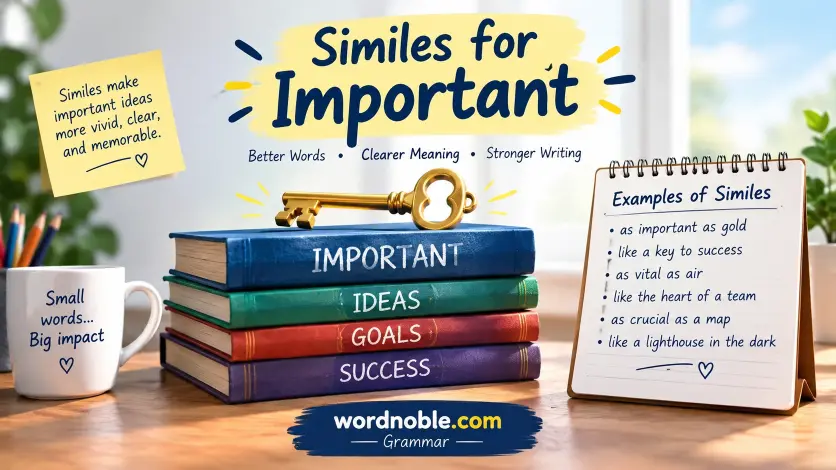
You’re writing a speech, and one sentence keeps falling flat: “This moment is very important.” The idea is right. The words are tired. What you need are fresh similes for important things, people, and moments, ones that show the weight instead of just stating it.
A good simile does that job fast. Saying something is “as vital as oxygen” or “like the keystone in an arch” gives the reader a picture they feel at once. Suddenly, importance has a shape.
Below, you’ll find comparisons for important ideas, decisions, relationships, and everyday objects, sorted so you can grab the right one quickly. Some sound poetic. Some are plain and punchy. Each one works in essays, stories, captions, and speeches.
You’ll also see how to pick a comparison that fits your tone, plus a few quick tips to keep your writing from sounding clichéd. Ready to swap that flat sentence for something memorable? Start with the first group of similes below.
Similes for important are comparisons that describe the value, significance, or necessity of something by using words such as “like” or “as.” They make the idea of importance more vivid, emotional, and memorable.
What Are Similes for Important?
Sometimes the word important feels too general. Saying that something is important tells the reader its value, but it does not always show how or why it matters.
A simile solves this problem by comparing importance with something familiar.
For example:
- Her advice was as important as a compass to a lost traveler.
- Family is like the foundation of a strong house.
- His decision was as important as the first step on a long journey.
These comparisons give the reader a mental picture. Instead of simply stating that something matters, they help the reader understand its significance through imagery.
Similes for important are useful in creative writing, poetry, essays, speeches, stories, school assignments, and everyday communication. They can express emotional importance, practical importance, social importance, personal value, or even urgency.
How Do Similes for Important Work?
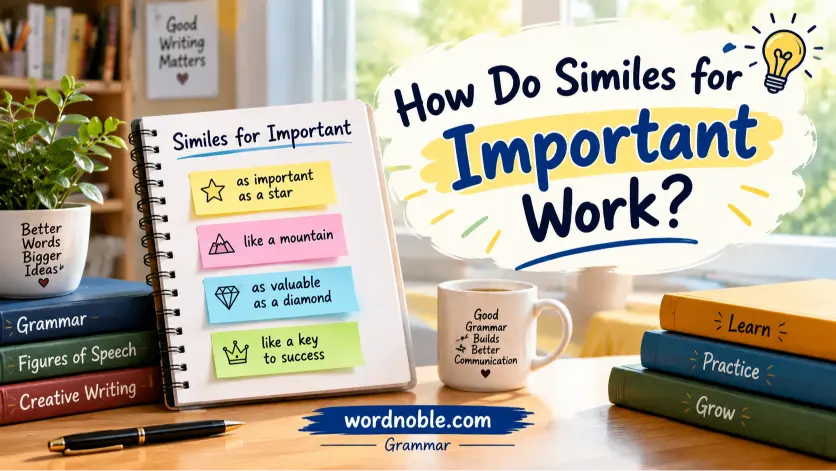
A simile connects the idea of importance to something whose value or role is already easy to understand.
The comparison may come from:
- Nature
- Animals
- Technology
- Objects
- Relationships
- Human behavior
- Everyday experiences
- Emotional situations
The strongest comparison is usually one that makes the reader immediately understand the intended meaning.
For example, comparing an important decision to a bridge across a river suggests that the decision helps someone move from one stage to another. Comparing an important person to a lighthouse suggests guidance, safety, and direction.
Why Do Writers Use Similes for Important?
Writers use similes because they turn an abstract idea into something concrete.
The word important describes significance, but significance can take many forms. A person may be important because they provide support. A decision may be important because it changes the future. A lesson may be important because it prevents a mistake.
Similes help distinguish these meanings.
They also add:
- Imagery that helps readers visualize an idea
- Emotion that makes writing more memorable
- Clarity by connecting abstract ideas with familiar things
- Emphasis when a writer wants to highlight significance
- Creativity in essays, poems, stories, and speeches
This is why similes are an important part of figurative language and creative writing techniques.
A simile for important is a figurative comparison that explains the significance or value of a person, object, idea, action, or event by relating it to something familiar. It commonly uses like or as to make importance easier to understand, visualize, or feel.
Understanding Different Kinds of Importance
The meaning of a simile can change depending on what makes something important.
Personal Importance
A person, memory, or experience can be important because of its emotional value.
Example:
Her friendship was like a warm blanket on a cold night.
The comparison suggests comfort, security, and emotional value.
Practical Importance
Something may be important because it performs an essential function.
Example:
Clean water is as important as fuel is to an engine.
The comparison emphasizes necessity.
Emotional Importance
Something can matter deeply because of its effect on feelings.
Example:
His words were like medicine for her wounded heart.
This shows emotional significance rather than practical necessity.
Future Importance
A decision may be important because it influences what happens later.
Example:
That choice was like the first stone in a path toward the future.
The comparison highlights long-term consequences.
Types of Similes for Important
🐾 Animal-Based Similes
Animals can represent strength, guidance, loyalty, protection, or survival. These qualities make them useful comparisons for important people, decisions, and ideas.
Examples
- His advice was like a wise owl in a dark forest.
- Her support was as important as a loyal dog beside its owner.
- The leader was like a lion protecting its pride.
- That lesson was like a bird showing a traveler the way home.
Meaning
Animal-based comparisons often give importance a sense of strength, wisdom, loyalty, protection, or guidance.
📡 Technology-Based Similes
Modern technology provides familiar comparisons for things that are necessary or central to a system.
Examples
- Her role was as important as a battery is to a phone.
- The password was like a key to the entire system.
- His message was as important as a signal during an emergency.
- Trust was like the operating system of their relationship.
Meaning
Technology-based similes work particularly well when describing necessity, connection, access, communication, or functionality.
🌿 Nature-Based Similes
Nature offers some of the most powerful imagery for expressing importance.
Examples
- Hope was like sunlight breaking through dark clouds.
- Education is as important as rain is to a growing tree.
- Her presence was like a lighthouse beside a dangerous shore.
- That decision was like a seed planted for the future.
Meaning
Nature-based comparisons can suggest growth, guidance, survival, renewal, direction, and long-term value.
😂 Funny and Exaggerated Similes
Humorous similes deliberately exaggerate importance to make a statement entertaining.
Examples
- That snack was as important to me as oxygen during a Monday morning.
- His phone was like the crown jewels of his entire universe.
- Finding my missing sock felt as important as solving a national mystery.
- Coffee was as important to him as sleep after an all-night study session.
Meaning
Funny similes use exaggeration to communicate importance while keeping the tone light and conversational.
🎭 Emotional and Behavioral Similes
These similes describe people, relationships, decisions, feelings, or actions that have strong emotional significance.
Examples
- Her mother was like an anchor during every storm.
- His apology was as important as a bridge after an argument.
- Their friendship was like a thread holding two hearts together.
- That promise was as important as a lock protecting a treasure.
Meaning
These comparisons emphasize trust, love, support, responsibility, connection, and emotional significance.
15 Creative Similes for Important
| Simile | Meaning | Category |
|---|---|---|
| Her advice was like a compass in unfamiliar territory. | It provides valuable direction. | Nature/Object |
| Family is like the foundation of a strong house. | Family provides essential support. | Object |
| Education is as important as sunlight to a growing plant. | Education helps development and growth. | Nature |
| His decision was like a bridge to a new future. | The decision created an important transition. | Object |
| Her kindness was like water in a dry desert. | Her kindness was deeply needed. | Nature |
| Trust is like the key to a locked door. | Trust makes access and connection possible. | Object |
| His words were like medicine for a wounded heart. | His words provided emotional healing. | Emotional |
| The teacher was like a lighthouse for confused students. | The teacher provided guidance. | Nature |
| That warning was as important as a flashing emergency signal. | The warning demanded attention. | Technology |
| Her friendship was like an anchor in a storm. | Her friendship provided stability. | Nature |
| The final clue was like the missing piece of a puzzle. | It completed an important understanding. | Object |
| His support was as important as a strong roof in a storm. | His support offered protection. | Object |
| That lesson was like a map for future choices. | It helped guide later decisions. | Object |
| Hope was like a small flame in a dark room. | Hope provided encouragement during difficulty. | Nature |
| The truth was as important as a key to freedom. | Knowing the truth had major significance. | Object |
Why These Similes Work
Each comparison connects importance with a recognizable function.
A compass provides direction. A foundation provides stability. Water supports life. A lighthouse provides guidance. A key provides access.
Because the reader already understands these functions, the comparison quickly communicates why something matters.
This is one of the central strengths of figurative language: the writer does not merely tell the reader what something means; the writer creates an image that demonstrates the meaning.
Similes for Important in Different Contexts
| Context | Meaning | Use Case | Example |
|---|---|---|---|
| School | Educational value | Essays and assignments | Education is like a key opening future opportunities. |
| Family | Emotional significance | Personal writing | Family is like an anchor in a storm. |
| Friendship | Support and loyalty | Stories and messages | Her friendship was like a shelter during rain. |
| Work | Practical value | Professional writing | Teamwork is like an engine powering progress. |
| Poetry | Emotional depth | Poems and creative writing | Hope was like sunlight after winter. |
| Speeches | Emphasis | Public speaking | Your vote is like a voice in a crowded room. |
| Storytelling | Character development | Fiction | His decision was like a doorway to another life. |
| Everyday speech | Casual emphasis | Conversations | My phone is like my lifeline when I travel. |
| Motivation | Future value | Inspirational writing | Every small effort is like a seed for tomorrow. |
| Relationships | Trust and connection | Personal writing | Trust is like a bridge between two people. |
How to Use Similes for Important in Your Writing
A good simile should feel natural rather than forced. Follow these steps.
1. Decide What Makes the Subject Important
Ask yourself:
Why does this matter?
Is it important because it provides:
- Support?
- Guidance?
- Safety?
- Growth?
- Love?
- Knowledge?
- Opportunity?
- Protection?
- Connection?
Once you identify the reason, finding a comparison becomes easier.
2. Find a Familiar Image
Choose something readers already understand.
For example:
- Guidance → compass
- Protection → shield
- Support → foundation
- Hope → light
- Connection → bridge
- Growth → seed
- Necessity → oxygen
3. Connect the Two Ideas
Use like or as to create the comparison.
Example:
Her guidance was like a compass.
The reader immediately understands that her guidance helps someone find direction.
4. Avoid Overexplaining
A strong simile often needs only one sentence.
Instead of writing several sentences explaining why something matters, a precise comparison can communicate the idea quickly.
5. Match the Tone
A serious essay needs a different simile from a funny text message.
For example:
Academic:
Education is like a foundation for lifelong development.
Casual:
My morning coffee is as important as my phone charger.
The comparison should fit the audience and purpose.
Simile vs. Metaphor
Similes and metaphors are both forms of figurative language, but they construct comparisons differently.
Simile
A simile usually uses like or as.
Example:
Her advice was like a compass.
The advice is being compared to a compass.
Metaphor
A metaphor directly states that one thing is another.
Example:
Her advice was a compass.
The writer does not use “like” or “as.”
Simple Difference
Simile: compares two things using like or as.
Metaphor: makes a direct comparison without like or as.
Both can communicate importance, but similes often make the comparison more explicit and accessible.
Common Mistakes When Writing Similes for Important
1. Using Too Many Similes
A paragraph filled with comparisons can become distracting.
Better: Use one strong simile where it adds meaning.
2. Choosing an Illogical Comparison
The comparison should share a meaningful quality with the subject.
Weak:
The teacher was like a banana because she was important.
There is no clear connection.
Stronger:
The teacher was like a lighthouse because she guided confused students.
3. Forgetting the Intended Meaning
A simile should clarify the subject rather than create confusion.
Before using one, ask:
What does this comparison tell the reader about importance?
4. Confusing Similes With Metaphors
Remember:
like/as = usually a simile
direct identification = metaphor
5. Using Clichés Without Purpose
Common comparisons can work, but original comparisons are often more memorable.
Instead of repeatedly using as important as gold, consider what the subject actually does and build the comparison around that function.
Do and Don’t: Using Similes Effectively
👍 Do
- Choose comparisons that have a clear connection.
- Match the simile to your audience.
- Use sensory and concrete imagery.
- Make abstract ideas easier to understand.
- Vary your comparisons.
- Use similes to strengthen meaning.
- Keep the wording natural.
- Consider emotional context.
❌ Don’t
- Fill every sentence with a simile.
- Use random comparisons.
- Force the words “like” or “as.”
- Mix incompatible images.
- Explain the same comparison repeatedly.
- Use exaggerated language in formal writing without purpose.
- Sacrifice clarity for creativity.
Natural Chat Responses Using Similes for Important
Here are some casual examples that sound natural in everyday conversation:
1. “Your advice was like a compass when I had no idea what to do.”
2. “That meeting was as important as the final exam.”
3. “You’re like an anchor for me when everything gets stressful.”
4. “That little reminder was like a wake-up call.”
5. “This document is as important as my passport right now!”
6. “Her support was like having a safety net when things went wrong.”
These examples show that similes for important do not have to sound formal. They can work naturally in texts, conversations, social posts, and personal messages.
Related Figurative Language Terms
Understanding similes for important becomes easier when you connect them with other writing concepts.
Figurative Language
Language that communicates ideas beyond their most literal meaning. Similes and metaphors are common forms.
Auditory Imagery
Language that creates an impression of sound. It is particularly useful when writers want readers to imagine hearing something.
Sensory Writing
Writing that appeals to sight, sound, smell, taste, touch, or other sensory experiences.
Descriptive Writing
Writing that uses specific details and imagery to help readers form a clear mental picture.
Metaphor vs. Simile
Both compare ideas, but similes typically use like or as, while metaphors make a direct comparison.
Creative Writing Techniques
Methods such as imagery, symbolism, personification, simile, metaphor, and sensory description help writers create stronger and more memorable prose.
Why Similes Matter in English Literature
Similes have a long history in English literature because they allow writers to communicate complex emotions and abstract ideas through familiar images.
Concepts such as love, fear, importance, loneliness, courage, sadness, hope, and beauty can be difficult to describe literally. A carefully chosen comparison gives these ideas shape.
For students, recognizing similes also improves literary analysis. When reading a poem, story, or novel, students can ask:
- What two things are being compared?
- What quality connects them?
- Why did the writer choose this comparison?
- What emotion does it create?
- Does the comparison strengthen the central idea?
These questions move beyond simply identifying a literary device. They help explain how figurative language creates meaning.
How Students Can Use Similes for Important
Students can use similes for important in:
- English essays
- Creative writing
- Poetry
- School assignments
- Personal narratives
- Speeches
- Literary analysis
- Descriptive paragraphs
- Story openings
- Character descriptions
For example:
Basic:
Education is important.
With a simile:
Education is like a key that can open doors to future opportunities.
The second sentence gives the reader a clearer image of why education matters.
However, students should avoid adding a simile simply to make writing sound complicated. The comparison should support the main idea.
How to Make Your Similes More Creative
A simple way to create original similes is to start with the function of the subject.
Suppose you want to describe an important friend.
Ask:
What does this friend do?
Maybe the friend provides:
- Guidance
- Comfort
- Protection
- Motivation
- Stability
Now find an object or natural element that performs a similar function.
Guidance → compass
Comfort → warm blanket
Protection → shield
Motivation → spark
Stability → anchor
Then build the comparison:
Her friendship was like an anchor during difficult times.
This method creates meaningful similes instead of random comparisons.
FAQs:
1. What are similes for important?
Similes for important are comparisons that explain how valuable, necessary, meaningful, or significant something is. They commonly use like or as to connect an important subject with a familiar object, person, experience, or part of nature. For example, saying that education is like a key suggests that education is valuable because it can open opportunities.
2. What is an example of a simile for important?
One example is: “Her advice was like a compass in unfamiliar territory.” This means her advice was important because it provided direction. Another example is “Family is like the foundation of a strong house.” Here, the foundation represents stability and support. The best similes explain why something is important rather than simply repeating the word important.
3. What are some funny similes for important?
Funny similes exaggerate importance for entertainment. For example: “Coffee is as important to me as oxygen on Monday morning.” Another is: “Finding my missing charger was like discovering buried treasure.” These comparisons are not meant to be taken literally. Their exaggeration creates humor while still showing that the speaker considers something highly significant.
4. What are poetic similes for important?
Poetic similes use vivid imagery and emotion to express significance. Examples include “Hope was like a small flame in a dark room” and “Her presence was like sunlight after a long winter.” These comparisons communicate more than practical importance. They can suggest emotional value, comfort, renewal, guidance, or deep personal meaning.
5. What is the difference between a simile and a metaphor?
A simile makes a comparison using words such as like or as, while a metaphor makes the comparison directly. For example, “Her advice was like a compass” is a simile. “Her advice was a compass” is a metaphor. Both are forms of figurative language, but the structure of the comparison is different.
6. How can I use similes for important in writing?
First, identify why the subject is important. Then choose something familiar that performs a similar function. For example, if someone provides guidance, compare them with a compass or lighthouse. If someone provides support, an anchor or foundation may work. Finally, connect the ideas naturally using “like” or “as” and make sure the comparison fits your tone.
7. Why are similes important in English literature?
Similes help literary writers express abstract ideas through concrete imagery. Concepts such as love, fear, hope, courage, and significance can be difficult to explain directly. A strong comparison gives readers something familiar to visualize. Similes also contribute to tone, emotion, characterization, symbolism, and descriptive detail, making literary passages more vivid and memorable.
8. How can students use similes for important?
Students can use them in essays, poems, stories, speeches, assignments, and descriptive paragraphs. A simile can make a basic statement more vivid. Instead of writing “Education is important,” a student might write “Education is like a key that opens doors to future opportunities.” The comparison adds imagery while explaining the value of education.
9. Can similes for important be used in poetry?
Yes. Poetry often benefits from similes because they create compact images and emotional associations. A poet can compare an important person to a lighthouse, an important memory to a photograph, or hope to a small flame. The comparison should contribute to the poem’s mood or meaning rather than exist only for decoration.
10. How do I create an original simile for important?
Start by asking what makes the subject important. If it gives guidance, think of a compass. If it provides support, think of a foundation or anchor. And if it creates growth, think of sunlight or rain. Then form a comparison using “like” or “as.” This approach produces similes based on meaning rather than random objects.
Conclusion:
Similes for important help writers explain significance in a vivid and memorable way. Instead of simply saying that someone or something matters, a comparison can show why it matters. A person can be like a lighthouse, advice can be like a compass, education can be like a key, and support can be like an anchor.
The strongest similes are clear, purposeful, and connected to the quality being described. They should add imagery without making the sentence confusing or overloaded. Whether you are writing a poem, completing a school assignment, creating a story, or simply improving everyday language, thoughtful similes can make your writing more expressive.
When you need to describe importance, look beyond the word important. Find an image that shows its value and let the comparison make the meaning memorable.

I am Naqash Ayub, proudly writing for WordNoble, where I focus on creating clear, informative, and SEO-friendly content. I enjoy turning detailed information into simple, trustworthy articles that help readers find the answers they need.