
Picture this: you’re writing a thank-you card, and “you’re a good friend” just sits there, flat and forgettable. That’s the exact moment similes for good earn their keep. A well-chosen comparison “good as gold,” “good as new” turns a plain compliment into something the reader actually feels.
This kind of language isn’t just for writers chasing pretty prose. Teachers use it to make lessons stick. Parents use it to praise kids in ways that land. Marketers use it to make a product review sound genuine instead of generic. Even a simple birthday message gets warmer with the right phrase for goodness or kindness woven in.
What follows is a hand-picked collection of similes for good, sorted by where they work best everyday conversation, creative writing, kids’ stories, and more. You’ll also find quick notes on tone, so you’re not accidentally comparing your grandmother’s cooking to something that sounds sarcastic.
Ready to build a bigger vocabulary for praise? Let’s start with the classics everyone recognizes first.
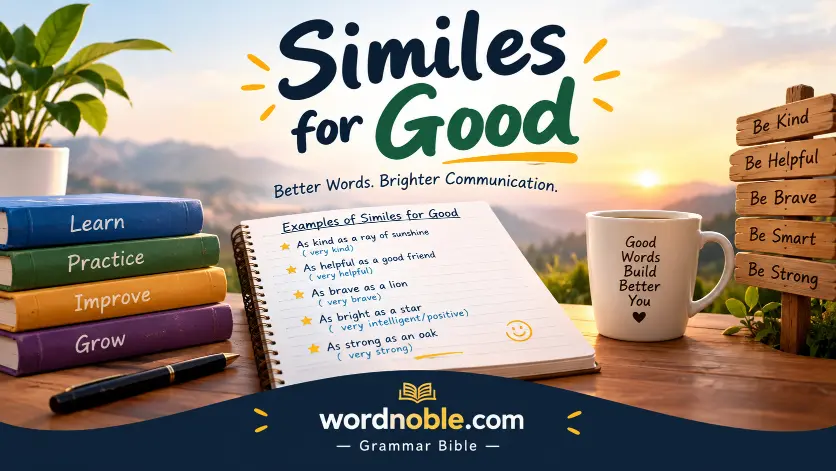
Similes for good are comparisons that describe something positive, excellent, kind, useful, or admirable by using like or as. For example, “Her kindness was like a warm blanket on a cold day.”
What Are Similes for Good?
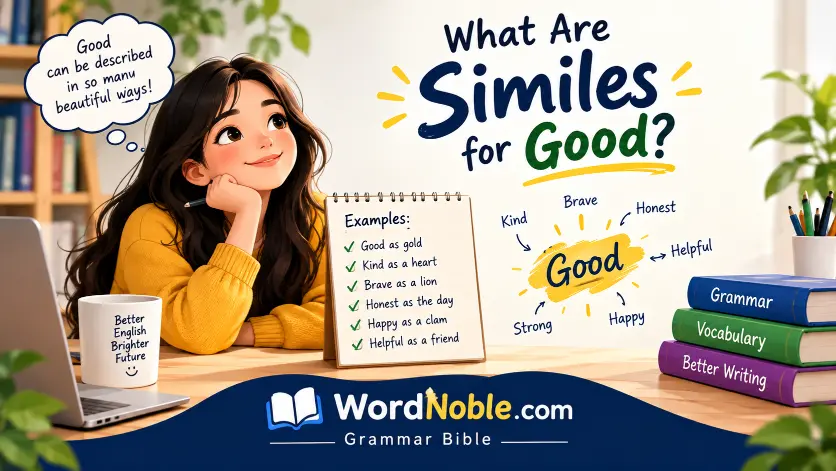
A simile for good compares a positive quality, action, person, experience, or thing with something familiar to make its meaning clearer or more vivid.
For example:
- He was as good as gold.
- Her kindness was like sunshine.
- The meal was as good as a feast.
- His heart was like a safe harbor.
The word good can have many meanings. It may describe kindness, quality, skill, usefulness, beauty, morality, success, or satisfaction. Because of this, similes for good can take many forms.
A strong simile does more than replace the word good. It gives the reader an image, feeling, or sensory impression. Instead of simply saying, “She is a good friend,” you might write, “She is like a lighthouse in a storm.” The comparison suggests that she provides guidance and support when things become difficult.
Similes are a form of figurative language and are widely used in creative writing, poetry, storytelling, speeches, conversations, and English literature.
Why Do Writers Use Similes for Good?
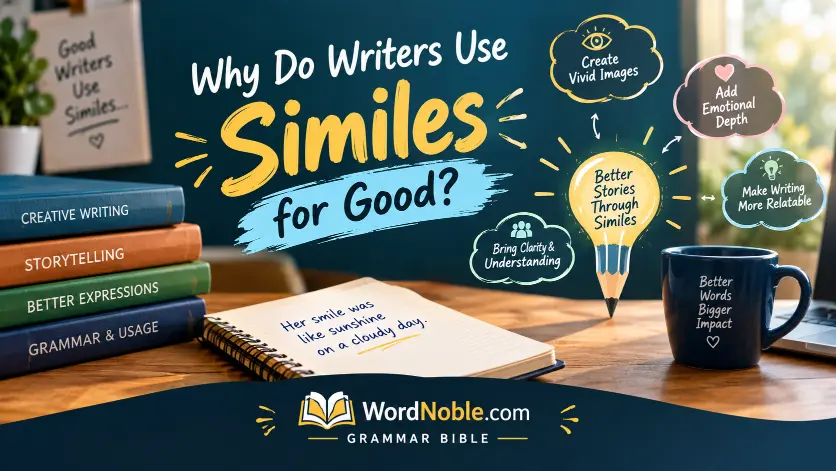
Writers use these comparisons because the word good is often too general to communicate a precise feeling.
Compare:
The teacher was good.
with:
The teacher was like a bright lamp, making difficult ideas easier to understand.
The second sentence creates an image and tells us how the teacher was good.
Similes can communicate different shades of positive meaning, including:
- kindness
- generosity
- excellence
- beauty
- usefulness
- reliability
- intelligence
- courage
- happiness
- moral goodness
- impressive quality
They also add imagery, making abstract qualities easier for readers to visualize or feel.
Similes for good are figurative expressions that compare a positive quality or experience with another familiar thing to make the description more vivid, specific, and emotionally meaningful. They commonly use comparison words such as like or as and can describe kindness, excellence, beauty, usefulness, character, or other forms of positive value.
How Similes for Good Work
A simile usually connects two different things through a recognizable shared quality.
Thing being described + comparison + familiar image
For example:
Her kindness + was like + sunshine.
The reader understands that her kindness is not literally sunshine. Instead, the comparison communicates warmth, comfort, and positivity.
This is why similes are particularly useful when describing abstract ideas. Qualities such as kindness, goodness, loyalty, or excellence cannot always be seen directly. A familiar comparison gives those qualities a clearer shape.
Contextual Meanings of Similes for Good
The meaning of a simile can change depending on where it appears.
Storytelling
In stories, similes help readers understand characters and experiences quickly.
Example:
The old woman was as kind as an angel.
The comparison emphasizes her gentle and caring personality.
Poetry
Poetry often uses more imaginative or emotional comparisons.
Example:
Her goodness flowed like a quiet river.
The image suggests continuous, peaceful kindness.
Casual Speech
Everyday conversations tend to use simple, familiar expressions.
Example:
That burger was as good as gold.
The speaker means the burger was extremely satisfying or valuable to them.
Humor
Funny similes exaggerate a quality for comic effect.
Example:
That cake was as good as finding money in an old jacket.
The comparison makes the speaker’s excitement playful and relatable.
Academic Writing
Formal writing should use similes selectively. They can clarify an abstract idea, but excessive figurative language may make an explanation less precise.
Types of Similes for Good
🐾 Animal-Based Similes
Animal comparisons can communicate qualities such as loyalty, courage, gentleness, or energy.
- He is as loyal as a dog.
Meaning: He is extremely faithful and dependable. - She was as gentle as a dove.
Meaning: She behaved in a peaceful and tender way. - He was as brave as a lion.
Meaning: He showed great courage.
Animal imagery works well because readers already associate certain animals with recognizable characteristics.
📡 Technology-Based Similes
Technology-based comparisons can make modern descriptions feel familiar and creative.
- Her advice was like a GPS for my problems.
Meaning: Her advice helped me find the right direction. - His memory was like a powerful search engine.
Meaning: He could recall information very easily. - The new system was as smooth as a well-designed app.
Meaning: It worked efficiently and without unnecessary difficulty.
These comparisons can be particularly effective in contemporary writing.
🌿 Nature-Based Similes
Nature provides some of the most recognizable imagery for positive qualities.
- Her smile was like sunshine.
Meaning: Her smile created warmth and happiness. - His kindness was like a gentle breeze.
Meaning: His kindness felt calm and comforting. - The experience was as refreshing as rain after a dry summer.
Meaning: The experience felt extremely pleasant and renewing.
Nature-based similes are common in poetry because they create strong sensory imagery.
😂 Humorous and Exaggerated Similes
Humorous similes intentionally stretch an idea to make the description entertaining.
- That pizza was as good as winning the lottery.
Meaning: The speaker thought it was exceptionally enjoyable. - His cooking was like magic after three cups of coffee.
Meaning: His cooking was surprisingly energetic or impressive. - The movie was as good as finding an extra dessert in the fridge.
Meaning: The movie was an unexpectedly pleasant experience.
Exaggeration makes these comparisons memorable, especially in casual writing and conversation.
🎭 Emotional and Behavioral Similes
These similes focus on personality, feelings, and behavior.
- She was as kind as a caring grandmother.
Meaning: She showed warmth and compassion. - His support was like a safety net.
Meaning: He helped protect someone during difficult moments. - Her friendship was like a warm blanket.
Meaning: Her friendship provided comfort and security.
These comparisons are especially useful when writing about relationships and character development.
15 Examples of Similes for Good
| Simile | Meaning | Category | Clarity |
|---|---|---|---|
| He was as good as gold. | He was very well-behaved or trustworthy. | Traditional | Simple positive comparison |
| Her kindness was like sunshine. | Her kindness made people feel happy and warm. | Nature | Creates warmth and light imagery |
| She was as gentle as a dove. | She was peaceful and caring. | Animal | Connects gentleness with a dove |
| His advice was like a compass. | His advice provided useful direction. | Object | Shows guidance |
| The meal was as good as a feast. | The meal was excellent and satisfying. | Food | Emphasizes quality |
| Her friendship was like a safe harbor. | Her friendship provided comfort and security. | Nature | Suggests protection |
| He was as loyal as a dog. | He was extremely faithful. | Animal | Highlights loyalty |
| The book was like a treasure chest of ideas. | The book contained many valuable ideas. | Object | Shows intellectual value |
| Her smile was like morning sunshine. | Her smile created happiness and warmth. | Nature | Creates positive visual imagery |
| His performance was as good as gold. | His performance was excellent. | Traditional | Strong positive evaluation |
| The solution was like a key to a locked door. | The solution solved an important problem. | Object | Shows usefulness |
| Her voice was as comforting as soft rain. | Her voice created calmness. | Nature | Uses auditory and sensory imagery |
| His generosity was like an overflowing river. | He gave freely and abundantly. | Nature | Emphasizes abundance |
| The new idea was like a breath of fresh air. | The idea felt new and refreshing. | Nature | Suggests renewal |
| The experience was as good as a dream. | The experience was wonderful. | Emotional | Emphasizes delight |
Similes for Good in Different Contexts
| Context | Meaning | Use Case | Example |
|---|---|---|---|
| Friendship | Kindness and reliability | Personal writing | Her friendship was like a safe harbor. |
| School | Skill or helpfulness | Student assignments | The teacher was like a guiding star. |
| Food | Excellent quality | Reviews or conversation | The dessert was as good as a celebration. |
| Personality | Positive character | Character descriptions | He was as kind as a gentle dove. |
| Poetry | Beauty and emotion | Poems | Her goodness flowed like a river. |
| Storytelling | Character development | Fiction | His courage was like a flame in darkness. |
| Humor | Exaggerated praise | Casual conversation | That burger was as good as winning the lottery. |
| Work | Excellence or usefulness | Professional writing | Her solution was like a key fitting a lock. |
How to Use Similes for Good Naturally
The strongest similes are specific rather than automatic.
Instead of writing:
She was very good.
Ask yourself:
What kind of good?
Is she:
- kind?
- talented?
- helpful?
- generous?
- intelligent?
- trustworthy?
- beautiful?
- courageous?
- successful?
Then choose a comparison that matches the exact quality.
For example:
Kind:
She was like sunshine on a cold morning.
Helpful:
His advice was like a compass.
Brave:
She was as brave as a lion.
Reliable:
He was like a strong bridge.
This approach creates more precise and meaningful writing.
How to Make Your Similes More Creative
Choose Familiar Images
Readers understand common objects quickly. A lighthouse, bridge, sunshine, river, compass, or shelter can communicate meaning without lengthy explanation.
Use Sensory Language
Try to involve sight, sound, touch, taste, or movement.
For example:
Her kindness was like warm sunlight on my face.
The comparison becomes stronger because the reader can imagine the warmth.
Match the Comparison to the Quality
A simile should have a logical connection.
If you are describing generosity, an overflowing river may work well because both suggest abundance.
Avoid Random Comparisons
A creative comparison is not automatically a good comparison. Readers should be able to understand why the two things are connected.
Simile vs. Metaphor
A simile makes a comparison using words such as like or as.
Simile:
Her kindness was like sunshine.
A metaphor makes a direct comparison without using like or as.
Metaphor:
Her kindness was sunshine.
Both expressions communicate a positive quality, but they use different grammatical structures.
A useful way to remember the difference is:
Simile = comparison is stated openly.
Metaphor = comparison is presented directly.
Common Mistakes When Writing Similes for Good
1. Overusing Similes
Using a simile in every sentence can make writing feel crowded. Choose comparisons where they add genuine meaning.
2. Using Weak Comparisons
A comparison such as He was good like a good person adds almost nothing.
A stronger version is:
He was like a lighthouse, always guiding people when they were lost.
3. Choosing an Illogical Image
The comparison should share a recognizable quality with the subject.
4. Confusing Similes With Metaphors
Remember that a simile normally uses an explicit comparison such as like or as.
5. Explaining Too Much
A strong image can often speak for itself. Avoid adding several sentences that repeat exactly what the simile already communicates.
Do and Don’t Usage Guide
Do
- Choose comparisons that fit the exact meaning of good.
- Use familiar images when clarity matters.
- Add sensory details when appropriate.
- Use similes to strengthen descriptions.
- Adapt the comparison to your audience.
- Read the sentence aloud to check its natural flow.
Don’t
- Force a simile into every paragraph.
- Use comparisons that have no clear connection.
- Mix several unrelated images together.
- Depend entirely on clichés.
- Use figurative language when a precise literal statement is clearer.
- Repeat the same comparison throughout a piece of writing.
Natural Chat-Style Examples
Here are some ways similes for good can appear naturally in everyday conversation:
Friend: How was the restaurant?
Reply: The food was as good as a homemade feast.
Friend: How is your new teacher?
Reply: She is like a guide who makes everything easier to understand.
Friend: Was the movie worth watching?
Reply: Absolutely. It was as good as finding a hidden gem.
Friend: How was your trip?
Reply: It was like a dream from beginning to end.
Friend: What do you think of your new teammate?
Reply: He is as reliable as a strong bridge.
Related Figurative Language Terms
Understanding similes for good becomes easier when you connect them with related English language concepts.
Figurative Language
Figurative language communicates ideas beyond their strict literal meanings. Similes and metaphors are two common examples.
Sensory Language
Sensory language uses descriptions connected to sight, sound, smell, taste, touch, or movement. It can make a simile more vivid.
Descriptive Writing
Descriptive writing aims to help readers imagine a person, place, object, experience, or emotion. Similes are useful tools for achieving this.
Auditory Imagery
Auditory imagery describes sounds and hearing. Although similes for good are not limited to sound, positive comparisons can include auditory details.
Metaphor vs. Simile
Both devices create comparisons, but similes explicitly signal comparison with words such as like or as, while metaphors make direct comparisons.
FAQs:
What are similes for good?
Similes for good are comparisons used to describe something positive, excellent, kind, useful, beautiful, or admirable. They commonly use like or as to connect the subject with a familiar image. For example, saying “Her kindness was like sunshine” suggests that her kindness creates warmth and happiness. These comparisons make general descriptions more specific and memorable.
What is a good example of a simile?
A simple example is “He was as good as gold.” This traditional expression can describe someone who is very well-behaved, trustworthy, or reliable. Another example is “Her smile was like sunshine,” which communicates happiness and warmth. The best example depends on the specific meaning of good that you want to express.
What are some funny similes for good?
Funny similes often exaggerate how enjoyable or impressive something is. For example, you could say, “That pizza was as good as finding money in an old jacket.” Another playful example is, “The dessert was like winning a tiny lottery.” These comparisons are not meant literally. Their exaggeration makes ordinary praise more entertaining and conversational.
What are poetic similes for good?
Poetic similes use imaginative images to communicate positive qualities with emotion and sensory detail. Examples include “Her kindness was like morning light” and “His generosity flowed like an endless river.” These comparisons create visual or emotional imagery rather than simply stating that someone is kind or generous. They work particularly well in poems, stories, and reflective writing.
What is the difference between a simile and a metaphor?
A simile makes a comparison using words such as like or as, while a metaphor makes a direct comparison. For example, “Her kindness was like sunshine” is a simile. “Her kindness was sunshine” is a metaphor. Both forms of figurative language can communicate similar ideas, but their grammatical structures and stylistic effects are different.
How can I use similes for good in writing?
First, identify what kind of goodness you want to describe. It might be kindness, talent, courage, beauty, usefulness, or quality. Then choose a familiar image that shares that characteristic. For example, describe guidance with a compass, warmth with sunshine, or reliability with a strong bridge. Keep the comparison natural and avoid adding unnecessary figurative language.
Why are similes important in English literature?
Similes help writers create imagery, emotion, characterization, and clearer descriptions. Instead of simply telling readers that a character is kind or brave, a writer can compare that quality with something familiar. This gives readers an image to visualize and an emotional connection to the description. Similes are therefore an important technique in poetry, fiction, speeches, and other forms of literature.
How can students use similes for good?
Students can use similes in creative writing, descriptive paragraphs, poems, stories, presentations, and language assignments. A student might write, “The teacher was like a lighthouse, guiding us through difficult lessons.” This is more descriptive than simply saying the teacher was good. Students should focus on choosing comparisons that clearly match the quality they want to describe.
Can similes for good describe people?
Yes. They can describe a person’s personality, behavior, talents, appearance, kindness, courage, or reliability. For example, “She was as gentle as a dove” describes a gentle personality, while “He was like a lighthouse in difficult times” describes someone who provides guidance. The comparison should match the specific positive quality being emphasized.
Can similes for good be used in everyday speech?
Yes. Similes are common in everyday conversations, especially when people want to make praise more expressive. Phrases such as “as good as gold” can sound natural in casual speech. More creative comparisons can also be used when talking about food, movies, experiences, friendships, work, or achievements. The key is choosing a comparison that feels natural for the situation.
Conclusion:
Similes for good turn a simple positive description into something readers can picture, feel, and remember. Instead of repeatedly using the general word good, writers can describe kindness as sunshine, guidance as a compass, loyalty as a faithful animal, or support as a safe harbor.
The most effective comparisons are specific, logical, and suited to the context. Whether you are writing a poem, story, school assignment, conversation, or descriptive paragraph, a well-chosen simile can add depth without making the writing complicated.
The key is to identify exactly what makes something good and then find an image that expresses that quality naturally.

I am Naqash Ayub, proudly writing for WordNoble, where I focus on creating clear, informative, and SEO-friendly content. I enjoy turning detailed information into simple, trustworthy articles that help readers find the answers they need.