
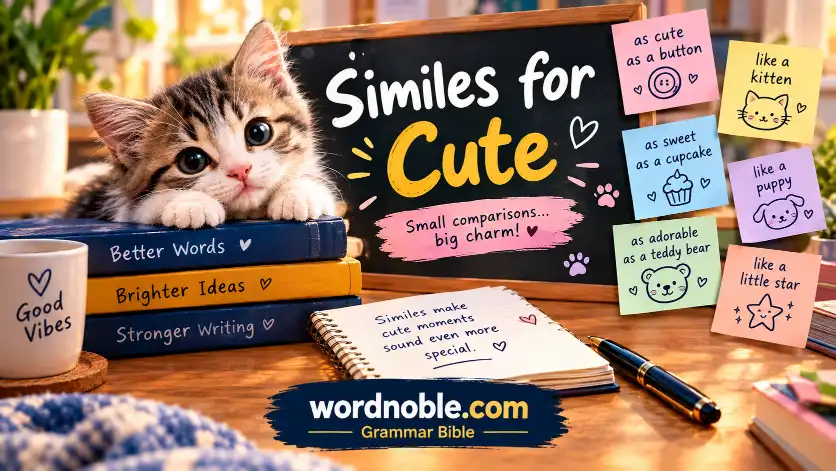
Something round, wobbly, and impossibly tiny puppy, kitten, toddler pulls the same sound out of us: an involuntary “aww.”
That instinct has a name in language too, and it lives inside similes for cute. English has stacked up dozens of playful comparisons for that heart-melting feeling, from “cute as a button” to “cute as a bunny hopping through clover.
” These phrases do more than decorate a sentence. They capture a specific flavor of adorable the kind that makes you want to squeeze something gently, or laugh out loud at how small it is. Maybe you’re writing a caption for your dog’s new haircut, describing a baby’s tiny socks, or just trying to avoid saying “cute” for the tenth time in one paragraph.
Whatever the reason, a fresh simile can turn a flat sentence into something readers actually feel. Below, you’ll find similes sorted by tone sweet, funny, poetic, and downright silly so you can pick the perfect match for whatever (or whoever) has stolen your heart today. Let’s start with the classics everyone already loves.
Similes for cute are comparisons that describe something adorable by using “like” or “as,” making the feeling of cuteness more vivid, specific, and memorable.
What Do Similes for Cute Mean?
Similes for cute are creative comparisons used to show how adorable, charming, lovable, attractive, or endearing something appears.
Instead of simply saying:
The kitten is cute.
You can make the image stronger by comparing it with something familiar:
The kitten is as cute as a tiny cloud.
The second sentence gives the reader something to imagine. The comparison transforms an abstract quality, cuteness, into a visual or emotional picture.
A good simile does not merely add decoration. It helps readers understand the exact kind of cuteness being described. A baby might be cute like a button, a puppy might be cute like a bouncing toy, and a smile might be cute like a ray of sunshine.
This makes similes an important part of figurative language, especially in creative writing, poetry, storytelling, captions, and descriptive writing.
Similes for cute are figurative expressions that compare an adorable person, animal, object, appearance, action, or moment with another familiar thing. They usually use words such as like or as to create a clearer emotional or sensory image. Writers use them to make descriptions of cuteness more specific, imaginative, memorable, and engaging.
How Do Similes for Cute Work?
A simile connects two different things that share a recognizable quality.
The basic structure is:
Subject + is/looks/seems + like/as + comparison
For example:
- Her smile was like sunshine.
- The puppy was as cute as a button.
- The baby looked like a tiny teddy bear.
- His little laugh was as sweet as a songbird.
The comparison gives “cute” a particular personality.
One simile can make something seem sweet. Another can make it seem playful, tiny, funny, innocent, or adorable.
This flexibility makes similes useful across many types of writing.
Why Do Writers Use Similes for Cute?
Writers use similes for cute for several reasons:
1. They Create Stronger Imagery
A simple adjective tells the reader something is cute. A simile helps the reader see it.
2. They Add Emotion
Comparing something cute to sunshine, flowers, puppies, or candy can create a warm emotional response.
3. They Make Writing Memorable
Creative comparisons are often easier to remember than plain descriptions.
4. They Show Instead of Simply Telling
Instead of telling readers that something is adorable, a writer can demonstrate its charm through a vivid comparison.
5. They Add Personality
A funny simile can make a cute description playful, while a poetic simile can make it gentle and emotional.
50+ Similes for Cute
Here are creative examples organized by meaning and style.
🐾 Animal-Based Similes for Cute
Animal comparisons naturally communicate innocence, playfulness, and affection.
- As cute as a puppy
Means extremely adorable, playful, and lovable. - As cute as a kitten
Describes something small, sweet, and charming. - Cute like a baby bunny
Suggests innocence and softness. - As adorable as a duckling
Highlights small size and innocent charm. - Cute like a sleepy panda
Creates a relaxed, lovable image. - As cute as a little lamb
Suggests gentleness and innocence. - Cute like a fluffy chick
Emphasizes softness and tiny proportions. - As cute as a playful puppy
Works especially well for energetic children or animals. - Cute like a tiny hedgehog
Creates a quirky and distinctive image. - As adorable as a baby koala
Suggests softness, sweetness, and innocence.
🌿 Nature-Based Similes for Cute
Nature gives writers countless images for describing gentle or beautiful forms of cuteness.
- Cute like a little flower
Suggests delicacy and beauty. - As cute as a spring morning
Creates a fresh, cheerful feeling. - Cute like a butterfly
Suggests lightness, beauty, and charm. - As adorable as a blooming flower
Works well for gentle, innocent descriptions. - Cute like a tiny cloud
Suggests softness and a fluffy appearance. - As cute as a ray of sunshine
Describes someone or something that feels warm and cheerful. - Cute like a little star
Suggests something small, bright, and special. - As sweet as a spring breeze
Gives a soft, poetic impression. - Cute like a snowflake
Suggests delicate and unique beauty. - As adorable as a field of daisies
Creates a cheerful and innocent image.
🧸 Object-Based Similes for Cute
Everyday objects can make cute descriptions easy to understand.
- As cute as a button
One of the most familiar ways to describe something adorable. - Cute like a teddy bear
Suggests softness, warmth, and affection. - As adorable as a doll
Can describe a polished or delicate appearance. - Cute like a cupcake
Gives a sweet and cheerful impression. - As cute as a little toy
Works for something tiny and charming. - Cute like a candy wrapper
Creates a colorful, playful image. - As adorable as a pocket-sized toy
Emphasizes smallness and charm. - Cute like a tiny balloon
Gives the description a light and playful quality. - As cute as a soft pillow
Suggests comfort and softness. - Cute like a tiny gift box
Makes something seem small, special, and delightful.
😂 Funny and Exaggerated Similes for Cute
Humorous similes work particularly well in conversations, captions, social posts, and casual writing.
- He was as cute as a puppy who just discovered snacks.
- She was cute like a cupcake wearing a tiny crown.
- That kitten was as cute as the internet could possibly handle.
- He looked cute like a teddy bear with a secret plan.
- The baby was as cute as a tiny celebrity avoiding the paparazzi.
- That puppy was cute like a walking ball of happiness.
- She smiled like a cartoon character who had just won the lottery.
- The little dog was as cute as a marshmallow with legs.
- He was cute like a tiny boss giving everyone orders.
- The kitten was as cute as a fluffy cloud with attitude.
These comparisons are intentionally exaggerated. Their purpose is not scientific accuracy but humor and emotional effect.
🎭 Emotional and Behavioral Similes for Cute
Sometimes cuteness comes from an action rather than appearance.
- Her smile was like sunshine.
Suggests warmth and happiness. - His laugh was as sweet as a lullaby.
Connects cuteness with a pleasant sound. - She waved like a little flower dancing in the breeze.
Makes the action feel gentle and charming. - The child giggled like a tiny bell.
Creates a cheerful auditory image. - He looked at the puppy like a child seeing magic for the first time.
Shows innocent excitement. - Her little wave was as cute as a butterfly fluttering by.
Creates a delicate visual image. - The baby slept like a peaceful little angel.
Emphasizes calmness and innocence. - He bounced around like a tiny ball of sunshine.
Describes energetic cuteness. - She smiled as sweetly as morning sunlight.
Creates a warm emotional image. - The puppy followed him like a tiny shadow.
Shows affection and playful attachment.
15 Short Similes for Cute
If you need quick phrases for captions, schoolwork, or everyday conversation, these are easy to use:
- Cute as a button.
- Cute as a puppy.
- Cute like a kitten.
- Cute as a teddy bear.
- Cute like sunshine.
- Cute as a cupcake.
- Cute like a little flower.
- Cute as a bunny.
- Cute like a tiny cloud.
- Cute as a duckling.
- Cute like a butterfly.
- Cute as a baby panda.
- Cute like a little star.
- Cute as a snowflake.
- Cute like a pocket-sized toy.
Context Table: How Similes for Cute Change by Situation
| Context | Meaning | Use Case | Example |
|---|---|---|---|
| Storytelling | Builds a visual character image | Fiction | The kitten was cute like a tiny cloud. |
| Poetry | Creates emotional imagery | Poems | Her smile was like morning sunshine. |
| Casual Speech | Makes descriptions expressive | Conversations | Your puppy is as cute as a button. |
| Humor | Adds exaggeration | Jokes and captions | He is cute like a marshmallow with legs. |
| Academic Writing | Explains descriptive language | English assignments | The author uses a simile to emphasize innocence. |
| Social Media | Creates catchy descriptions | Captions | Cute as a little ray of sunshine. |
| Children’s Writing | Makes language easy to imagine | Stories | The bunny was as cute as a fluffy cloud. |
How to Use Similes for Cute in Your Writing
The best similes feel natural rather than forced.
1. Identify What Makes the Subject Cute
Ask yourself:
- Is it small?
- Is it soft?
- Is it playful?
- Is it innocent?
- Is it cheerful?
- Is it funny?
- Is it beautiful?
Your answer can guide the comparison.
2. Choose a Familiar Comparison
Readers should understand the image quickly. Puppies, flowers, sunshine, buttons, cupcakes, clouds, and teddy bears are easy comparisons.
3. Match the Mood
A romantic poem may need a gentle simile, while a funny caption can use an exaggerated one.
4. Avoid Overexplaining
A strong simile often works in one sentence. Let the image speak for itself.
5. Use Sensory Language
Think about what readers can see, hear, feel, or imagine. This turns a basic adjective into richer descriptive writing.
Simile vs. Metaphor: What Is the Difference?
A simile makes a comparison using words such as like or as.
Her smile was like sunshine.
A metaphor makes a direct comparison without using “like” or “as.”
Her smile was sunshine.
Both are examples of figurative language, but their structures are different.
Similes often make comparisons easier to recognize because the connecting word clearly signals that the writer is comparing two things.
Common Mistakes When Writing Similes for Cute
1. Using Too Many Similes
A paragraph filled with comparisons can become distracting.
Better: Choose one or two strong comparisons.
2. Making an Illogical Comparison
The comparison should have a recognizable connection to cuteness.
A strange comparison may confuse readers instead of creating an image.
3. Confusing Similes With Metaphors
Remember:
Simile: She is cute like a kitten.
Metaphor: She is a kitten.
4. Choosing Overused Comparisons Every Time
“Cute as a button” is familiar and useful, but original comparisons can make creative writing more distinctive.
5. Ignoring Context
A playful comparison may work in a social-media caption but feel inappropriate in formal academic writing.
Do and Don’t: Using Similes for Cute
👍 Do
- Choose comparisons readers understand.
- Match the simile to the mood.
- Use vivid imagery.
- Experiment with original comparisons.
- Keep the comparison relevant.
- Use similes to strengthen descriptions.
❌ Don’t
- Fill every sentence with a simile.
- Use confusing comparisons.
- Mix up similes and metaphors.
- Force a comparison into formal writing.
- Use exaggerated language when precision matters.
- Repeat the same comparison throughout a paragraph.
Natural Chat Responses Using Similes for Cute
Here are some natural ways to use these expressions in everyday conversation:
1. “Your puppy is cute as a button! I could watch those little paws all day.”
2. “That baby is like a tiny teddy bear. So adorable!”
3. “Her smile is like sunshine. It instantly makes the room feel happier.”
4. “That kitten is as cute as a little cloud.”
5. “He looked like a tiny superhero. Honestly, way too cute!”
6. “Your new profile picture is cute like a cupcake.”
Why Similes Matter in English Literature
Similes are an important part of English literature because they help writers communicate ideas through comparison.
Instead of giving readers a plain description, writers can create imagery that connects an unfamiliar idea with something familiar.
A simile can establish:
- character personality
- emotional atmosphere
- visual imagery
- humor
- tone
- symbolism
- sensory detail
For example, describing a character as being “cute like a puppy” can suggest more than physical attractiveness. It may imply playfulness, innocence, friendliness, or youthful energy.
This is why figurative language is useful in novels, poetry, children’s literature, creative nonfiction, and descriptive writing.
Related Terms and Semantic Concepts
Understanding related concepts can help you build stronger descriptive writing.
Figurative Language
Language that communicates ideas beyond strictly literal meanings.
Sensory Language
Words that appeal to sight, sound, touch, taste, or smell.
Auditory Imagery
Language that helps readers imagine sounds. It can be useful when describing a cute laugh, giggle, voice, or playful noise.
Descriptive Writing
Writing that uses specific details to help readers form a clear mental picture.
Metaphor vs. Simile
Two major forms of figurative comparison with different grammatical structures.
Creative Writing Techniques
Methods such as imagery, personification, metaphor, simile, symbolism, and sensory description that make writing more expressive.
FAQs:
1. What are similes for cute?
Similes for cute are comparisons that describe something adorable by connecting it with another familiar thing, usually with “like” or “as.” They help readers visualize and emotionally understand the quality being described. Examples include “cute as a button,” “cute like a kitten,” and “as adorable as a teddy bear.” Writers use them in stories, poems, captions, conversations, and school assignments.
2. What are some examples of similes for cute?
Common examples include “cute as a button,” “cute like a kitten,” “as adorable as a puppy,” “cute like sunshine,” and “as cute as a teddy bear.” Each comparison creates a slightly different impression. Animal comparisons often suggest innocence or playfulness, while nature comparisons can make the description feel softer or more poetic.
3. What are funny similes for cute?
Funny similes exaggerate cuteness for comic effect. For example, you might say, “He is as cute as a marshmallow with legs,” or “She is cute like a cupcake wearing a crown.” These comparisons are not meant to be literal. Their purpose is to create an unexpected mental image that makes the description more entertaining.
4. What are poetic similes for cute?
Poetic similes describe cuteness through gentle, imaginative comparisons. Examples include “her smile was like morning sunshine,” “his laugh was as sweet as a lullaby,” and “the baby was cute like a little star.” These expressions work especially well in poetry and creative writing because they combine emotional meaning with visual or sensory imagery.
5. What is the difference between a simile and a metaphor?
A simile explicitly compares two things using words such as “like” or “as.” For example, “She is cute like a kitten” is a simile. A metaphor makes the comparison directly: “She is a kitten.” Both are forms of figurative language, but a simile usually makes the comparison more obvious to the reader.
6. How can I use similes for cute in writing?
Start by deciding what kind of cuteness you want to communicate. Then choose a familiar comparison that shares that quality. For softness, you might use a cloud; for playfulness, a puppy; for warmth, sunshine. Place the simile where it strengthens the description instead of adding it simply for decoration.
7. Why are similes important in English literature?
Similes help literary writers create imagery, emotion, characterization, and atmosphere. A comparison can communicate several qualities at once. For instance, comparing a character to a puppy may suggest innocence, energy, friendliness, or playfulness. This makes similes valuable in poetry, fiction, children’s literature, and other forms of creative writing.
8. How can students use similes for cute?
Students can use similes in descriptive paragraphs, creative stories, poems, dialogue, and English-language assignments. They should choose comparisons that clearly support the subject. A sentence such as “The puppy was as cute as a fluffy cloud” is easy to understand and gives the reader a strong visual image.
9. Can similes for cute describe actions?
Yes. Similes can describe both appearance and behavior. For example, “She waved like a little butterfly” describes an action rather than simply saying that she looks cute. Similarly, “The baby giggled like a tiny bell” combines behavior with auditory imagery, making the scene more vivid.
10. Can I create my own similes for cute?
Absolutely. Creating original similes is a useful creative-writing skill. First identify the quality you want to emphasize, such as softness, innocence, energy, or sweetness. Then find something familiar that shares that quality. Combine the two using “like” or “as.” Original comparisons can make your writing more personal and memorable.
Conclusion:
Similes for cute turn a simple description into a more vivid and memorable image. Instead of simply calling something cute, you can show its softness, innocence, playfulness, sweetness, or charm through a creative comparison. Animal, nature, object-based, humorous, and emotional similes each create a different effect.
The key is to choose a comparison that matches the feeling you want to communicate.
Whether you are writing a poem, story, school assignment, caption, or casual message, a well-chosen simile can make your language more expressive. Once you understand how comparisons work, describing cuteness becomes much more creative, specific, and engaging.

I am Naqash Ayub, proudly writing for WordNoble, where I focus on creating clear, informative, and SEO-friendly content. I enjoy turning detailed information into simple, trustworthy articles that help readers find the answers they need.