A poet once said the moon doesn’t just shine it remembers. That’s the trouble with describing it plainly; the word “bright” feels lazy next to something that has haunted lovers, guided sailors, and inspired centuries of verse.
Similes for moon give writers a way to capture that quiet magic, turning a flat description into something readers actually feel. Maybe you’re crafting a poem, polishing a novel’s atmosphere, or just searching for the right moon metaphors to make a caption stand out.
Whatever brought you here, plain comparisons like “the moon is bright” simply won’t cut it. Below, you’ll find a curated collection of similes some tender, some eerie, some downright unexpected sorted by mood and use case, so you can find the exact phrase that fits your scene.
We’ll cover everything from classic nature-inspired comparisons to fresh, modern imagery rarely used elsewhere. By the end, you won’t just have a list you’ll understand why certain comparisons work, so you can even craft your own. Let’s start with the moon at its most luminous.
Similes for moon are comparisons that describe the moon by using words such as “like” or “as” to create vivid visual, emotional, or poetic imagery.
What Do Similes for Moon Mean?
A simile for the moon compares the moon to another person, object, animal, place, or natural feature to make its appearance or mood easier to imagine.
For example:
The moon was like a silver coin floating in the sky.
The moon is not literally a coin. The writer compares its round shape, pale color, and position in the night sky to a silver coin.
Similes are a form of figurative language. They are especially valuable when ordinary descriptions feel too plain. Instead of simply saying “The moon was bright,” a writer can say:
The moon shone like a lantern above the sleeping town.
This creates stronger imagery because readers can visualize the brightness and understand the atmosphere.
How Do Similes for Moon Work?
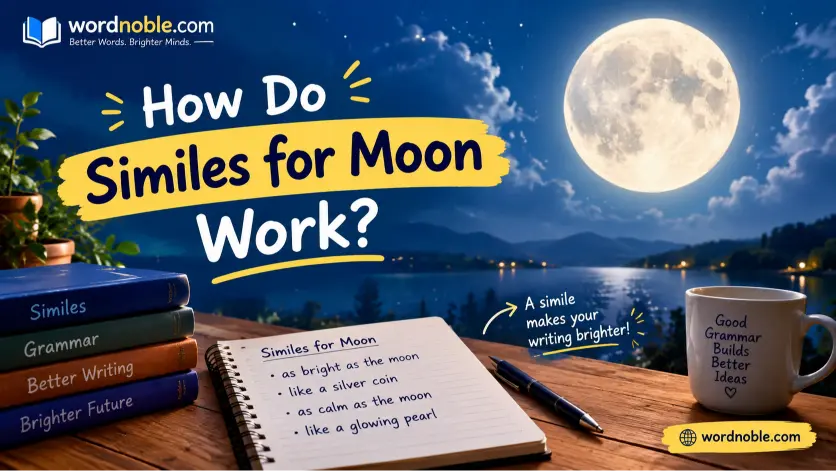
Moon similes usually focus on one or more qualities:
- Shape round, curved, crescent-like
- Color silver, white, golden, pale
- Brightness glowing, shining, radiant
- Position floating, hanging, rising
- Mood peaceful, lonely, mysterious, romantic
- Movement drifting, climbing, appearing
- Atmosphere dreamy, magical, eerie, calm
The strongest similes usually compare the moon to something readers already understand.
Why Do Writers Use Similes for the Moon?
Writers use moon similes because the moon is visually powerful but familiar. A comparison gives readers a fresh way to experience it.
Similes can:
- Create vivid imagery
- Make descriptions more memorable
- Establish a mood
- Add emotion to poetry
- Improve descriptive writing
- Make stories more engaging
- Help students explain visual details
- Give ordinary scenes a creative quality
- Strengthen sensory language
- Make poetic descriptions feel more personal
A moon can represent beauty, loneliness, mystery, hope, romance, silence, or change depending on the comparison.
Similes for moon are figurative expressions that compare the moon to another familiar thing using “like” or “as.” They help writers communicate the moon’s appearance, brightness, shape, movement, mood, or emotional meaning through clear and imaginative comparisons.
Contextual Meanings of Moon Similes
The same moon can have completely different meanings depending on the writing situation.
Storytelling
In fiction, a moon simile can establish the atmosphere of a scene.
Example:
The moon hung like a watchful eye above the forest.
This makes the setting feel mysterious or slightly frightening.
Poetry
Poetry often uses moon similes to express emotion.
Example:
The moon floated like a lonely pearl across the dark sky.
The comparison creates a quiet and emotional mood.
Casual Speech
In everyday conversation, simple comparisons work best.
Example:
The moon looked like a huge white ball tonight.
It sounds natural and easy to understand.
Humor
Funny similes deliberately exaggerate the moon’s appearance.
Example:
The full moon looked like a giant cookie someone forgot to eat.
The unexpected comparison creates humor.
Academic Writing
In academic or educational writing, similes should be controlled and purposeful.
Example:
The moon appeared like a pale disc against the dark background of the sky.
The comparison helps explain a visual observation without becoming overly poetic.
Types of Similes for Moon
🐾 Animal-Based Similes
Animals can give the moon personality, movement, or emotional meaning.
Examples
- The moon was like a white owl watching over the night.
- The crescent moon looked like a cat curled up in the sky.
- The full moon shone like a wolf’s pale eye.
- The moon floated like a butterfly resting on darkness.
Meaning
Animal-based comparisons can make the moon seem alive. A comparison to an owl may suggest wisdom or watchfulness, while a cat can make a crescent moon seem gentle and curled.
📡 Technology-Based Similes
Modern comparisons can make traditional moon imagery feel fresh.
Examples
- The moon glowed like a giant night-light.
- The moon looked like a silver satellite in the darkness.
- The full moon appeared like a bright screen above the rooftops.
- The crescent moon was like a curved notification icon in the sky.
Meaning
These comparisons connect the moon with familiar technology. They are especially useful for modern stories, social media captions, and humorous writing.
🌿 Nature-Based Similes
Nature provides some of the most natural moon comparisons.
Examples
- The moon was like a silver flower blooming in the night.
- The full moon looked like a pearl floating on a dark ocean.
- The crescent moon curved like a banana above the trees.
- The moon shone like frost on a winter morning.
Meaning
Nature-based similes create peaceful, beautiful, and visually rich descriptions.
😂 Funny and Exaggerated Similes
Humorous comparisons work by choosing something unexpected.
Examples
- The full moon was like a giant dinner plate hanging in the sky.
- The moon looked like a cookie someone had taken one bite from.
- The crescent moon was like a banana that forgot to fall from the tree.
- The moon was as bright as a flashlight with no off switch.
Meaning
These comparisons are not intended to be scientifically precise. Their purpose is entertainment and memorable imagery.
🎭 Emotional and Behavioral Similes
The moon can also represent feelings and human behavior.
Examples
- The moon watched like a silent friend.
- The moon hid like a shy child behind the clouds.
- The moon appeared like a lonely traveler in the darkness.
- The moon waited like a patient guardian above the sleeping world.
Meaning
These similes give the moon human-like emotional qualities without directly saying that it is a person.
15 Creative Similes for Moon With Meanings
| # | Simile | Meaning | Category |
|---|---|---|---|
| 1 | The moon was like a silver coin in the sky. | It looked round, pale, and shiny. | Object |
| 2 | The moon glowed like a lantern above the village. | It provided a strong, gentle light. | Object |
| 3 | The full moon looked like a pearl on black velvet. | It appeared bright against the dark sky. | Nature |
| 4 | The crescent moon was like a curved smile. | Its shape resembled a smiling mouth. | Human |
| 5 | The moon watched like a silent guardian. | It seemed to observe the world peacefully. | Emotional |
| 6 | The moon floated like a boat across the night. | It seemed to move slowly through the sky. | Nature |
| 7 | The moon was like a white flower blooming in darkness. | It appeared beautiful against the night. | Nature |
| 8 | The moon hid like a shy child behind clouds. | Clouds partially covered it. | Emotional |
| 9 | The moon shone like a polished mirror. | Its surface appeared bright and reflective. | Object |
| 10 | The moon looked like a giant cookie in the sky. | Its round shape inspired a humorous comparison. | Funny |
| 11 | The moon hung like a silver lamp above the rooftops. | It appeared suspended and luminous. | Object |
| 12 | The crescent moon was like a banana among the stars. | Its curved shape resembled a banana. | Funny |
| 13 | The moon appeared like an eye opening in the darkness. | It seemed round, bright, and watchful. | Animal/Body |
| 14 | The moon drifted like a feather across the clouds. | It seemed light and graceful. | Nature |
| 15 | The moon was like a lonely pearl in a sea of darkness. | It appeared isolated against the night sky. | Poetic |
Context Table: Which Moon Simile Should You Use?
| Context | Meaning | Use Case | Example |
|---|---|---|---|
| Poetry | Beauty and emotion | Poems | The moon was like a pearl in darkness. |
| Fantasy | Magic and mystery | Fantasy stories | The moon glowed like an enchanted lantern. |
| Horror | Fear and suspense | Horror writing | The moon stared like a pale eye. |
| Romance | Love and beauty | Romantic writing | The moon shone like a silver promise. |
| Children’s writing | Simplicity and fun | School stories | The moon was like a big white ball. |
| Humor | Exaggeration | Captions/comedy | The moon looked like a giant cookie. |
| Nature writing | Peace and beauty | Descriptions | The moon floated like a pearl on water. |
| Academic writing | Clear observation | Essays | The moon appeared like a bright disc. |
More Beautiful Similes for Moon
If you want poetic descriptions, try these:
- The moon was like a silver crown above the mountains.
- The moon glowed like a candle in a cathedral of stars.
- The moon floated like a white feather across the heavens.
- The moon looked like a pearl sewn into the night.
- The moon was like a quiet lamp in an endless room.
- The moon shone like ice beneath winter sunlight.
- The crescent moon was like a smile drawn across the sky.
- The moon appeared like a silver flower among the clouds.
- The full moon was like a golden plate above the horizon.
- The moon rested like a sleeping pearl above the hills.
How to Use Moon Similes Naturally in Writing
A good simile should improve the sentence rather than simply decorate it.
1. Decide What You Want to Describe
Ask yourself whether you are describing:
- Shape
- Color
- Light
- Movement
- Mood
- Emotion
- Setting
For example, if you want to emphasize shape, compare the crescent moon to something curved.
2. Choose a Familiar Comparison
Readers should understand the comparison quickly.
Weak:
The moon was like a mysterious astronomical object.
Better:
The moon was like a silver coin in the sky.
3. Match the Mood
A peaceful scene needs a peaceful comparison.
For a frightening scene:
The moon stared like a cold eye through the clouds.
For a romantic scene:
The moon glowed like a pearl above the quiet lake.
4. Avoid Explaining Too Much
A strong simile often speaks for itself.
Instead of adding several explanations after every comparison, let the imagery do the work.
5. Mix Similes With Other Writing Techniques
Combine similes with:
- Metaphors
- Personification
- Sensory language
- Strong verbs
- Descriptive adjectives
- Alliteration
- Symbolism
This creates richer figurative language.
Simile vs. Metaphor: What’s the Difference?
The main difference is how the comparison is expressed.
Simile
A simile usually uses like or as.
The moon was like a silver coin.
Metaphor
A metaphor directly states that one thing is another.
The moon was a silver coin in the sky.
Both create imagery, but the grammatical structure is different.
Easy Rule
Simile = comparison using like or as.
Metaphor = direct comparison without like or as.
Common Mistakes When Writing Moon Similes
1. Using Too Many Similes
One strong comparison can be more effective than five weak ones.
❌ The moon was like a pearl, like a coin, like a lamp, like a flower, and like a plate.
This feels crowded.
2. Choosing an Illogical Comparison
The comparison should share at least one meaningful quality with the moon.
A random comparison can confuse the reader.
3. Forgetting the Purpose
Do not add a simile simply because you need figurative language. Ask what the comparison contributes to the scene.
4. Confusing Similes With Metaphors
Remember that “The moon is a pearl” is generally a metaphor, while “The moon is like a pearl” is a simile.
5. Making Every Simile Extremely Poetic
Simple comparisons can be powerful too. The best choice depends on your audience and context.
👍 Usage Guide: Do and Don’t
Do
- Choose comparisons readers understand.
- Match the simile to the mood.
- Use sensory details.
- Keep comparisons relevant.
- Experiment with unusual but logical imagery.
- Use simple language when writing for children or students.
- Use fresh comparisons in creative writing.
Don’t
- Overload a paragraph with similes.
- Use confusing comparisons.
- Force a rhyme just to sound poetic.
- Repeat the same comparison throughout a piece.
- Explain an obvious comparison unnecessarily.
- Mix several unrelated images into one sentence.
Natural Chat-Style Responses Using Moon Similes
Sometimes you need a short, natural response rather than a literary sentence.
1. “The moon tonight is like a giant pearl!”
2. “That moon looks like a silver lamp hanging over the city.”
3. “The crescent looks like a little smile in the sky.”
4. “Wow, the full moon is like a huge glowing ball tonight.”
5. “The moon looks like a coin someone left among the stars.”
6. “It’s hiding behind the clouds like a shy kid.”
These work well in casual conversations, captions, texts, and social posts because they sound natural rather than overly formal.
Why Moon Similes Matter in English Literature
The moon has appeared throughout poetry and literature as an image of beauty, mystery, solitude, change, time, and emotional reflection.
Similes give writers a way to make that familiar symbol feel new.
A comparison can change the reader’s emotional response. A moon described as a guardian can feel protective. A moon compared to a lonely pearl can create sadness. And a moon compared to a smile can create warmth and happiness.
This is why figurative language matters in English literature. It allows writers to communicate more than literal information. A carefully chosen comparison can carry visual meaning, emotion, atmosphere, and symbolism at the same time.
How Students Can Use Similes for Moon
Students can use moon similes in:
- Creative writing assignments
- Poetry
- Descriptive paragraphs
- Story introductions
- English homework
- Figurative language exercises
- Literary analysis
- School presentations
- Journal writing
A useful approach is to first identify what the moon looks like and then ask:
“What else looks, feels, or behaves like this?”
If the moon is round, think of coins, plates, pearls, balls, or eyes. If it is a crescent, think of smiles, bananas, curved boats, or horns.
This simple technique helps students develop creative thinking instead of memorizing comparisons.
Related Figurative Language Terms
Learning moon similes becomes easier when you understand related concepts.
Figurative Language
Language that communicates ideas beyond strictly literal meanings.
Auditory Imagery
Language that helps readers imagine sounds. Although moon descriptions are mainly visual, auditory imagery can describe the surrounding night.
Sensory Writing
Writing that appeals to sight, sound, smell, taste, touch, or other sensory experiences.
Descriptive Writing
Writing that uses specific details to help readers visualize a person, place, object, or scene.
Metaphor
A direct comparison between two unlike things without typically using “like” or “as.”
Personification
Giving human qualities or actions to something nonhuman.
FAQs:
1. What are similes for moon?
Similes for moon are creative comparisons that describe the moon using “like” or “as.” They can focus on its shape, brightness, color, movement, or emotional effect. For example, “The moon was like a silver coin in the sky” compares its round, shiny appearance to a coin. Writers use these comparisons to create stronger imagery.
2. What is a good simile for the moon?
A simple and effective moon simile is “The moon was like a silver coin in the sky.” It clearly communicates the moon’s round shape and pale brightness. For a more poetic description, you could write, “The moon was like a pearl floating in a sea of darkness.” The best simile depends on the mood and purpose of your writing.
3. What are some funny similes for the moon?
Funny moon similes use unexpected or exaggerated comparisons. For example, “The full moon looked like a giant cookie in the sky” creates a playful image. Another option is “The crescent moon was like a banana hanging above the trees.” These comparisons work especially well in humorous writing, children’s stories, social media captions, and casual conversations.
4. What are some poetic similes for the moon?
Poetic moon similes often compare it with pearls, flowers, lamps, jewels, or other beautiful objects. For example, “The moon was like a pearl sewn into the dark sky.” Another poetic option is “The moon floated like a silver flower among the stars.” These comparisons create visual imagery and can communicate beauty, peace, loneliness, or mystery.
5. What is the difference between a moon simile and a moon metaphor?
A moon simile uses an explicit comparison, usually with like or as. For example, “The moon was like a silver coin.” A metaphor makes the comparison directly: “The moon was a silver coin.” Both are forms of figurative language, but a simile signals the comparison more clearly.
6. How can I use a moon simile in creative writing?
First, decide what quality of the moon you want to emphasize. You might focus on its shape, light, movement, or mood. Then choose something familiar that shares that quality. For example, if you want to emphasize its brightness, compare it to a lantern. If you want to emphasize its shape, compare it to a coin or pearl.
7. Why are similes important in English literature?
Similes make descriptions more vivid and emotionally meaningful. Instead of giving readers a plain statement, writers can create a visual or emotional connection with something familiar. A moon described as a “silent guardian,” for example, creates a different feeling from one described simply as “bright.” This makes figurative language an important creative writing technique.
8. How do students use moon similes?
Students commonly use moon similes in poetry, descriptive writing, creative stories, homework, and figurative language exercises. They can begin with a simple observation such as the moon being round or bright and then find something with a similar quality. This helps students practice imagery, comparison, vocabulary, and creative thinking.
9. Can a moon simile be funny and poetic at the same time?
Yes. A simile can combine imaginative language with humor. For example, “The full moon was like a giant cookie floating in a velvet sky.” The word “cookie” adds humor, while “velvet sky” creates a poetic image. Combining contrasting tones can make a description more memorable when used appropriately.
10. How can I make my moon similes more creative?
Avoid relying only on common comparisons such as a coin or ball. Think about what the moon does, how it feels, and what it reminds you of. Consider animals, technology, food, nature, emotions, or everyday objects. Then choose a comparison that fits your scene. Creativity works best when the comparison is both surprising and understandable.
Conclusion
Similes for moon give writers a simple way to transform an ordinary description into vivid imagery. A moon can become a silver coin, a glowing lantern, a lonely pearl, a curved smile, or even a giant cookie depending on the mood and purpose of the writing.
The strongest comparisons are clear, relevant, and imaginative without feeling forced. Whether you are writing poetry, a story, a school assignment, or a casual caption, choose a comparison that helps readers see the moon in a fresh way.
Most importantly, remember that good figurative language is not about using complicated words it is about creating an image that stays in the reader’s mind.

I am Naqash Ayub, proudly writing for WordNoble, where I focus on creating clear, informative, and SEO-friendly content. I enjoy turning detailed information into simple, trustworthy articles that help readers find the answers they need.