
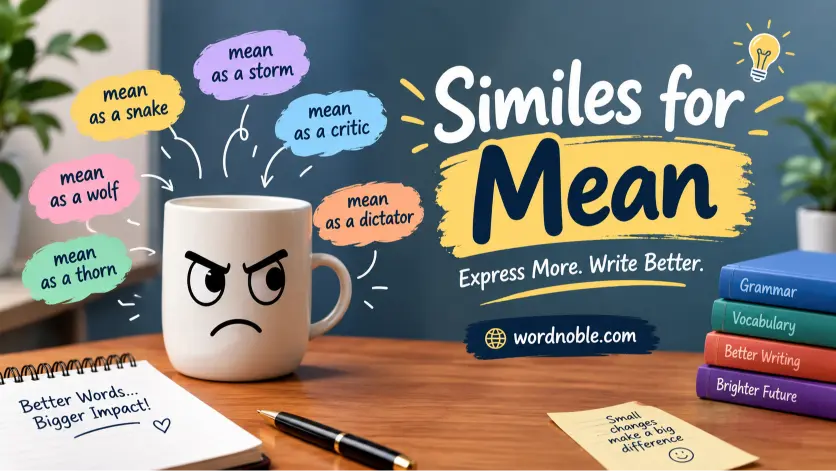
Some insults land, but the right comparison cuts deeper than any curse word ever could. Calling someone “mean” barely scratches the surface it’s flat, overused, and forgettable. Similes for mean give your words teeth.
They paint a picture: cruel as a winter wind, cold as a blade in the dark. That’s the difference between saying someone hurt you and making the reader actually feel it. Writers, poets, and anyone crafting sharp dialogue know this trick well vivid comparisons carry weight that plain adjectives simply can’t match.
Maybe you’re building a villain readers will despise, venting about someone who wronged you, or just hunting for fresher vocabulary than “cruel” or “harsh.”
Whatever brought you here, you’re about to find a collection of biting, memorable, and downright creative similes that describe meanness, cruelty, and cold-heartedness in ways that stick.
Below, you’ll find expressions sorted by tone and use case, from playful jabs to genuinely chilling descriptions. Ready to trade boring insults for language with real bite? Let’s start with what makes a simile for “mean” actually work.
What Are Similes for Mean?
Similes for mean are comparisons that describe someone or something as unkind, cruel, harsh, nasty, or unpleasant by using words such as “like” or “as.”
For example, “She was as cold as ice” compares her unfriendly behavior to the coldness of ice.
Meaning of Similes for Mean
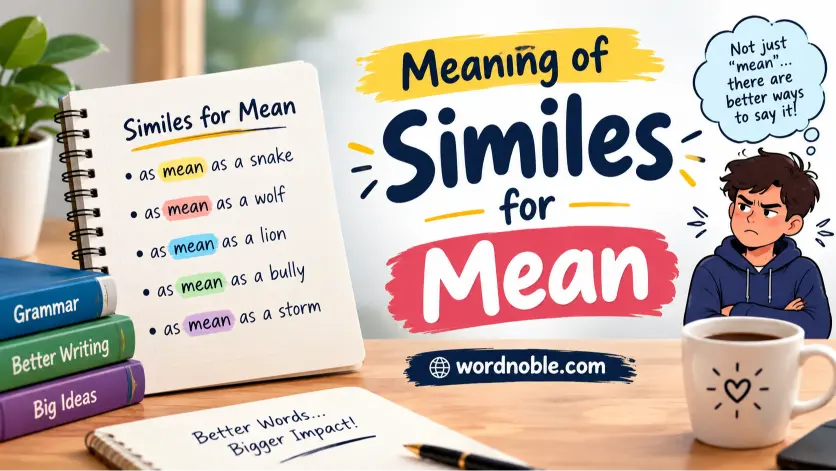
The word mean can describe several related ideas. It may refer to someone who is deliberately unkind, a harsh attitude, a hurtful remark, or behavior intended to upset another person.
A simile makes that meaning more specific.
Compare:
- He was mean.
- He was as sharp as a thorn.
The first sentence simply tells the reader that he was unkind. The second gives the reader an image of someone whose words or behavior can hurt.
Similes for mean can communicate different shades of unkindness, including:
- cruelty
- harshness
- anger
- coldness
- rudeness
- hostility
- sarcasm
- selfishness
- intimidation
- emotional distance
The best comparison depends on exactly what kind of “mean” you want to express.
How Do Similes for Mean Work?
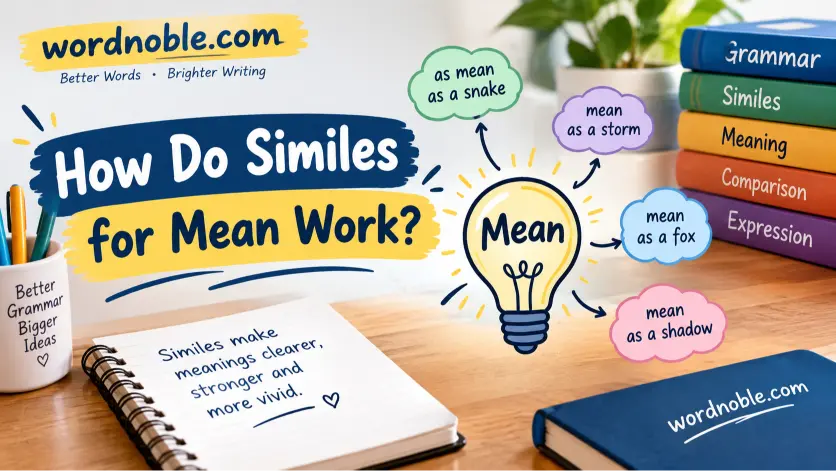
Similes connect the quality of meanness with something familiar. The comparison gives the reader a mental picture instead of leaving the description abstract.
For instance, comparing a mean person to a thorn suggests that the person hurts others through sharp words or actions. Comparing someone to ice emphasizes emotional coldness.
This makes similes especially valuable when ordinary adjectives do not provide enough detail.
They can also create:
- visual imagery by helping readers picture a character
- emotional imagery by creating a particular mood
- sensory language by connecting behavior with familiar sensations
- characterization by revealing personality through comparison
- figurative language by communicating an idea indirectly
Why Do Writers Use Similes for Mean?
Writers use similes because they make descriptions more vivid and memorable.
Instead of repeatedly writing words such as unkind, cruel, or nasty, a writer can create a fresh comparison that reveals what the behavior feels like.
A simile can also change the emotional intensity of a sentence. A mild comparison may suggest ordinary rudeness, while a powerful comparison can make a character seem frightening or cruel.
In English literature, creative writing, poetry, storytelling, and descriptive writing, this kind of figurative language helps readers understand characters and emotions more deeply.
Similes for mean are figurative comparisons used to describe unkind, cruel, harsh, rude, or unpleasant behavior by comparing it with a familiar person, animal, object, or natural feature. They usually use like or as to make the comparison clear and create stronger imagery.
Types of Similes for Mean
🐾 Animal-Based Similes
Animal comparisons can make a mean personality seem aggressive, threatening, sneaky, or hostile.
1. As mean as a wolf
Meaning: Extremely hostile or threatening.
Category: Animal-based
The wolf creates an image of danger and aggression.
2. As mean as a snake
Meaning: Cruel, sneaky, or untrustworthy.
Category: Animal-based
This works especially well for someone whose harmful behavior is hidden behind a calm appearance.
3. Like a snarling dog
Meaning: Aggressive and unfriendly.
Category: Animal-based
The image suggests someone who is ready to attack verbally or emotionally.
4. As vicious as a wild beast
Meaning: Extremely cruel or aggressive.
Category: Animal-based
This is a stronger comparison suitable for dramatic storytelling.
5. Like a cat with claws
Meaning: Seemingly calm but capable of hurting someone.
Category: Animal-based
The comparison works well for a character whose meanness appears suddenly.
📡 Technology-Based Similes
Modern comparisons can give figurative language a contemporary feel.
6. As cold as a disconnected screen
Meaning: Emotionally distant or unfriendly.
Category: Technology-based
The image emphasizes a lack of warmth or human connection.
7. Like a broken alarm
Meaning: Irritating, harsh, or constantly unpleasant.
Category: Technology-based
Useful when describing someone’s repeatedly annoying behavior.
8. As sharp as a notification at midnight
Meaning: Abrupt, disturbing, or irritating.
Category: Technology-based
This creates a humorous modern image of something unpleasant interrupting peace.
🌿 Nature-Based Similes
Nature provides some of the most recognizable comparisons for meanness.
9. As cold as ice
Meaning: Emotionally uncaring or unfriendly.
Category: Nature-based
One of the clearest ways to describe a person who shows little sympathy.
10. As sharp as a thorn
Meaning: Hurtful, cutting, or cruel.
Category: Nature-based
A thorn suggests that someone’s words or actions can cause pain.
11. Like a storm cloud
Meaning: Dark, angry, or unpleasant.
Category: Nature-based
This can describe a person’s mood as well as their behavior.
12. As bitter as winter wind
Meaning: Harsh, unpleasant, and emotionally cold.
Category: Nature-based
It combines physical discomfort with emotional harshness.
😂 Humorous and Exaggerated Similes
Funny similes can describe meanness without making the sentence overly serious.
13. As mean as a cat guarding its last tuna
Meaning: Extremely possessive and unwilling to share.
Category: Humorous
The exaggeration creates a playful image.
14. Like a grumpy bear before breakfast
Meaning: Irritable and unpleasant.
Category: Humorous
This is useful for lighthearted descriptions of bad moods.
15. As mean as a mosquito at midnight
Meaning: Irritating and relentless.
Category: Humorous
The comparison makes someone’s annoying behavior funny rather than frightening.
🎭 Emotional and Behavioral Similes
These comparisons focus directly on a person’s attitude or behavior.
16. As cold as a stone
Meaning: Unemotional, uncaring, or harsh.
Category: Emotional
17. Like a knife in conversation
Meaning: Someone whose words are deliberately hurtful.
Category: Behavioral
18. As bitter as old coffee
Meaning: Unpleasant, resentful, or harsh.
Category: Emotional
19. Like a door slammed in your face
Meaning: Extremely rejecting or unfriendly.
Category: Behavioral
20. As cruel as a cruel joke
Meaning: Deliberately hurtful or insensitive.
Category: Emotional
20 Similes for Mean With Meanings
| Simile | Meaning | Category | Clarity |
|---|---|---|---|
| As mean as a wolf | Aggressive and threatening | Animal | Suggests danger |
| As mean as a snake | Sneaky and cruel | Animal | Suggests hidden hostility |
| Like a snarling dog | Aggressive and unfriendly | Animal | Creates a threatening image |
| As cold as ice | Emotionally uncaring | Nature | Shows lack of warmth |
| As sharp as a thorn | Hurtful or cutting | Nature | Suggests painful words |
| Like a storm cloud | Angry or unpleasant | Nature | Creates a dark mood |
| As cold as a stone | Unfeeling | Nature | Suggests emotional emptiness |
| Like a broken alarm | Irritating | Technology | Suggests repeated annoyance |
| As bitter as old coffee | Resentful or unpleasant | Humorous | Gives a bitter image |
| Like a door slammed in your face | Rejecting | Behavioral | Shows strong unfriendliness |
| Like a knife in conversation | Verbally hurtful | Behavioral | Suggests cutting words |
| As vicious as a wild beast | Extremely cruel | Animal | Strong dramatic comparison |
| Like a cat with claws | Quietly threatening | Animal | Suggests hidden aggression |
| As bitter as winter wind | Harsh and unpleasant | Nature | Combines coldness and bitterness |
| Like a grumpy bear before breakfast | Irritable | Humorous | Lighthearted description |
| As mean as a mosquito at midnight | Irritating | Humorous | Exaggerates annoyance |
| As sharp as a blade | Cutting or cruel | Object-based | Suggests painful remarks |
| Like a locked door | Emotionally unavailable | Object-based | Shows rejection |
| As hard as a rock | Unyielding or unsympathetic | Object-based | Suggests stubbornness |
| Like a slap in the face | Shockingly hurtful | Behavioral | Emphasizes emotional impact |
Contextual Meaning of Similes for Mean
| Context | Meaning | Use Case | Example |
|---|---|---|---|
| Storytelling | Character is unkind | Character description | She was as cold as ice. |
| Poetry | Emotional cruelty | Emotional imagery | His words were sharp as thorns. |
| Casual speech | Mild criticism | Everyday conversation | He was like a grumpy bear today. |
| Humor | Exaggerated annoyance | Funny descriptions | She was as mean as a mosquito at midnight. |
| Academic writing | Analysis of characterization | Literature discussion | The writer portrays the character as cold as stone. |
| Creative writing | Strong imagery | Descriptive scenes | His voice was as sharp as a blade. |
How to Use Similes for Mean in Writing
A strong simile should add something that the basic adjective mean cannot.
1. Identify the type of meanness
Ask what the character is actually doing.
Are they:
- insulting someone?
- refusing to help?
- behaving aggressively?
- acting selfishly?
- showing no sympathy?
- deliberately hurting someone’s feelings?
Then select a comparison that matches that behavior.
2. Choose a familiar image
The reader should understand the comparison quickly. Ice, thorns, storms, wolves, stones, and blades are recognizable images.
3. Match the emotional intensity
Do not use an extremely violent or dramatic comparison for a mildly rude character. A humorous simile may work better for everyday irritation.
4. Make the comparison purposeful
A simile should contribute to characterization, atmosphere, emotion, or imagery.
Instead of adding a comparison simply because you can, ask:
What does this comparison help the reader understand?
5. Avoid repetition
If every sentence compares the character to something dangerous, the writing can become predictable. Mix animal, nature, object, and emotional comparisons.
Simile vs. Metaphor
A simile directly compares two things, usually with like or as.
Simile:
Her words were as sharp as thorns.
A metaphor makes the comparison directly without using like or as.
Metaphor:
Her words were thorns.
Both forms create figurative meaning, but they produce slightly different effects.
Similes often make comparisons easier to understand because the connection is explicitly signaled. Metaphors can feel more direct and powerful.
When Not to Use Similes
Similes are useful, but more comparisons do not automatically make writing better.
Avoid them when:
- the comparison adds no useful meaning
- the sentence is already clear without it
- the comparison feels forced
- the image is confusing
- several similes appear in every sentence
- the comparison does not match the character or situation
- formal writing requires straightforward wording
In academic writing, use figurative language when it supports analysis rather than decorating every sentence.
Common Mistakes With Similes for Mean
Overusing the Same Comparison
Using as cold as ice repeatedly can make writing predictable. Look for fresh comparisons when the context allows it.
Making an Illogical Comparison
A comparison should have a recognizable connection. If the reader cannot understand why two things are being compared, the simile becomes distracting.
Confusing Similes With Metaphors
Not every figurative comparison is a simile. If the sentence says one thing is another without like or as, it may be a metaphor instead.
Choosing the Wrong Emotional Tone
A funny simile can weaken a serious scene. Likewise, an extremely dark comparison may feel excessive in a playful conversation.
Explaining Too Much
A strong image often speaks for itself. Avoid explaining every simple comparison at unnecessary length.
Do and Don’t: Using Similes Naturally
👍 Do
- Choose comparisons that fit the context.
- Use familiar images.
- Match the emotional tone.
- Use similes to strengthen characterization.
- Experiment with nature, animals, objects, and everyday experiences.
- Keep the reader’s interpretation in mind.
👎 Don’t
- Stuff every sentence with a simile.
- Use comparisons that have no logical connection.
- Repeat the same cliché constantly.
- Confuse metaphors with similes.
- Choose dramatic imagery simply to sound impressive.
- Sacrifice clarity for creativity.
Natural Chat Responses Using Similes for Mean
Here are a few ways people might naturally use these comparisons in conversation:
“Why was he acting so mean?”
“He was as cold as ice today. I have no idea what happened.”
“How was your teacher’s mood?”
“She was like a grumpy bear all morning.”
“Was her comment really that bad?”
“Yes. It was as sharp as a thorn.”
“Why did he refuse to help?”
“He was as hard as a rock when I asked him.”
“How would you describe that character?”
“He’s like a wolf—quiet, aggressive, and always looking for an opportunity.”
Related Figurative Language Terms
Understanding similes for mean becomes easier when you connect them with other language concepts.
Figurative Language
Language that communicates ideas beyond their most literal interpretation.
Auditory Imagery
Descriptive language that helps readers imagine sounds. It can be useful when describing harsh, soft, loud, or unpleasant voices.
Sensory Language
Words that appeal to sight, sound, touch, taste, and smell. Similes frequently strengthen sensory descriptions.
Metaphor vs. Simile
Both make comparisons, but similes generally use like or as, while metaphors make a direct comparison.
Descriptive Writing
Writing that uses specific details and imagery to help readers visualize people, places, objects, and emotions.
Why Are Similes Important in English Literature?
Similes are an important English literature concept because they allow writers to communicate abstract qualities through concrete images.
Words such as mean, sad, angry, beautiful, and scared describe emotions or qualities, but they do not always show readers exactly how those qualities appear.
A carefully chosen simile provides that missing image.
Writers can use comparisons to develop:
- characterization
- mood
- atmosphere
- symbolism
- emotional depth
- sensory imagery
- tone
- narrative voice
Students also encounter similes when analyzing poems, novels, short stories, speeches, and other forms of literature.
How Students Can Use Similes for Mean
Students can use these comparisons in several ways:
- Creative writing: Make characters more vivid.
- Poetry: Build emotional imagery.
- Story assignments: Show personality instead of simply telling it.
- Literary analysis: Explain how an author creates characterization.
- Descriptive paragraphs: Replace repetitive adjectives with imagery.
- Vocabulary practice: Understand how figurative language changes meaning.
For schoolwork, students should choose a simile that genuinely supports the idea rather than inserting one merely to make a paragraph sound complicated.
FAQs:
1. What are similes for mean?
Similes for mean are figurative comparisons used to describe unkind, cruel, harsh, rude, or unpleasant behavior. They commonly use like or as to connect meanness with something familiar. For example, saying someone is as cold as ice emphasizes emotional coldness rather than simply stating that the person is mean.
2. What is a good simile for someone who is mean?
A good simile depends on the kind of meanness being described. As cold as ice works for someone who lacks sympathy, while as sharp as a thorn suits someone whose words hurt others. For an aggressive character, like a snarling dog creates a stronger and more threatening image.
3. What are some funny similes for mean?
Funny similes exaggerate someone’s unpleasant behavior in a playful way. Examples include as mean as a mosquito at midnight, like a grumpy bear before breakfast, and as mean as a cat guarding its last tuna. These comparisons are best for casual conversation, humorous stories, social posts, and lighthearted creative writing.
4. What are poetic similes for mean?
Poetic similes often use strong natural or sensory imagery. Expressions such as as cold as winter wind, as sharp as a thorn, and like a storm cloud can describe emotional cruelty without simply naming it. Poetic comparisons are especially useful when a writer wants to create mood, symbolism, atmosphere, or emotional depth.
5. What is the difference between a simile and a metaphor?
A simile makes a comparison using words such as like or as, while a metaphor makes the comparison directly. For example, her words were as sharp as thorns is a simile. Her words were thorns is a metaphor. Both are forms of figurative language, but their structures and effects are different.
6. How can I use similes for mean in writing?
First, decide what type of meanness you want to show. Then choose a familiar image that communicates that quality. Use the simile where it strengthens characterization, emotion, or imagery. For example, describing a character as as cold as stone can show emotional distance more effectively than repeatedly calling the character mean or uncaring.
7. Why are similes important in English literature?
Similes help literary writers transform abstract qualities into concrete images. Instead of merely telling readers that a character is cruel, a writer can create a comparison that lets readers visualize or emotionally experience that cruelty. This supports characterization, mood, imagery, symbolism, tone, and overall descriptive depth.
8. How can students use similes for mean?
Students can use them in creative writing, poetry, descriptive paragraphs, and literary analysis. A student might use a simile to describe a character’s personality or explain how an author creates a particular impression. The key is to select a comparison that supports the intended meaning instead of adding figurative language without purpose.
9. Can similes for mean be positive?
Usually, similes for mean describe something negative because the word commonly refers to unkind or unpleasant behavior. However, context can change interpretation. In casual language, mean can sometimes have other meanings, such as average or signify. Therefore, writers should make the intended meaning clear through surrounding context and the comparison they choose.
10. What makes a simile for mean effective?
An effective simile is clear, relevant, vivid, and appropriate for the situation. The comparison should help readers understand something specific about the person’s behavior, personality, mood, or words. A familiar image often works best because readers can immediately understand the connection. The strongest similes add meaning rather than simply making a sentence more decorative.
Conclusion:
Similes for mean give writers a more vivid way to describe cruelty, rudeness, coldness, harsh words, and unpleasant behavior. Instead of relying on the single adjective mean, you can compare a person’s actions or personality with familiar images such as ice, thorns, storms, animals, or everyday objects.
The right comparison adds emotional depth and helps readers understand exactly what kind of meanness is being shown.
Whether you are writing a poem, story, school assignment, or casual description, choose a simile that fits the context and tone. Most importantly, use figurative language with purpose: a strong simile should make the reader see, feel, or understand the idea more clearly.

I am Naqash Ayub, proudly writing for WordNoble, where I focus on creating clear, informative, and SEO-friendly content. I enjoy turning detailed information into simple, trustworthy articles that help readers find the answers they need.