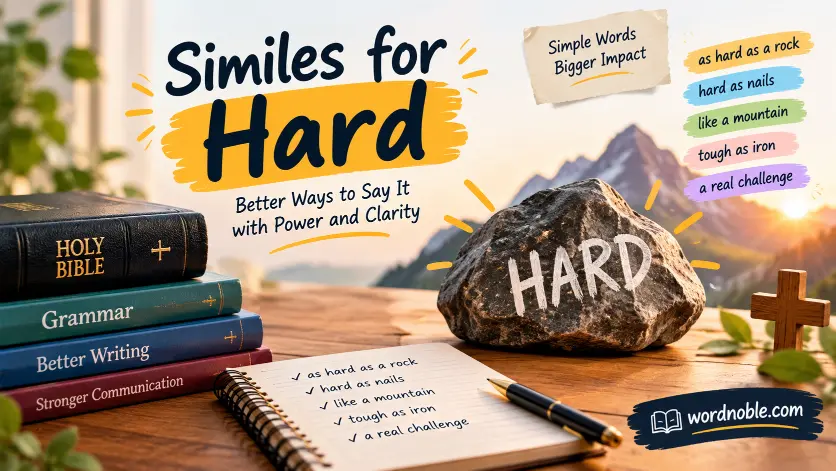
Picture a locked door, a brutal math test, and a lump of stale bread. All three are hard, yet each one needs a different comparison. The right similes for hard match the exact kind of hardness you mean.
Hard can mean solid, like a rock. It can mean difficult, like climbing a mountain in flip-flops. It can even mean harsh, like a cold stare from a strict teacher. Pick the wrong comparison, and your sentence falls flat.
Below, you’ll find fresh examples sorted by meaning, so you can grab the right one fast. You’ll see similes for hard objects, tough tasks, and stern people. Each group comes with a quick note on when it works best. You’ll also get simple tips for building your own comparisons that sound natural instead of tired.
Ready to swap “very hard” for a line your reader will remember? Let’s start with the most common meaning: things that are solid and unyielding.
Similes for hard compare something difficult, solid, tough, or intense to another familiar thing using words such as like or as. They make descriptions clearer, stronger, and more vivid.
What Are Similes for Hard?
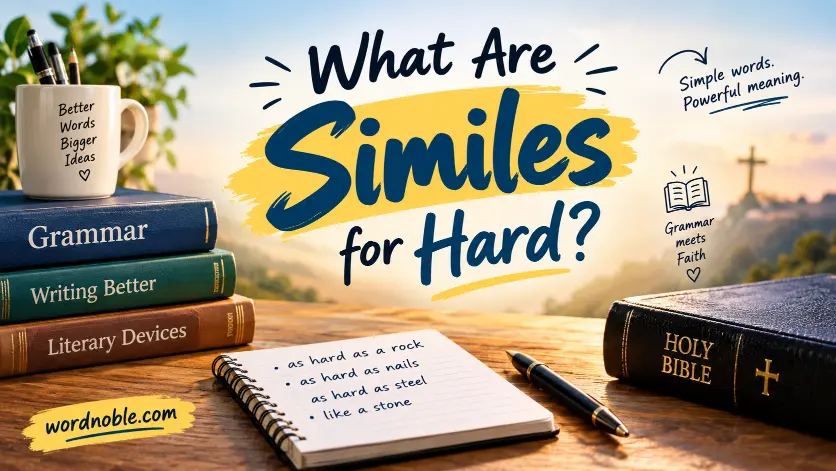
A simile for hard is a comparison that explains how difficult, firm, strong, painful, or intense something is. Instead of simply saying that something is hard, a writer compares it with something readers already understand.
For example:
- The exam was as hard as climbing a mountain.
- The rock was hard like iron.
- Her determination was as hard as steel.
These comparisons turn an ordinary description into a mental picture.
The word hard has several meanings in English. It can describe a physically solid object, a difficult task, intense effort, harsh conditions, emotional experiences, or someone who refuses to give up. Because of these different meanings, the best simile depends on the context.
Similes are an important part of figurative language and are widely used in creative writing, poetry, storytelling, speeches, conversations, and English literature.
Understanding the Meaning of Similes for Hard
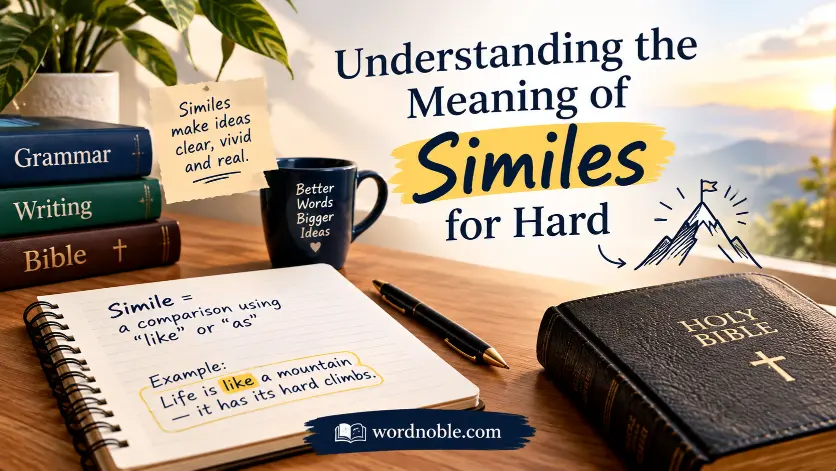
The simplest way to understand a simile for hard is to ask:
What familiar thing has the same quality of hardness, difficulty, strength, or intensity?
A writer then creates a comparison using like or as.
😊For physical hardness, writers may compare something to rock, stone, iron, steel, or glass.
For difficulty, they may compare an experience to climbing a mountain, solving a complicated puzzle, or crossing a stormy sea.
For emotional toughness, a person might be compared to steel, an unbreakable wall, or a strong tree.
The comparison should match the intended meaning. A simile about a hard rock is different from a simile about a hard examination.
Why Do Writers Use Similes for Hard?
Writers use these comparisons because the single word hard can sometimes feel vague.
Compare:
The test was hard.
with:
The test was as hard as solving a puzzle with half the pieces missing.
The second sentence gives readers a clearer sense of difficulty.
Similes can also add:
- sensory detail
- emotional depth
- visual imagery
- humor
- emphasis
- personality
- dramatic effect
They help readers experience an idea instead of simply being told about it.
Similes for hard are figurative expressions that compare physical hardness, difficulty, intensity, or emotional toughness with a familiar person, object, experience, animal, or natural force. They use comparison words such as like or as to make an abstract or ordinary description more vivid and understandable.
Contextual Meanings of “Hard” in Similes
The meaning of hard changes according to context, so a useful simile should communicate the specific quality being described.
In Storytelling
Story writers use similes to make difficult situations easier to imagine.
Example:
The journey was as hard as crossing a desert without water.
This emphasizes exhaustion and difficulty.
In Poetry
Poets often use unusual or emotional comparisons to create imagery.
Example:
His heart was hard like winter stone.
The comparison suggests emotional coldness or resistance.
In Casual Speech
People use simple similes to make everyday conversations more expressive.
Example:
That workout was as hard as a marathon.
The speaker emphasizes physical effort.
In Humor
Funny similes exaggerate difficulty or hardness for comic effect.
Example:
That old cookie was as hard as a brick.
The exaggeration makes the description amusing.
In Academic Writing
Similes can be useful in explanatory writing, although they should be used carefully and only when they clarify an idea.
Example:
Learning a new language can be like building a house one brick at a time.
Here, the comparison explains gradual progress.
Types of Similes for Hard
🐾 Animal-Based Similes
Animal comparisons can communicate strength, toughness, persistence, or difficulty.
1. As hard as a turtle’s shell
Meaning: Extremely firm or difficult to break.
Use: Describing a protective surface or something tough.
2. As tough as an old crocodile
Meaning: Very strong and resistant.
Use: Describing a person, object, or situation that withstands pressure.
3. As stubborn as a mule
Meaning: Difficult to change or persuade.
Use: Describing someone who refuses to give up an idea.
4. As tough as a rhino
Meaning: Extremely strong or resilient.
Use: Describing physical or emotional toughness.
Animal-based similes work especially well in children’s writing, stories, humorous descriptions, and character development.
📡 Technology-Based Similes
Modern comparisons can make descriptions feel familiar and contemporary.
5. As hard as a computer’s metal casing
Meaning: Very firm and resistant.
6. As difficult as cracking a secure password
Meaning: Extremely challenging to solve.
7. As hard as debugging a thousand-line program
Meaning: Very difficult and demanding.
8. As rigid as a steel machine frame
Meaning: Firm, strong, and resistant to movement.
Technology-based comparisons are particularly useful in modern essays, blogs, fiction, and informal writing.
🌿 Nature-Based Similes
Nature provides some of the most familiar comparisons for hardness and difficulty.
9. As hard as stone
Meaning: Extremely firm or solid.
10. As hard as rock
Meaning: Very solid, tough, or resistant.
11. As hard as frozen ground
Meaning: Extremely firm and difficult to penetrate.
12. As difficult as climbing a mountain
Meaning: Extremely challenging.
13. As tough as an ancient tree
Meaning: Strong and able to withstand difficult conditions.
Nature-based similes are effective because readers can easily visualize rocks, mountains, trees, storms, and frozen ground.
😂 Humorous and Exaggerated Similes
Humorous similes often stretch the comparison to make the description memorable.
14. As hard as a brick in a boxing match
Meaning: Extremely hard, with intentional exaggeration.
15. As hard as yesterday’s leftover bread
Meaning: Very hard and unpleasantly dry.
16. As difficult as teaching a cat to follow instructions
Meaning: Extremely challenging in a humorous way.
17. As hard as a rock wearing armor
Meaning: Comically extreme hardness.
Funny similes are useful in dialogue, social writing, children’s stories, and informal descriptions.
🎭 Emotional and Behavioral Similes
Not all forms of hardness are physical. A person’s attitude or emotional state can also be described as hard.
18. As hard as steel
Meaning: Strong, firm, or emotionally tough.
19. As hard as a locked door
Meaning: Resistant to persuasion or emotional openness.
20. As tough as an old oak tree
Meaning: Strong and resilient despite difficulties.
21. As stubborn as stone
Meaning: Unwilling to change.
22. As hard as a wall
Meaning: Emotionally distant or difficult to approach.
These comparisons can add depth to characters and emotional scenes.
15 Examples of Similes for Hard
| Simile Sentence | Meaning | Category | Clarity |
|---|---|---|---|
| The rock was as hard as steel. | Extremely solid | Object | Shows physical hardness |
| The exam was as hard as climbing a mountain. | Very difficult | Difficulty | Emphasizes effort |
| His determination was as hard as iron. | Extremely strong | Emotional | Shows persistence |
| The frozen soil was hard like stone. | Very firm | Nature | Creates a physical image |
| That cookie was as hard as a brick. | Extremely hard | Humor | Uses exaggeration |
| The puzzle was as difficult as unlocking a secret code. | Very challenging | Technology | Highlights complexity |
| Her resolve was as strong as steel. | Emotionally tough | Emotional | Shows determination |
| The old tree was as tough as rock. | Very resilient | Nature | Suggests endurance |
| The training was as hard as running uphill all day. | Extremely demanding | Physical | Shows exhaustion |
| His expression was as hard as a wall. | Unfriendly or emotionless | Behavioral | Suggests emotional distance |
| The ground was as hard as frozen stone. | Extremely firm | Nature | Creates sensory imagery |
| The assignment was as hard as solving a mystery. | Difficult | Academic | Shows mental effort |
| The bread was hard like a piece of wood. | Very dry or solid | Humor | Creates a vivid comparison |
| Her spirit was as tough as an oak tree. | Very resilient | Nature | Shows inner strength |
| Breaking the habit was as hard as moving a mountain. | Extremely difficult | Exaggeration | Emphasizes a major challenge |
Context Table for Similes for Hard
| Context | Meaning | Use Case | Example |
|---|---|---|---|
| Physical object | Solid or firm | Descriptive writing | The surface was as hard as stone. |
| School | Difficult | Essays and assignments | The exam was as hard as climbing a mountain. |
| Work | Demanding | Everyday speech | The project was as hard as solving a giant puzzle. |
| Exercise | Physically demanding | Conversations | The workout was as hard as running uphill. |
| Personality | Tough or stubborn | Character writing | His attitude was as hard as iron. |
| Emotions | Resistant or closed | Poetry | Her heart felt as hard as stone. |
| Humor | Exaggerated hardness | Dialogue | That biscuit was as hard as a brick. |
| Nature | Solid or difficult | Creative writing | The frozen ground was as hard as rock. |
| Literature | Symbolic strength | Poetry and fiction | His resolve was as hard as steel. |
How to Use Similes for Hard in Writing
A good simile should make the original description clearer rather than simply adding decoration.
1. Identify What “Hard” Means
First decide whether hard means:
- physically solid
- difficult
- exhausting
- emotionally tough
- stubborn
- intense
- resistant
This prevents confusing comparisons.
2. Choose a Familiar Comparison
Select something your audience can easily understand.
For physical hardness, familiar objects such as stone, rock, iron, and steel are effective.
For difficulty, experiences such as climbing a mountain or solving a complex puzzle may work better.
3. Match the Emotional Tone
A serious story needs a different simile from a comedy.
Serious:
The decision was as hard as walking through a storm.
Funny:
That cookie was as hard as a paving stone.
Both communicate hardness, but the emotional effect is different.
4. Avoid Forcing the Comparison
A simile should feel natural.
Instead of adding an unrelated comparison simply because it sounds dramatic, ask whether the comparison actually shares the quality you want to describe.
5. Use Sensory Language
Strong descriptive writing often appeals to sight, touch, sound, taste, or emotion.
For example:
The frozen mud was as hard as stone beneath his boots.
The reader can imagine both the texture and physical resistance.
Simile vs Metaphor
A simile makes a direct comparison, usually using like or as.
Simile:
The task was as hard as climbing a mountain.
A metaphor states the comparison more directly without using like or as.
Metaphor:
The task was a mountain.
The two devices can communicate a similar idea, but their structures differ.
Quick Difference
| Simile | Metaphor |
|---|---|
| Uses a comparison word | Makes a direct comparison |
| The test was as hard as a mountain | The test was a mountain |
| Often easier to understand | Often more symbolic |
| Useful for clear imagery | Useful for stronger figurative effect |
Common Mistakes When Using Similes for Hard
Overusing Familiar Comparisons
Using “as hard as a rock” repeatedly can make writing predictable.
Try choosing a comparison that fits the specific scene.
Making Illogical Comparisons
A comparison should share a meaningful quality with the subject.
If you describe a difficult mathematics problem as “as hard as a blue sky,” the connection is unclear.
Confusing Similes With Metaphors
Remember that a simile normally signals its comparison with words such as like or as.
Using Too Much Exaggeration
Exaggeration can be funny or dramatic, but too much can make serious writing sound unrealistic.
Ignoring Context
A physical object, difficult assignment, emotional experience, and stubborn personality may all be described as “hard,” but they require different comparisons.
Usage Guide: Do and Don’t
👍 Do
- Choose comparisons that match your meaning.
- Use familiar images when clarity matters.
- Use creative comparisons in poetry and fiction.
- Consider your audience.
- Vary your similes.
- Read the sentence aloud to check its natural flow.
- Use similes to strengthen imagery.
❌ Don’t
- Repeat the same simile throughout an article.
- Add comparisons that have no logical connection.
- Use a simile in every sentence.
- Confuse metaphor with simile.
- Sacrifice clarity for complexity.
- Overuse dramatic exaggeration.
- Choose a comparison simply because it sounds impressive.
Natural Chat Responses Using Similes for Hard
Here are some natural ways people might use these comparisons in everyday conversation:
1.
“That exam was as hard as climbing a mountain.”
2.
“Getting through that workout was like pushing a boulder uphill.”
3.
“This bread is as hard as a brick. I can barely bite it!”
4.
“Learning all those formulas was as hard as solving a giant puzzle.”
5.
“She stayed as tough as steel even when everything went wrong.”
6.
“Breaking that habit was as hard as moving a mountain.”
Related Figurative Language Terms
Understanding similes for hard becomes easier when you connect the topic to broader English-language concepts.
Figurative Language
Figurative language communicates ideas beyond their most literal meanings. Similes and metaphors are two common forms.
Auditory Imagery
Auditory imagery describes sounds and helps readers imagine what they hear. It is especially useful when a writer wants to create a strong sensory experience.
Sensory Writing
Sensory writing uses details connected to sight, sound, smell, taste, touch, and other perceptions.
Metaphor vs Simile
Both create comparisons, but a simile generally uses comparison words such as like or as, while a metaphor makes a more direct comparison.
Descriptive Writing
Descriptive writing uses precise details and imagery to help readers visualize people, places, objects, experiences, and emotions.
Why Are Similes Important in English Literature?
Similes are an important creative writing technique because they transform ordinary descriptions into memorable images.
A writer can say:
The character was tough.
That statement communicates an idea, but it gives readers limited imagery.
A more developed sentence could say:
The character was as tough as an old oak tree standing through a winter storm.
Now the reader receives an image of strength, endurance, and resistance.
In English literature, similes can contribute to characterization, atmosphere, symbolism, tone, and imagery. They can also make abstract ideas easier to understand.
For students, learning how similes work provides a foundation for understanding other figurative language devices.
How Students Can Use Similes for Hard
Students can use similes in:
- descriptive essays
- creative writing
- poetry
- story assignments
- character descriptions
- personal narratives
- literary analysis
- classroom exercises
For example:
The final question was as hard as solving a mystery without any clues.
This communicates difficulty more vividly than simply saying the question was hard.
Students should focus on clear, relevant comparisons rather than trying to make every sentence complicated.
FAQs:
What Are Similes for Hard?
Similes for hard are comparisons that describe something as difficult, solid, tough, intense, or resistant. They commonly use words such as like or as. For example, “The rock was as hard as steel” describes physical hardness, while “The exam was as hard as climbing a mountain” describes difficulty. The right comparison depends on which meaning of hard the writer wants to communicate.
What Are Some Examples of Similes for Hard?
Examples include “as hard as rock,” “as hard as stone,” “as hard as steel,” and “as difficult as climbing a mountain.” Each comparison communicates a slightly different idea. Rock and stone usually describe physical hardness, steel can suggest strength or toughness, and climbing a mountain emphasizes difficulty. Writers should select the comparison that best matches the subject and context.
What Are Funny Similes for Hard?
Funny similes often exaggerate hardness to create humor. Examples include “That cookie was as hard as a brick” and “This bread is as hard as a wooden board.” These comparisons are not normally meant literally. Their exaggeration creates a memorable mental image and makes ordinary descriptions entertaining. Funny similes work especially well in casual conversation, dialogue, children’s writing, and humorous stories.
What Are Poetic Similes for Hard?
Poetic similes use imaginative comparisons to communicate physical or emotional qualities. Examples include “Her heart was as hard as winter stone” and “His resolve stood as hard as an ancient oak.” Poetic similes can suggest emotional resistance, strength, pain, or endurance without stating the idea directly. Their purpose is often to create imagery and emotional atmosphere rather than simply provide factual information.
What Is the Difference Between a Simile and a Metaphor?
A simile explicitly compares two things, usually with like or as. For example, “The task was as hard as climbing a mountain” is a simile. A metaphor makes a direct comparison, such as “The task was a mountain.” Both devices create figurative meaning, but their grammatical structures are different. Similes often make comparisons more explicit for the reader.
How Do You Use Similes for Hard in Writing?
First determine what hard means in your sentence. It might mean physically solid, difficult, exhausting, emotionally tough, or resistant. Then select a familiar comparison that shares that quality. For example, use stone for physical hardness or climbing a mountain for difficulty. Keep the comparison relevant, natural, and appropriate for the tone of your writing.
Why Are Similes Important in English Literature?
Similes help writers create imagery, communicate emotions, strengthen descriptions, and make abstract ideas easier to visualize. They can contribute to characterization, atmosphere, symbolism, and tone. Instead of simply telling readers that something is difficult or tough, a writer can create a comparison that gives readers a clearer mental picture. This makes similes an important part of figurative language and literary analysis.
How Can Students Use Similes for Hard?
Students can use similes when writing essays, poems, stories, descriptions, and character profiles. A useful approach is to identify the quality being described and then choose a familiar comparison. For example, “The final assignment was as hard as solving a mystery” communicates difficulty clearly. Students should prioritize relevance and clarity instead of filling their writing with unnecessary comparisons.
Can Similes for Hard Describe Emotions?
Yes. The word hard can describe emotional resistance as well as physical objects and difficult experiences. A writer might say, “His heart was as hard as stone” to suggest emotional distance or a lack of sympathy. Such a comparison is figurative rather than literal. Emotional similes can make character descriptions more vivid and help readers understand an internal state.
What Is the Best Simile for Something Very Difficult?
There is no single simile that works best in every situation because the intended meaning and context matter. A comparison such as “as hard as climbing a mountain” emphasizes effort and difficulty, while “as hard as solving an impossible puzzle” emphasizes mental challenge. Writers should choose a comparison that accurately communicates the particular kind of difficulty they want readers to imagine.
Conclusion:
Similes for hard give writers a creative way to describe difficulty, physical strength, emotional toughness, and intense experiences. Instead of relying on the single word “hard,” a well-chosen comparison can help readers visualize exactly what the writer means.
Comparisons with rock, stone, steel, mountains, animals, nature, and familiar experiences can add clarity and personality to writing.
The key is to match the simile with the intended meaning and context. Whether you are writing a school assignment, poem, story, conversation, or literary analysis, use similes selectively and naturally.
A strong comparison does more than decorate a sentence: it creates an image that helps the reader understand and remember the idea.

I am Naqash Ayub, proudly writing for WordNoble, where I focus on creating clear, informative, and SEO-friendly content. I enjoy turning detailed information into simple, trustworthy articles that help readers find the answers they need.