
Picture this: you’re describing last night’s dinner to a friend, and “delicious” just isn’t cutting it. That’s where similes for food come in handy they turn a flat description into something a listener can almost taste.
Whether you’re writing a restaurant review, crafting a recipe blog, or just trying to describe your grandma’s cooking without repeating the same three adjectives, the right comparison makes all the difference.
Food similes work because they borrow familiar images melting butter, crunchy autumn leaves, rich velvet and attach them to flavors and textures we already know. Suddenly, “sweet” becomes “sweet as honey dripping off a spoon,” and readers actually feel the sentence instead of skimming past it.
Similes for food are comparisons that describe food by using words such as “like” or “as.” They connect food with familiar objects, animals, nature, or experiences to make descriptions more vivid and memorable.
What Are Similes for Food?
Similes for food are a form of figurative language used to compare food with something familiar. The comparison usually contains “like” or “as”, making it easy for readers to recognize.
For example:
- The cake was as soft as a pillow.
- The soup looked like liquid sunshine.
- The popcorn was as light as a feather.
- The chili was hot like a summer afternoon.
These comparisons do more than describe food literally. They help readers imagine its taste, texture, temperature, appearance, smell, or overall experience.
Food is naturally connected to sensory language because eating involves several senses at once. A strong food simile can help a reader imagine something crunchy, creamy, spicy, sweet, bitter, juicy, warm, cold, soft, or crispy without actually tasting it.
How Do Similes for Food Work?
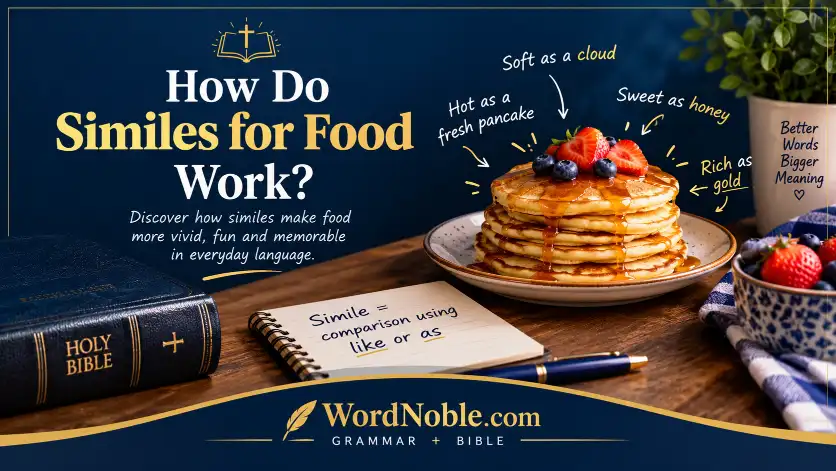
A food simile takes a quality of food and connects it to something the reader already understands.
For example, saying:
The bread was soft as a cloud.
The bread is not literally a cloud. The comparison tells us that the bread felt extremely soft and light.
Food similes can describe:
- Taste: sweet as honey
- Texture: smooth as silk
- Temperature: hot like fire
- Appearance: red like a rose
- Smell: fresh as a garden
- Sound: crunchy like dry leaves
- Size: tiny as a pea
- Overall feeling: comforting like a warm blanket
This makes similes especially useful in creative writing, poetry, storytelling, restaurant descriptions, school assignments, and everyday conversation.
Why Do Writers Use Similes for Food?
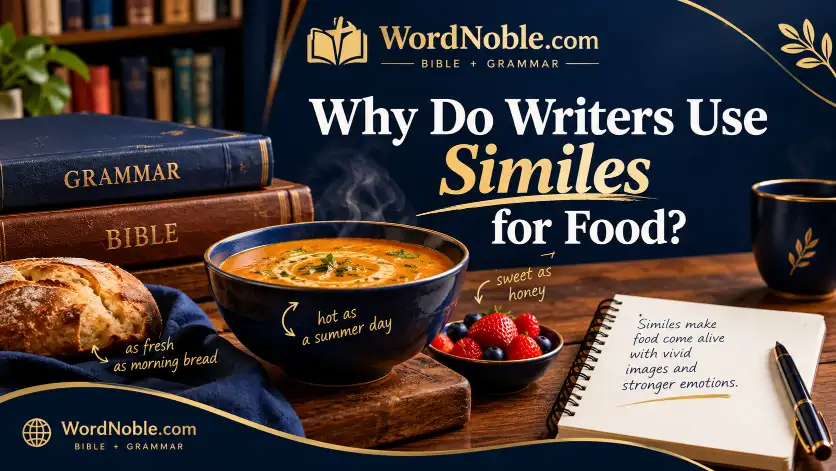
Writers use food similes because ordinary descriptions can sometimes feel flat.
Compare these two sentences:
The cake was soft.
The cake was as soft as a pillow.
The second sentence gives the reader a clearer sensory impression. The reader can imagine the texture instead of simply receiving a fact.
Similes can also create:
- stronger imagery
- emotional associations
- memorable descriptions
- humor
- personality
- sensory detail
- creative comparisons
In English literature, figurative language helps writers communicate experiences in ways that go beyond literal description.
Similes for food are figurative comparisons used to make descriptions of taste, texture, appearance, smell, temperature, or eating experiences more vivid. They commonly use “like” or “as” to connect a food-related quality with something familiar.
Contextual Meaning of Food Similes
The same type of simile can serve different purposes depending on where it appears.
Storytelling
Food similes can make scenes more vivid.
Example:
The pancakes were as fluffy as clouds.
This allows readers to picture the breakfast instead of simply being told that the pancakes were fluffy.
Poetry
Poetry often uses food similes to create emotional and sensory imagery.
Example:
Her smile was sweet like honey.
The comparison can connect sweetness with happiness, affection, or warmth.
Casual Speech
People naturally use food comparisons in everyday conversation.
Example:
That dessert was as rich as chocolate fudge.
The language sounds conversational while giving the listener a clearer impression.
Humor
Exaggerated comparisons can make food descriptions funny.
Example:
That burger was as huge as a small mountain.
The burger is obviously not a mountain. The exaggeration creates humor.
Academic Writing
Similes can be useful in descriptive or literary analysis, but they should be used carefully. Academic writing generally benefits from precise language rather than excessive figurative expressions.
Types of Similes for Food
Animal-Based Similes for Food
Animal comparisons can make food descriptions playful, vivid, or expressive.
- The noodles were slippery like eels.
Meaning: The noodles were difficult to hold because they were very slippery. - The chicken was as tender as a baby rabbit.
Meaning: The chicken had an exceptionally soft texture. - The popcorn jumped like excited frogs.
Meaning: The popcorn was rapidly popping and moving. - The cookies were as small as mice.
Meaning: The cookies were very tiny.
Animal-based similes are especially useful for children’s stories, humorous writing, and imaginative descriptions.
Technology-Based Similes for Food
Technology comparisons can give food descriptions a modern and unexpected feel.
- The blender was as loud as a jet engine.
Meaning: The blender made an extremely loud noise. - The popcorn machine worked like a factory.
Meaning: It produced a large amount of popcorn quickly. - The frozen dessert was as smooth as a touchscreen.
Meaning: Its texture was exceptionally smooth. - The toaster popped like a notification.
Meaning: The toast suddenly popped up in a quick, surprising way.
Technology-based comparisons work particularly well in modern storytelling, blogs, social media writing, and humorous content.
Nature-Based Similes for Food
Nature provides some of the strongest comparisons because readers already understand familiar natural objects.
- The soup was hot like the summer sun.
Meaning: The soup was extremely hot. - The salad was fresh as morning grass.
Meaning: The salad seemed very fresh. - The cake was soft as a cloud.
Meaning: The cake had a very soft, light texture. - The strawberries were red like roses.
Meaning: The strawberries had a bright red appearance. - The ice cream was cold as winter snow.
Meaning: The ice cream was very cold.
Nature-based similes are excellent for poetry, descriptive writing, and sensory imagery.
Funny and Exaggerated Similes for Food
Humorous similes often depend on exaggeration.
- That sandwich was as big as a suitcase.
- The chili was hot like a dragon’s breath.
- The spaghetti was tangled like a pile of headphones.
- The cake was as sweet as a candy factory.
- That pizza was as wide as a bicycle wheel.
- The burger was heavy like a brick.
These comparisons do not need to be literally accurate. Their purpose is to create an entertaining mental image.
Emotional and Behavioral Similes for Food
Food can also be described through emotions, moods, or human behavior.
- The soup was comforting like a hug.
- The spicy sauce attacked my tongue like an angry bee.
- The dessert disappeared like a shy guest at a party.
- The coffee woke me up like an alarm clock.
- The sour candy shocked me like unexpected news.
These similes combine sensory language with emotional imagery, making them especially effective in personal narratives and creative writing.
15 Examples of Similes for Food
| Simile Sentence | Meaning | Category | Explanation |
|---|---|---|---|
| The cake was as soft as a pillow. | Very soft | Texture | Compares softness with a familiar pillow. |
| The honey was sweet like candy. | Very sweet | Taste | Uses candy to emphasize sweetness. |
| The soup was hot like fire. | Extremely hot | Temperature | Fire represents intense heat. |
| The ice cream was cold as snow. | Very cold | Temperature | Snow creates a clear image of coldness. |
| The popcorn was light as a feather. | Very light | Texture | A feather suggests light weight. |
| The chips were crunchy like dry leaves. | Very crunchy | Texture | Dry leaves suggest a crisp sound and texture. |
| The strawberries were red like roses. | Bright red | Appearance | Roses provide a familiar color comparison. |
| The noodles were slippery like eels. | Very slippery | Texture | Eels are associated with slippery movement. |
| The lemonade was sour like a lemon. | Very sour | Taste | The comparison emphasizes tartness. |
| The bread was fresh as morning air. | Very fresh | Quality | Morning air suggests freshness. |
| The chocolate was smooth as silk. | Very smooth | Texture | Silk represents a soft, smooth surface. |
| The burger was huge like a mountain. | Extremely large | Exaggeration | The mountain creates a humorous sense of size. |
| The coffee woke me up like an alarm. | Very stimulating | Behavioral | An alarm represents sudden alertness. |
| The soup felt comforting like a warm blanket. | Comforting | Emotional | A blanket represents warmth and comfort. |
| The pizza vanished like magic. | Disappeared quickly | Humorous | “Magic” creates a playful image of speed. |
Context Table: When to Use Food Similes
| Context | Meaning | Use Case | Example |
|---|---|---|---|
| Creative writing | Creates vivid imagery | Stories and narratives | The bread was soft as a cloud. |
| Poetry | Builds sensory and emotional imagery | Poems | Her lips were sweet like honey. |
| School assignments | Makes descriptions stronger | Descriptive essays | The soup was hot like fire. |
| Restaurant writing | Makes food sound appealing | Reviews and descriptions | The steak was tender as silk. |
| Humor | Creates exaggerated images | Jokes and social posts | The burger was as big as a suitcase. |
| Children’s writing | Makes descriptions easy to imagine | Stories and books | The popcorn popped like frogs. |
| Everyday speech | Adds personality | Conversations | This cake is sweet like candy. |
How to Use Similes for Food in Your Writing
1. Focus on One Strong Quality
Start by deciding what you want to describe.
Is the food:
- sweet?
- spicy?
- crunchy?
- soft?
- cold?
- colorful?
- large?
- fragrant?
Then find something familiar that shares that quality.
2. Choose a Familiar Comparison
A good simile should be easy to understand.
For example:
The ice cream was cold as snow.
The comparison works because most readers understand that snow is cold.
3. Use Sensory Language
Food writing becomes stronger when it appeals to the senses.
Think about:
- taste
- smell
- texture
- appearance
- temperature
- sound
Instead of writing “The chips were good,” you could write:
The chips were crunchy like autumn leaves.
The second sentence creates a sensory experience.
4. Avoid Forced Comparisons
Not every unusual comparison makes good writing.
A comparison should have a logical connection to the food.
For example, “The soup was like a blue telephone” does not communicate a clear quality unless the surrounding context explains it.
5. Match the Tone
A poetic simile may not work in a formal essay, while a funny comparison may be perfect for a casual social post.
Choose comparisons according to your audience and purpose.
Simile vs. Metaphor for Food
A simile directly compares two things using words such as “like” or “as.”
Simile:
The cake was as soft as a cloud.
A metaphor makes a direct comparison without using “like” or “as.”
Metaphor:
The cake was a cloud.
Both create imagery, but they structure the comparison differently.
| Simile | Metaphor |
|---|---|
| Uses “like” or “as” | Usually makes a direct comparison |
| The soup was hot like fire. | The soup was fire. |
| The bread was soft as a cloud. | The bread was a cloud. |
| Easy to identify as a comparison | Often sounds more direct or imaginative |
Common Mistakes When Using Food Similes
Overusing Similes
Adding a comparison to every sentence can make writing feel crowded.
Use your strongest similes where they add meaningful imagery.
Choosing Illogical Comparisons
A simile needs a recognizable connection.
Weak:
The pizza was like a calendar.
There is no obvious shared quality.
Stronger:
The pizza was round like the moon.
Now the comparison is clear.
Confusing Similes With Metaphors
Remember that similes usually contain “like” or “as.”
Simile: The soup was hot like fire.
Metaphor: The soup was fire.
Using Clichés Too Often
Some comparisons are so familiar that they may feel predictable. When appropriate, create a fresh comparison that still makes sense.
Food Simile Usage Guide
Do
- Choose clear comparisons.
- Use sensory details.
- Match the simile to the context.
- Experiment with nature and everyday objects.
- Use humor when the tone allows it.
- Keep the comparison easy to understand.
- Prefer quality over quantity.
Don’t
- Add similes to every sentence.
- Use confusing comparisons.
- Mix literal and figurative meanings accidentally.
- Force a comparison simply to sound creative.
- Use complicated language when a simple comparison works better.
- Forget the audience.
Natural Chat Responses Using Food Similes
Here are some examples of how food similes can appear naturally in conversation:
“How was the cake?”
“It was as soft as a pillow and honestly amazing.”
“Was the curry spicy?”
“Absolutely. It was hot like fire!”
“How was the pizza?”
“The crust was crunchy like toasted leaves.”
“Did you like the ice cream?”
“Yes! It was smooth as silk.”
“Why did everyone finish the dessert so quickly?”
“It disappeared like magic.”
“How was the coffee this morning?”
“Strong enough to wake me up like an alarm clock.”
Related Figurative Language Terms
Understanding food similes becomes easier when you know how they connect with broader English language concepts.
Figurative Language
Figurative language communicates ideas in imaginative rather than purely literal ways. Similes and metaphors are two common forms.
Sensory Language
Sensory language helps readers imagine what something looks, smells, tastes, feels, or sounds like.
Descriptive Writing
Descriptive writing uses carefully selected details to help readers form a mental picture.
Metaphor vs. Simile
Both create comparisons, but similes generally use “like” or “as,” while metaphors make a more direct comparison.
Imagery
Imagery creates mental pictures or sensory experiences through language. Food similes are particularly useful for creating sensory imagery.
English Literature Devices
Simile, metaphor, personification, symbolism, imagery, hyperbole, and alliteration are examples of literary devices writers can use to strengthen expression.
FAQs:
What Are Similes for Food?
Similes for food are figurative comparisons that make food descriptions more vivid. They commonly use “like” or “as” to connect food with something familiar. For example, “The cake was as soft as a pillow” compares the cake’s texture with a pillow. Food similes can describe taste, texture, color, smell, temperature, size, sound, or the emotional experience of eating.
What Are Some Examples of Food Similes?
Common food similes include “sweet as honey,” “soft as a cloud,” “cold as snow,” “smooth as silk,” and “crunchy like dry leaves.” Each comparison highlights a particular quality. For example, “The chips were crunchy like dry leaves” helps readers imagine both the texture and the sound of eating the chips.
What Are Funny Similes for Food?
Funny food similes often use exaggeration to create an entertaining mental picture. Examples include “The burger was as big as a suitcase,” “The chili was hot like a dragon’s breath,” and “The spaghetti was tangled like a pile of headphones.” These comparisons are not meant to be literal. Their purpose is to make descriptions playful and memorable.
What Are Poetic Similes for Food?
Poetic food similes use imaginative comparisons to create strong sensory or emotional imagery. Examples include “The strawberries were red like summer roses” or “The soup was comforting like a warm blanket.” Poetic similes are especially useful when writers want readers to experience food emotionally rather than simply understand its physical qualities.
What Is the Difference Between a Simile and a Metaphor?
A simile usually compares two things using “like” or “as,” while a metaphor makes a direct comparison. For example, “The cake was soft as a cloud” is a simile. “The cake was a cloud” is a metaphor. Both can create imagery, but the grammatical structure and style of the comparison are different.
How Can I Use Food Similes in Writing?
Choose the specific quality you want to describe first, such as sweetness, softness, heat, color, or crunchiness. Then find something familiar that shares that quality. For example, if you want to describe softness, you might write, “The bread was soft as a pillow.” Use similes selectively so they strengthen your writing rather than overwhelm it.
Why Are Similes Important in English Literature?
Similes help writers turn abstract or ordinary descriptions into vivid images. In literature, a carefully chosen comparison can communicate sensory details, emotions, atmosphere, and character experiences. Food similes can be particularly effective because eating is connected to multiple senses. They give readers a way to imagine experiences they may not be directly sharing with the character or narrator.
How Can Students Use Food Similes?
Students can use food similes in descriptive essays, creative stories, poetry, classroom exercises, and literary analysis. A sentence such as “The popcorn was light as a feather” provides more imagery than simply saying “The popcorn was light.” Students should choose comparisons that are clear, relevant, and appropriate for their assignment.
Can Food Similes Describe Taste and Texture?
Yes. Food similes can describe almost any noticeable characteristic of food. Taste can be described with comparisons such as “sweet as honey,” while texture can be described with phrases such as “smooth as silk” or “crunchy like dry leaves.” They can also describe temperature, appearance, smell, size, sound, and emotional associations.
Why Do Writers Use Food Similes Instead of Literal Descriptions?
Literal descriptions provide information, while similes can create an experience. Saying “The bread was soft” gives a basic fact. Saying “The bread was as soft as a pillow” gives the reader a familiar point of reference. This makes the description easier to visualize and can make creative writing more engaging and memorable.
Conclusion:
Similes for food make ordinary descriptions more vivid by connecting taste, texture, appearance, smell, temperature, and other qualities to familiar things. A comparison such as “soft as a cloud” or “crunchy like dry leaves” gives readers a clearer sensory experience than a simple literal statement.
These comparisons are useful in creative writing, poetry, storytelling, school assignments, restaurant descriptions, and everyday conversation. The key is to choose a comparison that feels natural and communicates a clear quality.
When used thoughtfully, food similes can strengthen imagery, add personality, and make writing easier to remember. In short, the best food simile does not merely describe what something is like; it helps the reader imagine experiencing it.

I am Naqash Ayub, proudly writing for WordNoble, where I focus on creating clear, informative, and SEO-friendly content. I enjoy turning detailed information into simple, trustworthy articles that help readers find the answers they need.