
Your chest tightens. Your thoughts race in circles. And somehow, plain words like “nervous” or “worried” just don’t capture what’s happening inside you. That’s exactly why similes for anxiety exist they give shape to a feeling that often feels shapeless and overwhelming.
Anxiety isn’t just an emotion; it’s a physical, almost sensory experience, and the right comparison can turn that vague unease into something you can actually describe, understand, and even share with someone else.
Maybe you’re a writer searching for fresh ways to portray a character’s inner turmoil. Maybe you’re trying to explain your own anxious moments to a friend or therapist who just doesn’t quite get it yet.
Either way, having a collection of vivid, relatable similes on hand makes all the difference between saying “I feel anxious” and saying something that truly lands.
Similes for anxiety are figurative expressions that compare feelings of worry, fear, or nervousness to other things using words such as like or as. They help readers understand the physical sensations and emotional experiences associated with anxiety.
What Do Similes for Anxiety Mean?
A simile for anxiety compares an anxious feeling with a familiar object, situation, animal, or natural event. This comparison makes an abstract emotion easier to understand.
For example, the sentence My anxiety was like a ticking clock suggests constant tension and anticipation. The clock represents the feeling that something is approaching, even when the person does not know exactly what will happen.
Anxiety can involve racing thoughts, physical tension, uncertainty, and heightened awareness. Similes help writers describe these experiences without relying on simple statements such as I was worried or I felt nervous.
The best comparisons communicate a specific emotional quality. A storm might suggest overwhelming worry, while a trapped bird might represent restlessness or the desire to escape a stressful situation.
How Do Similes for Anxiety Work?
Similes connect an unfamiliar emotional experience to something readers already understand. They commonly use the words like and as to establish the comparison.
Consider these three examples:
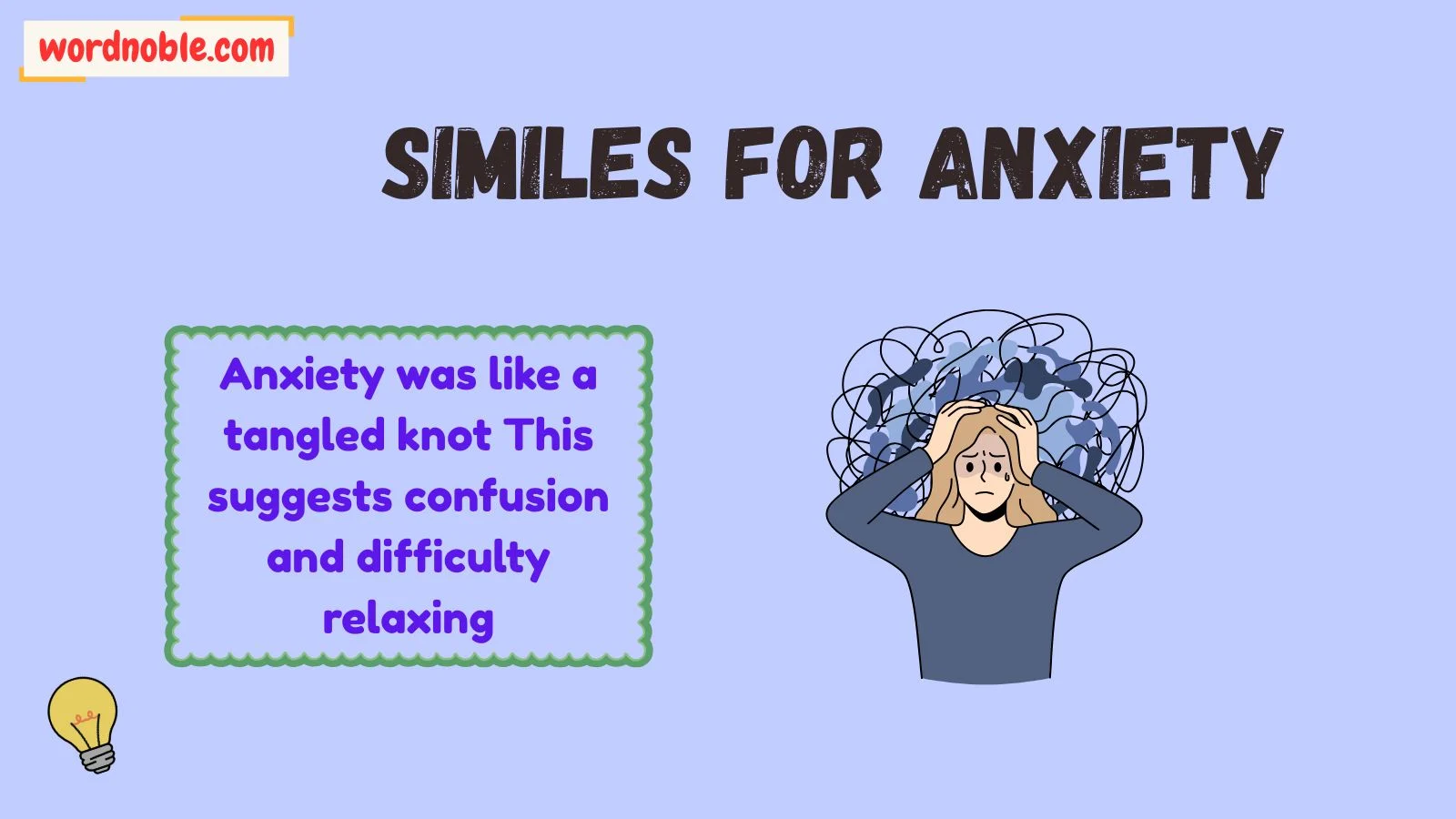
- Anxiety was like a tangled knot. This suggests confusion and difficulty relaxing.
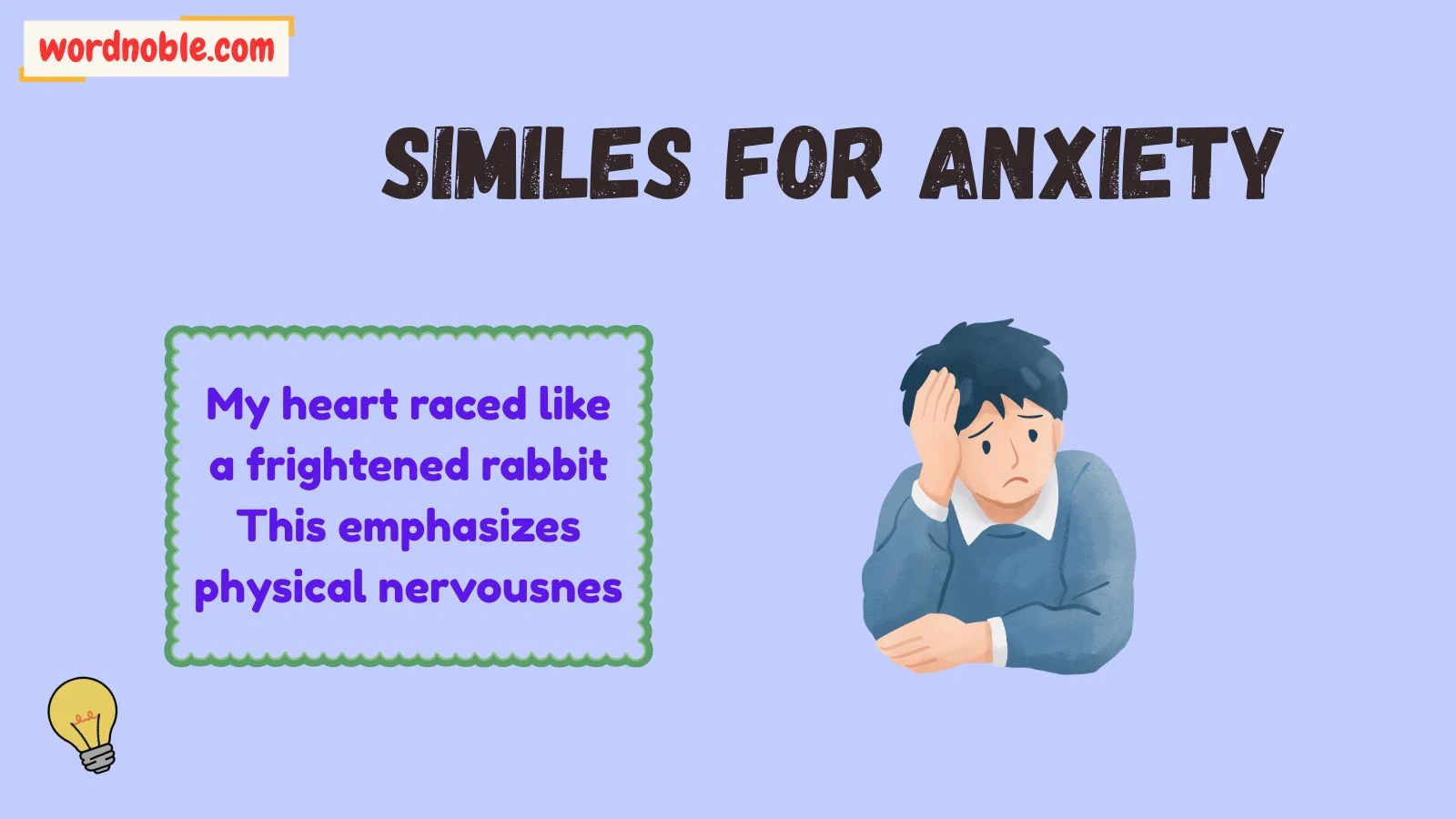
- My heart raced like a frightened rabbit. This emphasizes physical nervousness.
- Worry hung over me like a dark cloud. This communicates a lingering sense of unease.
Each comparison focuses on a different aspect of anxiety. One describes mental confusion, another highlights a bodily response, and the third creates a visual image of persistent worry.
This is the central purpose of figurative language: to communicate more than the literal meaning of words.
Why Do Writers Use Similes for Anxiety?
Writers use similes to make emotional descriptions vivid, memorable, and relatable. Rather than telling readers that a character feels anxious, they can show how that anxiety affects the character’s thoughts, body, and behavior.
Similes are especially useful for:
- Emotional expression: Showing worry, dread, nervousness, and uncertainty.
- Sensory description: Helping readers imagine tension through movement, sound, and physical sensations.
- Character development: Revealing how different people respond to stressful situations.
- Creative writing: Making stories, poems, and personal essays more expressive.
- Reader connection: Linking unfamiliar emotions to everyday experiences.
A useful simile also gives the reader information about the intensity of an emotion. Comparing anxiety to a whisper suggests something subtle, while comparing it to a crashing wave conveys a much stronger feeling.
Similes for anxiety are a form of figurative language used to describe worry, nervousness, apprehension, and emotional tension through comparisons. They make internal feelings easier to visualize by connecting them to recognizable experiences, objects, animals, and natural phenomena. In creative writing, these expressions strengthen imagery, clarify emotional tone, and help readers understand how anxiety influences thoughts, physical sensations, and behavior.
1. Animal-Based Similes for Anxiety
Animal comparisons can communicate instinctive fear, nervous movement, and the feeling of being trapped.
1. My heart raced like a frightened rabbit.
Category: Animal-based
Meaning: The person’s heartbeat is fast because of nervousness or fear.
Why it works: A frightened rabbit suggests quick movements and a strong instinct to escape.
2. My thoughts fluttered like a trapped bird.
Category: Animal-based
Meaning: The person’s mind jumps restlessly from one worry to another.
Why it works: The bird represents a desire for freedom from troubling thoughts.
3. I felt as tense as a cat in an unfamiliar room.
Category: Animal-based
Meaning: The person feels uncomfortable, alert, and unsure of what will happen.
Why it works: An unfamiliar environment creates a sense of uncertainty.
4. I was as jumpy as a squirrel before a storm.
Category: Animal-based
Meaning: The person reacts quickly to small noises or unexpected events.
Why it works: The comparison emphasizes restlessness and heightened alertness.
5. I waited like a puppy outside a closed door.
Category: Animal-based
Meaning: The person feels nervous and impatient while waiting for something important.
Why it works: The image suggests anticipation mixed with uncertainty.
2. Technology-Based Similes for Anxiety
Technology comparisons work well in modern stories, school assignments, and descriptions of racing thoughts.
6. My mind buzzed like a phone receiving endless notifications.
Meaning: Thoughts and worries keep demanding attention.
7. My nerves felt like an overloaded electrical circuit.
Meaning: The person feels mentally or physically overwhelmed.
8. My thoughts spun like a computer stuck in a loading loop.
Meaning: The person keeps thinking about the same problem without reaching a conclusion.
9. My heart pounded like an alarm going off.
Meaning: Fear or nervousness creates a strong physical reaction.
10. My anxiety was like a browser with too many tabs open.
Meaning: Several worries compete for attention at the same time.
These comparisons are particularly effective when writing about modern life, deadlines, digital distractions, or the pressure of managing multiple responsibilities.
3. Nature-Based Similes for Anxiety
Nature provides some of the strongest imagery for anxiety because storms, waves, wind, and darkness can represent emotional uncertainty.
11. My anxiety was like a storm gathering on the horizon.
Meaning: Worry grows as an uncertain event approaches.
12. Fear washed over me like a sudden wave.
Meaning: A powerful feeling of fear arrives unexpectedly.
13. Worry followed me like a shadow.
Meaning: Anxiety remains present even when the person tries to ignore it.
14. My thoughts swirled like leaves caught in the wind.
Meaning: The person’s thoughts move unpredictably and feel difficult to control.
15. My stomach felt as unsettled as the sea before a storm.
Meaning: Nervousness causes physical discomfort and emotional unease.
16. Anxiety crept over me like evening fog.
Meaning: Worry gradually makes it harder to think clearly.
17. My confidence melted like snow in the spring sun.
Meaning: The person’s confidence gradually disappears under pressure.
18. My worries grew like weeds in an untended garden.
Meaning: Unchecked worries multiply and become increasingly difficult to manage.
Nature-based similes are especially useful in poetry and descriptive storytelling because they create strong visual images while expressing emotional changes.
4. Funny and Exaggerated Similes for Anxiety
Humorous similes can make everyday nervousness relatable without dismissing the seriousness of intense anxiety.
19. My brain was like a hamster running on a wheel.
Meaning: The person keeps thinking without making progress.
20. I was as nervous as a penguin on a hot beach.
Meaning: The person feels completely out of place in an unfamiliar situation.
21. My stomach was like a washing machine on spin cycle.
Meaning: Nervousness creates a sensation of churning or discomfort.
22. My thoughts raced like shopping carts with broken brakes.
Meaning: Thoughts feel fast, chaotic, and difficult to stop.
23. I was like a phone at one percent battery, panicking about everything.
Meaning: The person feels depleted and increasingly stressed.
24. My confidence was as fragile as a soap bubble in a windstorm.
Meaning: Confidence feels easily damaged by pressure.
Funny comparisons are useful in lighthearted dialogue, personal blogs, and comedy writing. However, choose them carefully when discussing someone else’s distress so that the humor does not minimize their experience.
5. Emotional and Behavioral Similes for Anxiety
These comparisons focus on internal feelings, physical reactions, and changes in behavior.
25. My anxiety was like a knot tightening in my chest.
Meaning: Worry feels increasingly uncomfortable and restrictive.
26. I felt as restless as a clock that never stops ticking.
Meaning: The person struggles to relax or remain still.
27. My confidence shook like a candle in the wind.
Meaning: The person’s confidence is vulnerable to uncertainty or criticism.
28. I felt trapped like a key inside a locked drawer.
Meaning: The person feels unable to escape a difficult situation.
29. My worries piled up like dishes in an overflowing sink.
Meaning: Small concerns accumulate until they feel overwhelming.
30. My mind was like a room filled with people talking at once.
Meaning: Too many thoughts compete for attention.
31. I felt as exposed as a book left open in the rain.
Meaning: The person feels vulnerable or afraid of being judged.
32. My fear clung to me like a wet coat.
Meaning: The feeling remains uncomfortable and difficult to shake off.
33. I was as uncertain as a traveler standing at a crossroads.
Meaning: The person feels anxious because an important decision must be made.
34. My thoughts echoed like footsteps in an empty hallway.
Meaning: Worries repeatedly return when the person is alone or quiet.
35. Anxiety sat beside me like an unwelcome guest.
Meaning: Worry feels persistent, unwanted, and difficult to ignore.
Best Similes for Anxiety at a Glance
| Context | Meaning | Use Case | Example |
|---|---|---|---|
| Nervousness | Physical tension | Before a test | My heart raced like a frightened rabbit. |
| Overthinking | Repetitive thoughts | Personal essays | My brain was like a hamster running on a wheel. |
| Fear | Sudden emotional intensity | Suspense stories | Fear washed over me like a sudden wave. |
| Uncertainty | Worry about the future | Reflective writing | I was as uncertain as a traveler at a crossroads. |
| Persistent worry | An emotion that will not disappear | Poetry | Worry followed me like a shadow. |
| Overwhelm | Too many demands | Workplace writing | My anxiety was like a browser with too many tabs open. |
| Humor | Everyday nervousness | Casual conversation | I was as nervous as a penguin on a hot beach. |
| Vulnerability | Fragile confidence | Character development | My confidence shook like a candle in the wind. |
How Similes for Anxiety Change by Context
The same comparison can communicate different ideas depending on where and how it appears.
In Storytelling
In fiction, similes reveal a character’s internal state while keeping the narrative engaging.
Example: As the interviewer’s footsteps approached, my thoughts scattered like birds startled from a tree.
This comparison shows that anticipation disrupts the character’s concentration.
In Poetry
Poetry often uses emotional and natural imagery to communicate complex feelings with few words.
Example: My worries drifted like fog across a sleeping field.
The image creates a quiet, uncertain atmosphere and suggests that the worries are difficult to see clearly or escape.
In Casual Speech
Everyday conversations benefit from short, familiar comparisons.
Example: Before my presentation, my stomach felt like a washing machine.
The expression is easy to understand and conveys nervousness without a lengthy explanation.
In Humor
Humorous similes exaggerate ordinary experiences to make them entertaining.
Example: My brain had more open tabs than a computer at a research lab.
The comparison makes overthinking relatable through a familiar modern experience.
In Academic Writing
In literary analysis or reflective assignments, similes can illustrate how an author communicates an emotion. They should support the explanation rather than replace evidence or precise reasoning.
Example: The narrator’s comparison of fear to an approaching storm creates an atmosphere of growing tension.
This explains the literary function of the comparison instead of using imagery without analysis.
How to Use Similes for Anxiety in Your Writing
You do not need complicated vocabulary to create an effective simile. The key is to choose a comparison that accurately reflects the emotion you want to describe.
1. Identify the Exact Feeling
Anxiety can involve several related emotions. Decide whether your character feels nervous, overwhelmed, restless, uncertain, or frightened.
For example, a ticking clock works well for anticipation, while tangled string suggests confusion.
2. Choose a Familiar Image
Think about animals, weather, household objects, sounds, or physical sensations that share a quality with the emotion.
A crowded room might represent competing thoughts. A wave might represent a sudden rush of fear.
3. Connect the Two With Like or As
Create a clear comparison that sounds natural when read aloud.
Basic sentence: I felt nervous.
Improved sentence: I felt as nervous as a student waiting outside the principal’s office.
The second sentence gives readers a recognizable situation that communicates the feeling.
4. Explain Through the Scene
A simile becomes more effective when the surrounding details reinforce it.
Instead of writing several comparisons about a character’s fear, choose one strong image and show how the character behaves. Shaking hands, interrupted speech, or repeated glances at the clock may communicate the emotion more convincingly.
5. Match the Tone
A dark storm suits a suspenseful story. A hamster on a wheel suits a humorous personal essay. A candle flickering in the wind may work better in a reflective poem.
The best simile fits the scene, audience, and emotional intensity.
Simile vs. Metaphor: What Is the Difference?
Similes and metaphors both compare ideas, but they express comparisons differently.
| Feature | Simile | Metaphor |
|---|---|---|
| Structure | Usually uses like or as | Directly identifies one thing with another |
| Example | Anxiety was like a storm. | Anxiety was a storm. |
| Effect | Makes the comparison explicit | Makes the comparison more direct |
| Common use | Clear explanations and descriptions | Stronger symbolic or imaginative statements |
A simile tells readers that two things are similar in a particular way. A metaphor presents the comparison directly.
For example, My worries were like heavy chains is a simile. My worries were heavy chains is a metaphor.
Both can be effective. Use a simile when you want to make the connection clear and a metaphor when you want a more direct, symbolic effect.
Common Mistakes When Writing Anxiety Similes
Avoid these problems to make your descriptions more natural and precise.
- Overusing comparisons: Too many similes in one paragraph can distract readers from the main idea.
- Choosing unrelated images: A comparison should have a recognizable connection to the emotion.
- Repeating familiar expressions: Common phrases can work, but original comparisons may make a character or scene more memorable.
- Confusing similes with metaphors: Remember that similes typically use like or as to establish the comparison.
- Ignoring context: A funny simile may interrupt the atmosphere of a serious scene.
- Explaining every image excessively: Let readers interpret a clear comparison without repeating its meaning several times.
Similes for Anxiety: Do and Don’t
Do:
- Choose comparisons that reflect the exact emotion.
- Use concrete, familiar images.
- Vary your imagery across a piece of writing.
- Match the comparison to the tone of the scene.
- Read your sentences aloud to check their natural flow.
Don’t:
- Add a simile to every sentence.
- Use complicated comparisons just to sound sophisticated.
- Mix several unrelated images in a single sentence.
- Treat anxiety as identical to every other emotional experience.
- Use humor in a way that dismisses someone’s genuine distress.
Natural Chat Responses Using Similes for Anxiety
Here are six conversational examples you can use in messages, dialogue, or informal writing.
- Before an exam: My brain is like a browser with fifty tabs open right now.
- Before a presentation: My heart is pounding like an alarm clock.
- While waiting for a reply: My thoughts are spinning like a washing machine.
- When facing a big decision: I feel like a traveler standing at a crossroads.
- When overthinking: My brain is like a hamster running endlessly on a wheel.
- When feeling overwhelmed: My worries are piling up like laundry after a busy week.
These responses use familiar situations to describe nervousness in a simple, relatable way.
Related Terms to Explore
Understanding related literary concepts can help you develop stronger descriptions of anxiety and other emotions.
- Figurative language: Expressions that communicate ideas beyond their literal meanings.
- Auditory imagery: Language that helps readers imagine sounds.
- Sensory writing: Descriptions that appeal to sight, sound, touch, taste, or smell.
- Descriptive writing: Writing that uses specific details to create a clear impression.
- Metaphor vs. simile: Two comparison techniques with different grammatical structures.
- Personification: Giving human characteristics to nonhuman things or abstract ideas.
- Emotional imagery: Language that helps readers understand or experience a feeling.
These concepts overlap, but each serves a slightly different purpose. For example, auditory imagery focuses on sound, while a simile describes a comparison. A single sentence can use both techniques.
FAQs:
1. What are similes for anxiety?
Similes for anxiety are comparisons that describe worry, fear, or nervousness using words such as like or as. They make emotions easier to imagine by connecting them to familiar experiences. For example, My anxiety was like a storm gathering overhead suggests that worry is growing and may soon feel overwhelming. Writers use these expressions in stories, poems, essays, and everyday conversations.
2. What are five examples of similes for anxiety?
Five examples are My heart raced like a frightened rabbit, My worries followed me like a shadow, My thoughts spun like a computer stuck in a loading loop, My confidence shook like a candle in the wind, and Fear washed over me like a sudden wave. Each comparison highlights a different aspect of anxiety, from physical nervousness to persistent worry and sudden fear.
3. What are some funny similes for anxiety?
Funny similes describe nervousness through playful exaggeration. For example, My brain was like a hamster running on a wheel suggests endless overthinking. I was as nervous as a penguin on a hot beach describes feeling out of place. These comparisons work well in casual conversations, humorous essays, and lighthearted dialogue. They should be used thoughtfully when discussing people experiencing serious distress.
4. What are some poetic similes for anxiety?
Poetic similes often use natural images, delicate objects, and sensory details to communicate emotional depth. Examples include My anxiety drifted like fog across a silent valley and My confidence flickered like a candle in the wind. Such comparisons create atmosphere while expressing uncertainty, vulnerability, or persistent worry. They are especially useful in poems, reflective essays, and literary fiction.
5. What is the difference between a simile and a metaphor for anxiety?
A simile compares anxiety to something else using words such as like or as. For example, Anxiety was like a storm is a simile. A metaphor makes the comparison directly: Anxiety was a storm. Both expressions communicate emotional intensity, but the simile explicitly signals a comparison while the metaphor presents it as a direct imaginative statement.
6. How can I use similes for anxiety in creative writing?
Start by identifying the feeling you want to describe, such as anticipation, restlessness, or overwhelming worry. Choose a familiar image that communicates that feeling, then build a sentence around it. For example, My thoughts raced like cars through a busy intersection suggests mental activity that feels difficult to control. Keep the comparison relevant to the scene and avoid using too many similes together.
7. Why are similes important in English literature?
Similes help authors communicate emotions, develop characters, establish atmosphere, and make descriptions memorable. They can also reveal how a narrator interprets an experience. In literary analysis, identifying a simile and explaining its effect helps students move beyond simply recognizing a language technique. The important step is to connect the comparison to the text’s meaning, tone, or themes.
8. How can students use similes for anxiety in school assignments?
Students can use anxiety similes in descriptive essays, creative writing exercises, poems, and literary analysis. For instance, Before the speech, my hands trembled like leaves in the wind describes nervousness through a physical image. When an assignment requires analysis, students should explain why the comparison is effective and how it influences the reader rather than merely listing examples.
9. Can similes describe physical symptoms of anxiety?
Yes. Similes can describe sensations such as a racing heartbeat, tense muscles, a restless stomach, or trembling hands. For example, My heart pounded like a drum communicates a strong, rapid heartbeat. These expressions are descriptive rather than diagnostic. They help readers understand how a character experiences nervousness, but they do not establish the medical cause of any physical symptom.
10. How do I create an original simile for anxiety?
Think about what makes your particular experience distinctive. Consider a sound, movement, object, or situation that resembles your feeling. If your thoughts keep returning to the same problem, you might compare them to a song stuck on repeat. If worry builds gradually, you might compare it to water rising in a glass. Specific, meaningful connections usually create stronger similes than complicated wording.
Conclusion:
Similes for anxiety help transform difficult emotions into clear, memorable images. By comparing worry to storms, restless animals, tangled knots, or familiar everyday experiences, writers can communicate nervousness, uncertainty, and fear more effectively.
The strongest similes are not necessarily the most complicated ones. They are the comparisons that fit the situation and help readers understand exactly what a character feels.
When writing your own examples, identify the emotion, choose a meaningful image, and connect the two naturally using like or as. Use figurative language with purpose, avoid unnecessary repetition, and let the surrounding details support your comparison.
With practice, you can make your stories, poems, and school assignments more expressive, engaging, and precise.

I am Naqash Ayub, proudly writing for WordNoble, where I focus on creating clear, informative, and SEO-friendly content. I enjoy turning detailed information into simple, trustworthy articles that help readers find the answers they need.